Seminar series

© Shutterstock / Villiers Steyn / WWF-Sweden
WWF’s Science for Nature Seminars provide a regular forum for the conservation community to learn, discuss, network and inspire. The series seeks to advance the discussion of cutting edge research relating to critical topics in international conservation by featuring distinguished scientists from across the globe.
Since its beginning in 2007, the Fuller Science for Nature Seminar Series has hosted over 50 scientists with diverse specialties and has attracted thousands of attendees from different sectors of the conservation community.
Seminars are free, open to the public, and held remotely via Zoom (registration is required to receive link to the event).
2026 Seminar Series
The Psychology of Resilience
Motivating and Sustaining Conservation in a Changing World

© WWF-US
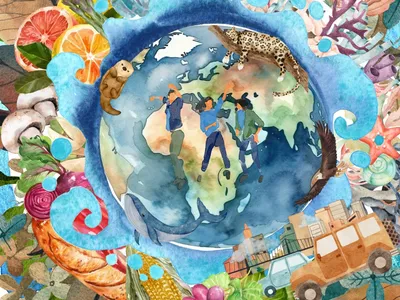
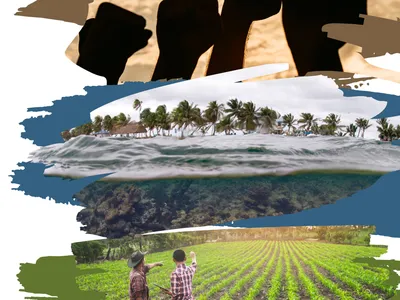
Biodiversity loss and climate change are reshaping ecosystems and communities alike. While conservation often focuses on ecological and technological solutions, evidence from around the world shows that lasting environmental progress depends just as much on the resilience of people and communities. Without the social capacity to cope with disruption, sustain motivation, and act collectively, conservation efforts struggle to endure. This seminar series, co-hosted with the American Psychological Association (APA), recognizes how social and ecological resilience are linked and explores the psychological mechanisms of social resilience. By integrating psychology and social science research with the lived experience from frontline communities and conservation practitioners, the series will illuminate how emotions, identity, culture, and community dynamics motivate, shape, and sometimes constrain conservation actions and outcomes. It will highlight strategies for fostering hope, managing eco-distress, and building collective capacity to adapt and thrive in a changing world. Participants will leave with actionable insights from psychological science that they can apply to strengthen social resilience, foster inclusive collaboration, and sustain conservation behaviors within their communities and professional contexts.
Watch recordings

2020
2019
2018
2017
Previous Fuller seminars
2016
Crunch time for coral reefs?
Ove Hoegh-Guldberg, The University of Queensland
Health in the Climate Crisis
Sabrina McCormick, George Washington University and University of Pennsylvania
Maximizing Conservation Return on Investment: Are we really achieving the impacts we want?
Alexander Pfaff, Duke University
Art to Action: Influencing behavior through creativity
Asher Jay, Creative Conservationist and 2014 National Geographic Society Emerging Explorer
2015
A Half Century of Conservation: How Did It Happen?
Tom Lovejoy, United Nations Foundation
Saving a Species: Vaquita
Lorenzo Rojas-Brancho, National Institute of Ecology/Center for Scientific Research and Higher Education of Ensenada; Rebecca Lent, Marine Mammal Commission, and Enrique Sanjurjo, WWF-Mexico
A Blooming Problem: The Disruptive Impacts of Climate Change on Nature's Calendar
Richard Primack, Boston University; Lizzie Wolkovich, Harvard University
Is human pressure on Earth driving the Anthropocene over the edge?
Marina Fischer-Kowalski, Alpen Adria University
2014
Synthetic Nature and the Future of Conservation
Kent Redford, Archiapelago Consulting
Do global market forces slow or grow habitat loss?
Eric Lambin, Stanford University and University of Louvain, Belgium
Monitoring global forest change at local scales using earth observation data
Matt Hansen, University of Maryland
Urban communities inspired by nature: connecting people and the planet
Tim Beatley, University of Virginia, and Stella Tarnay, George Washington University
Know your audience: influencing the American Public on climate change
Elke Weber, Columbia University; Matt Barreto, The University of Washington; and Molly Rauch, Mom’s Clean Air Force
2013
Going to Extremes: The Alarming Science Behind Climate Change’s Increasingly Wild Weather
Jennifer Francis, Rutgers University, and Stu Ostro, The Weather Channel
Think like an investor: making smart conservation decisions
Hugh Possingham, University of Queensland
Peak Cropland: Saving Room for Nature while Feeding Humanity throughout the 21st Century
Joe Fargione, The Nature Conservancy
SkyTruthing: Clean Up Your Act, The Crowd is Watching!
John Amos and Paul Woods, SkyTruth
Conservation Science for the Anthropocene—Boundaries, Tipping Points, and System Change
Joshua Tewksbury, Luc Hoffmann Institute
2012
Producing Wildlife: Managing a Conservation Reserve in India during the Anthropocene
Paul Robbins, University of Arizona
Can Social Networks Save Biodiversity?
Scott Loarie, Carnegie Institution for Science
Sustainability of World Fisheries & their contribution to global food security
Ray Hilborn, University of Washington
Farming the Future: Can we spare land for nature?
Navin Ramankutty, University of British Columbia
The facts are not enough: Overcoming public deadlock on climate change
Katharine Hayhoe, Texas Tech University
2011
The Panda and the Anthropocene: The Real Challenge for Conservation
Bill Adams, University of Cambridge
Farming’s Perennial Future
Jon Paul Rodriguez, Center for Ecology of the Venezuelan Institute for Scientific Investigations
Insights from Biodiversity Science for Addressing Global Sustainability Challenges
Georgina Mace, Imperial College London
The Future of Plants
Peter Crane, Yale University
Farming’s Perennial Future
Jerry Glover, U.S. Agency for International Development
2010
Elinor Ostrom, Workshop in Political Theory and Policy Analysis, Indiana University
Giving Science Away: Turning Tragedy to Hope in Humid Tropical Forest Conservation
Greg Asner, Carnegie Institution for Science
People and Nature: Conservation, Conflict, and Compromise
David Macdonald, Wildlife Conservation Research Unit
Ecological Consequences of Defaunation in Tropical Ecosystems
Rodolfo Dirzo, Stanford University
Ecological Restoration and Dreams of Natural Streams
Margaret Palmer, Chesapeake Biological Laboratory and University of Maryland Center for Environmental Science
2009
Douglas R. Nader, Environmental Defense Fund
Dan Nepstad, Gordon and Betty Moore Foundation
Paul R. Ehrlich, Stanford University
Andrew Baker, University of Miami
Carbon, Community and Livelihoods: Forest Commons in the 21st Century
Arun Agrawal, University of Michigan
Extreme Hydrological Conditions and Complex Channel Topology Drives Population Divergence and Speciation in the Lower Congo River
Melanie Stiassny, American Museum of Natural History
2008
Peter J. Mumby, University of Exeter
David S. Wilcove, Princeton University
Claire Kremen, University of California
Protecting the Large Pelagics: New technologies for marine conservation in the open ocean
Patrick N. Halpin, Duke University
Changing Dynamics of Tropical Deforestation and Atmospheric Carbon Emissions
Ruth DeFries, Columbia University
Dangerous anthropogenic interference: the latest insights
Micheal Oppenheimer, Princeton University
2007
Setting practical conservation priorities—and sequestering carbon to pay for them
Stuart Pimm, Duke University and University of Pretoria
Why Tropical Parks are Failing
John Terbough, Duke University
Social, Economic and Political Drivers of Bornean Deforestation and Fires: Implications for Carbon Emissions, Biodiversity and Rural Livelihoods.
Liz Curran, Yale University
Brave New Ocean
Jeremy Jackson, Scripps Institution of Oceanography
Paz con la Naturaleza: Costa Rica goes for Phase II Conservation
Dan Janzen, University of Pennsylvania
Sushi and Satellites: Tracking Giant Bluefin Tunas in the Atlantic and Pacific Oceans
Barbara A. Block, Stanford University and Tag A Giant Foundation