Publications
-
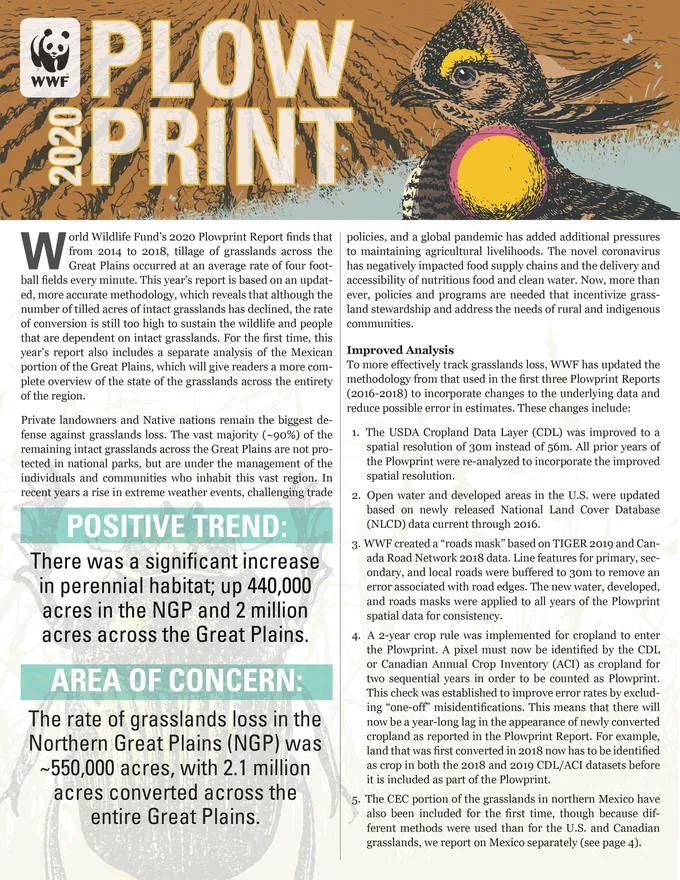
World Wildlife Fund‚'s annual Plowprint Report tracks grassland loss across the Great Plains. The 2020 Plowprint Report finds that from 2014 to 2018, tillage of grasslands across the Great Plains has occurred at an average rate of four football fields ev¬≠ery minute. This year‚'s report is based on an updated, more accurate methodology, which reveals that although the number of tilled acres of intact grasslands has declined, the rate of conversion is still too high to sustain the wildlife and people that are dependent on intact grasslands. For the first time, this year‚'s report also includes a separate analysis of the Mexican portion of the Great Plains, which will give readers a more complete overview of the state of the grasslands across the entirety of the region.
-
Biogenic Carbon Footprint Calculator for Harvested Wood Products (July 2020)
Background Data & Calculations
-
Biogenic Carbon Footprint Calculator for Harvested Wood Products (July 2020)
User Manual (Version 1)
-
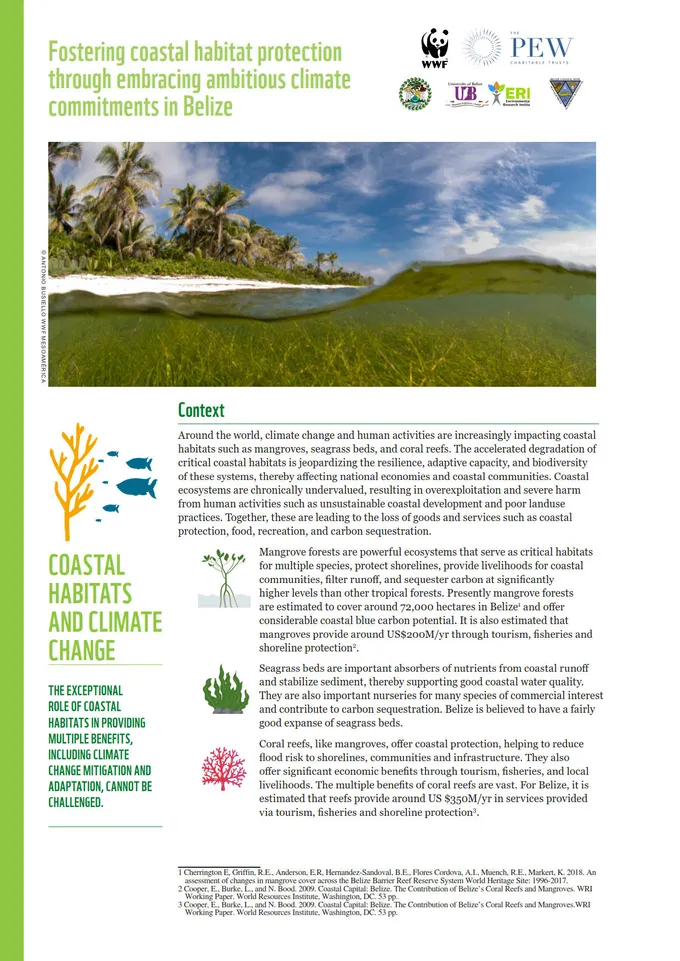
Climate change and human activities are increasingly impacting coastal habitats such as mangroves, seagrass beds, and coral reefs. In Belize, WWF and partners are aiming to increase the ambition for protection of coastal ecosystems in-country.
-
This special edition of World Wildlife magazine features a range of people-centric stories, originally published between 2014 and 2020 in the magazine or on worldwildlife.org. Each feature demonstrates that conservation can be a critical pathway towards stability and opportunity. World Wildlife: For People, For Nature, Forever showcases the human truth and longstanding depth of our work. Each feature is paired with a contextual essay by a WWF landscape, program, or country leader. The issue is framed by an overarching message from WWF President and CEO Carter Roberts.
-
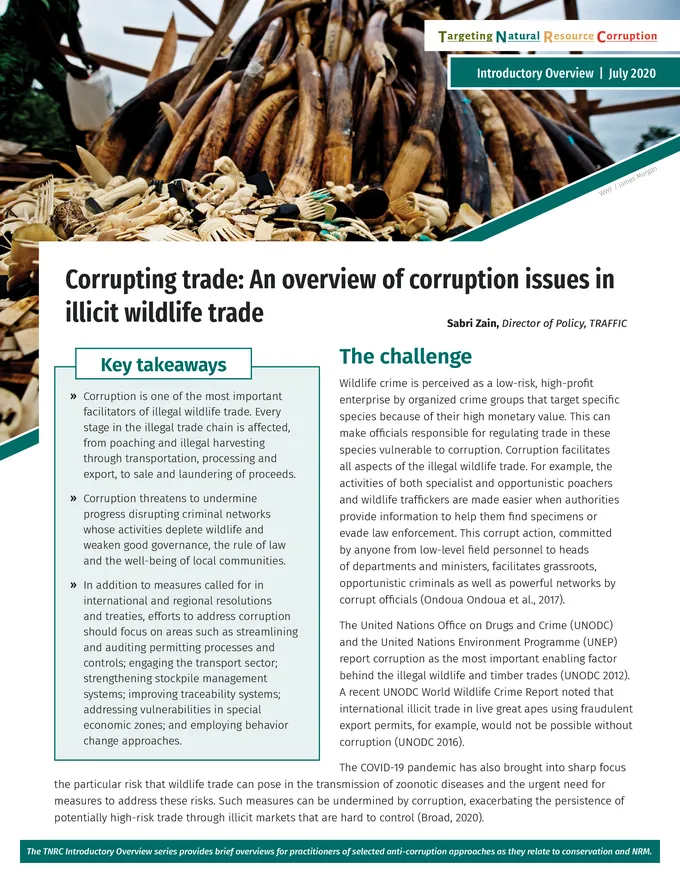
Corruption is a key facilitator of illegal wildlife trade. In addition to measures called for in international and regional resolutions and treaties, efforts to address corruption should focus on areas such as streamlining and auditing permitting processes and controls; engaging the transport sector; strengthening stockpile management systems; improving traceability systems; addressing vulnerabilities in special economic zones; and employing behavior change approaches.
For more resources, go to the Targeting Natural Resource Corruption project Knowledge Hub
-
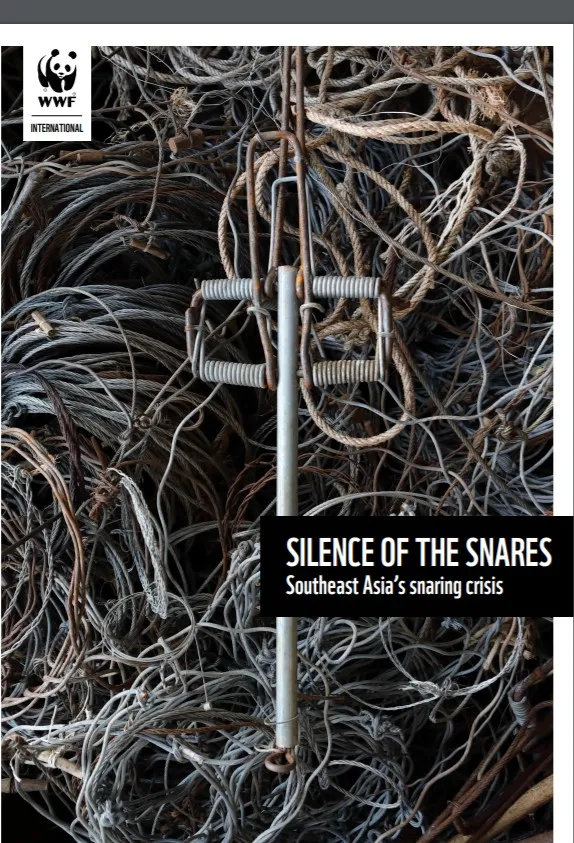
Snares are contributing to a wildlife extinction crisis, while also impacting ecosystems that support human well-being across Southeast Asia. Usually made from wire cable, nylon, or rope, snares are rudimentary traps used to supply the demand for wildlife meat and products. They also increasingly supply an urban demand for wildlife, which is often consumed as a delicacy. Overall, snares impact more than 700 mammal species in the region, including rare and charismatic animals such as the Asian elephant, Sumatran rhinoceros, saola, and banteng. They are also now the greatest threat to the long-term presence of tigers in Southeast Asia.
This report details the scale of the snaring crisis, and its impacts on people, nature, and wildlife, and lays out a set of recommendations, which if taken holistically, could help halt and reverse this crisis.
-
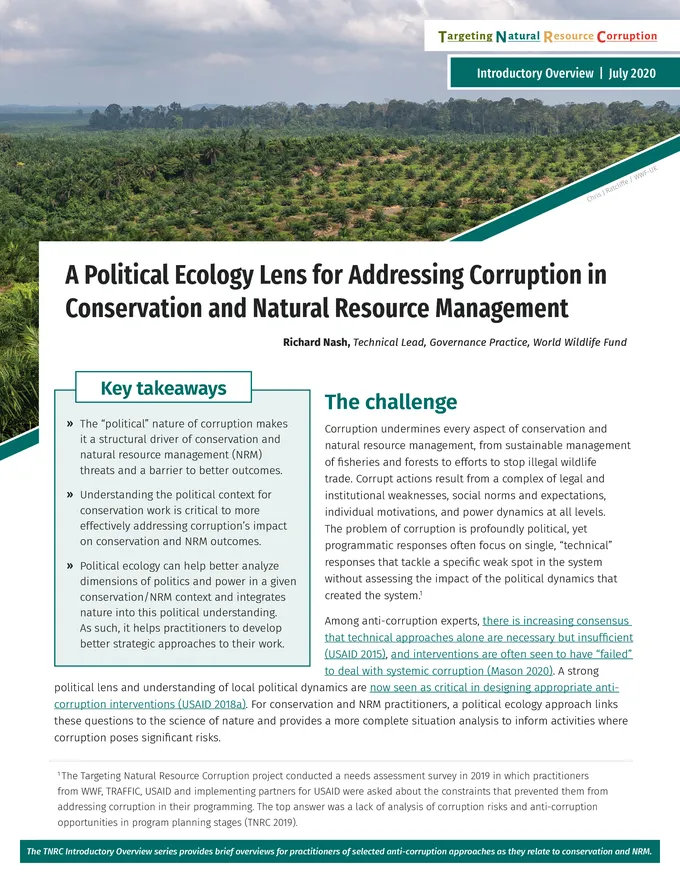
Corruption undermines every aspect of conservation and natural resource management, from sustainable management of fisheries and forests to efforts to stop illegal wildlife trade. Corrupt actions result from a complex of legal and institutional weaknesses, social norms and expectations, individual motivations, and power dynamics at all levels. The problem of corruption is profoundly political, yet programmatic responses often focus on single, "technical" responses that tackle a specific weak spot in the system without assessing the impact of the political dynamics that created the system. For conservation and NRM practitioners, a political ecology approach links these questions to the science of nature and provides a more complete situation analysis to inform activities where corruption poses significant risks.
-
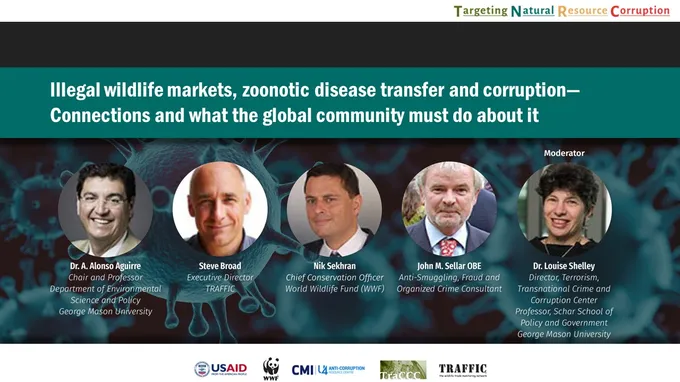
In the midst of the COVID-19 pandemic, there is greater international willingness to address illegal wildlife markets, especially those involving live animals. But to respond to this and future pandemics effectively, systems thinking, and a greater understanding of drivers and inter-sectoral approaches will be vital. This post captures insights on the connections between illegal wildlife markets, zoonotic disease transfer and corruption contributed by experts in the fields of wildlife ecology, public health, environment, development, transnational crime and wildlife trade at a TNRC virtual panel on 23 June 2020. Experts presented learning and approaches that global practitioners should consider to protect natural resources, public health and support good governance.
-
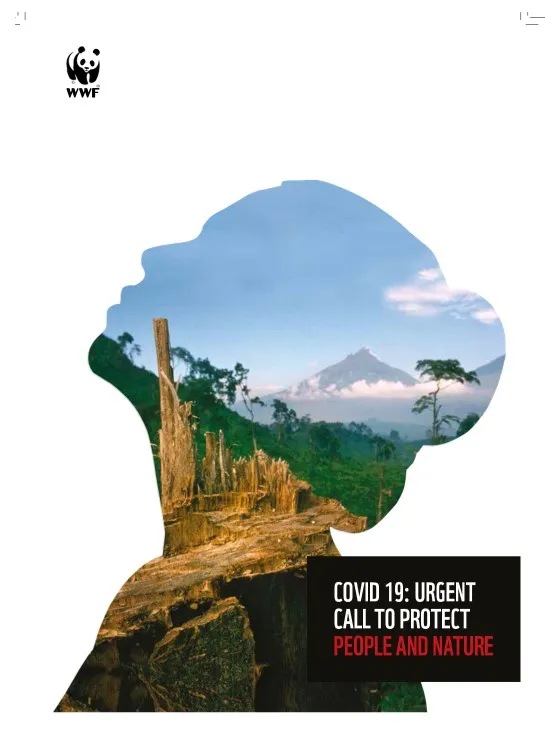
Humanity's broken relationship with nature comes with a cost. That cost has revealed itself in terrible ways. Loss of lives, loss of jobs, and a shock to our global economy. This pandemic joins a long list of emerging diseases that will continue to undermine global stability unless we fix our relationship with nature. Together we can ensure the response to this global emergency makes our planet and our communities stronger.