Publications
-
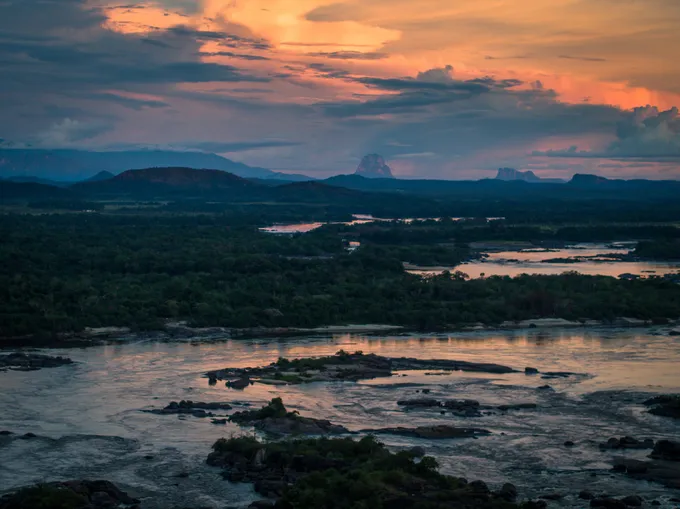
The Colombian Orinoco River Basin Report Card‚ – the first of its kind in South America‚ – came out in July 2016. Through a series of workshops held across the region, approximately 150 stakeholders came together to pinpoint the most important values and threats to their basin, known as indicators. What we learn about the health of each one of these indicators helps determine the overall health of the river basin. The Colombian Orinoco River Basin received a B-, meaning it's in moderately good health, but some action is needed now.
-
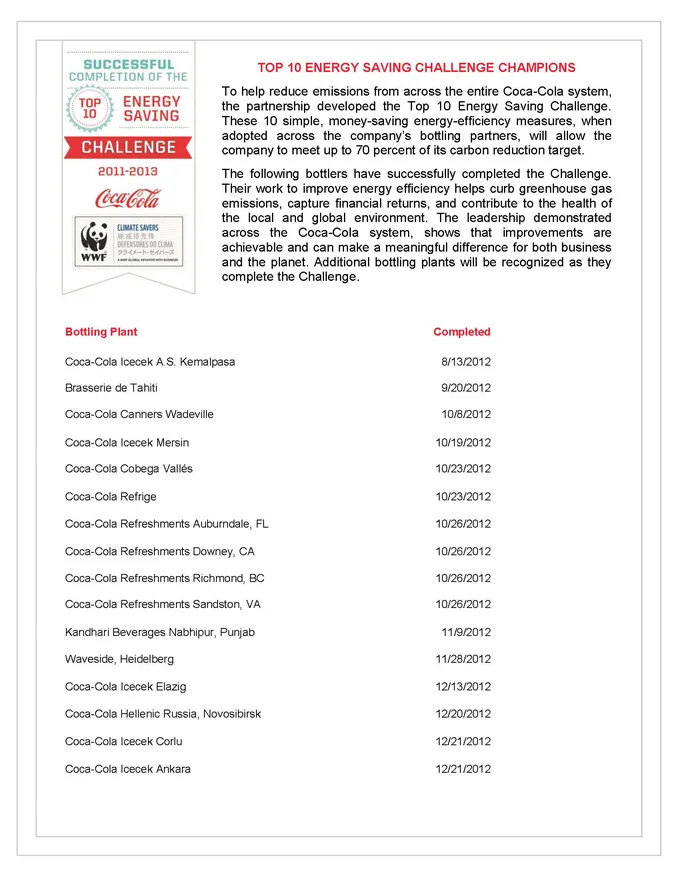
To help reduce emissions from across the entire Coca-Cola system, WWF and The Coca-Cola Company developed the Top 10 Energy Saving Challenge. These 10 simple, money-saving energy-efficiency measures, when adopted across the company's bottling partners will allow the company to meet up to 70 percent of its carbon reduction target.
-
WWF and RCL’s additional sustainability goals include targets to address RCL’s direct operations and the sustainability of the company’s tour operators and destinations.
-
Illegal, unreported and unregulated (IUU) fishing is a huge problem nationally and worldwide, costing the global economy an estimated $10 to $23.5 billion dollars per year. Yet, there has been little research done on how on how IUU affects legitimate fishermen. This economic snapshot analyzes how U.S. fishermen are impacted by IUU. It finds that due to price suppression, U.S. fishermen could be losing $1 billion in revenue per year. Stopping the flow of illegal seafood into the U.S. will help both U.S. fishermen, who could see the equivalent of about a 20 percent raise, and the health of our oceans.
-
More than ever before, the integrity of the Amazon region is under pressure from unsustainable economic activities and is undergoing unprecedented change. Multiple and interconnected pressures are driven by the economic interests of the countries of the region and the rest of the world. WWF Living Amazon Report 2016 alerts to a dramatic increase in the frequency of enacted legislative actions to downgrade, downsize or degazette protected areas in the Amazon.
-
To help companies reduce their water risks and impacts on local watersheds, Ceres and World Wildlife Fund have launched the AgWater Challenge – an initiative that aims to highlight leadership, as well as new, improved commitments on water stewardship, specifically stronger, more transparent targets around agricultural supply chains. Leveraging World Food Day on October 16, 2016, the initiative will highlight actions taken by companies and will raise awareness of the important role the private sector can play in addressing food and water security.
-
If you missed the AgWater Challenge‚'s first webinar or just need a refresher, you can view the presentation here.
-
Are you interested in participating in the AgWater Challenge but have some questions? Read our Frequently Asked Questions to see what the Challenge is all about and how your company can participate.
-
This Ranger Perceptions: Africa survey is the second in the series of report that aim to shed light on wildlife ranger working conditions. The intent of this survey -- like the previous one on Asia's rangers and the upcoming one on rangers in Latin America -- is to provide a snapshot of rangers' personal views of their working conditions, and so gain a deeper insight into the factors that affect their motivation.
-
Co-generating and integrating climate risk information to build resilience for conservation, development, and disaster risk reduction.