Publications
-
This model results chain illustrates how conservation and natural resource management practitioners could integrate anti-corruption into their traceability or other supply chain initiatives. However, like any model, it is only a starting point, and it should not be used "as is." Not every factor will be applicable or feasible for all traceability initiatives, and all require careful adaptation and integration into the specific strategy or activity that is being designed.
-
This model results chain illustrates how conservation and natural resource management practitioners could incorporate anti-corruption elements into a law enforcement activity. The chain focuses on the illegal wildlife trade, meaning here any unlawful activity related to profiting from fish, forests, and wild fauna. However, most of the information will be relevant to broader law enforcement against any crimes affecting the environment.
-
This Fact Sheet provides an overview of the Targeting Natural Resource Corruption (TNRC) project, highlighting its structure and impact. Supported by USAID and led by the World Wildlife Fund (WWF) with a consortium of leading conservation and anti-corruption organizations, the TNRC project focused on improving biodiversity outcomes by equipping practitioners with knowledge and tools to address the threats posed by corruption to wildlife, fisheries, and forests.
-
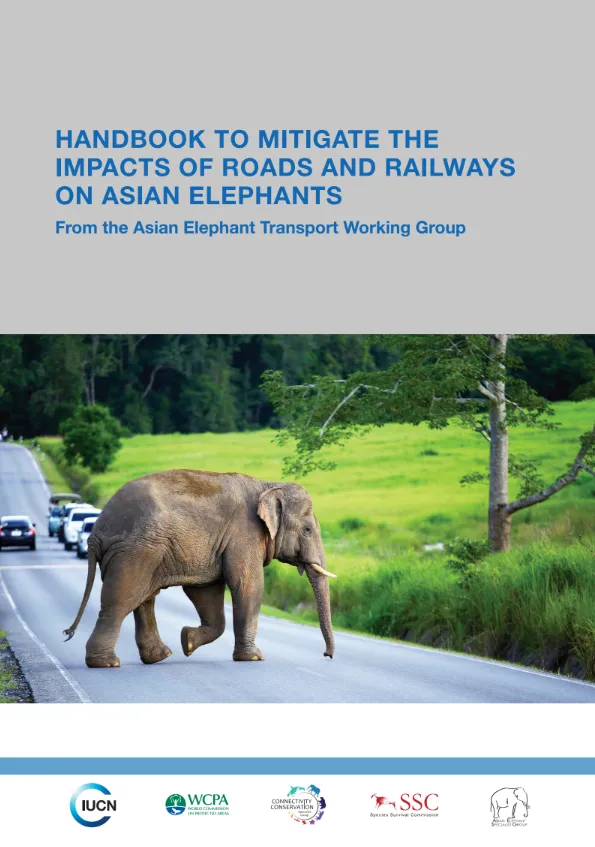
One of the greatest threats to Asian elephants is habitat loss and fragmentation, particularly resulting from human activities. With the profusion of current and planned linear infrastructure like roads and railways breaking up wildlife habitats across the continent, collisions with cars and trains are becoming more of a threat to Asian elephants. Elephants also have large ranges through which they travel, and this fragmentation is increasingly disrupting their movement.
The first elephant-specific handbook to help countries reduce collisions and provide safe passage for elephants has just been published, coauthored by experts on elephants and transport ecology from the Asian Elephant Transport Working Group‚ – a collaborative effort between the International Union for Conservation of Nature Asian Elephant Specialist Group and the Connectivity Conservation Specialist Group. The "Handbook to Mitigate the Impacts of Roads and Railways on Asian Elephants" aims to provide workable solutions for transportation planners and engineers to protect Asian elephants from the negative impacts of roads and railways. WWF and partners, including the United States Agency for International Development and the Center for Large Landscape Conservation, supported the development of the handbook.
-
-
-
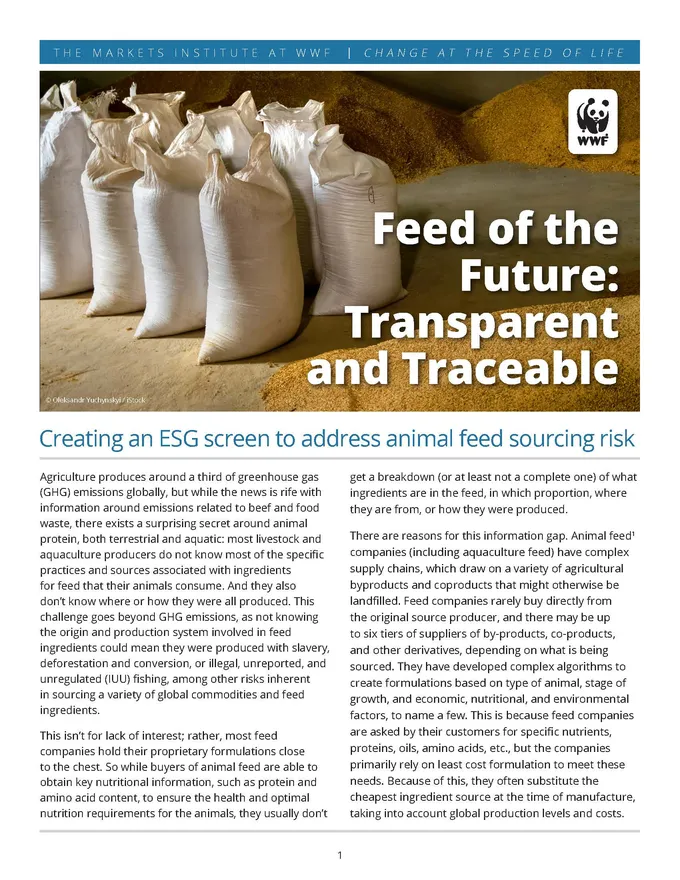
This business case examines the creation and implementation of an Environmental, Social, and Governance (ESG) screen to address animal feed sourcing risk.
-
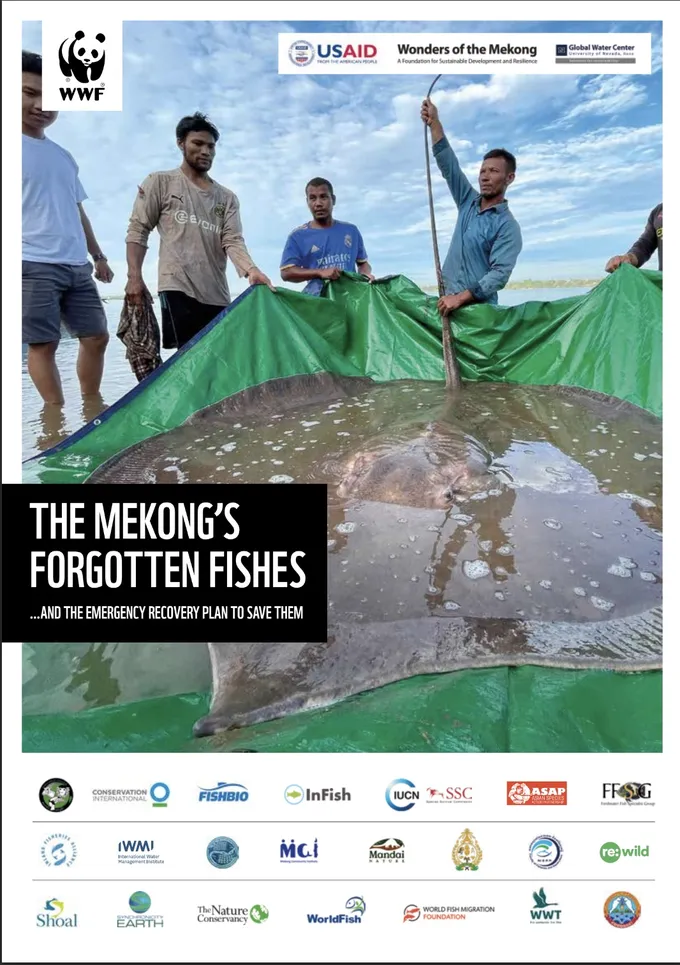
The Mekong River sustains a rich tapestry of fish species crucial for the well-being, food security, and livelihoods of millions in the region. However, these vital creatures face escalating threats, with one in five already endangered. A report by 25 organizations unveils the staggering diversity of the Mekong's fish, numbering at least 1,148 species and comprising the third most biodiverse river ecosystem globally. From giants to minnows, the Mekong hosts an astonishing array of fish life, including one of Earth's largest animal migrations, totaling around 5 billion individuals. This unprecedented report underscores the indispensable role these fish play in maintaining the river's health, sustaining economies, and ensuring the food security of over 40 million people who depend on the Mekong's inland fishery, generating over US$11 billion annually.
-
On March 4, the Business Coalition for a Global Plastics treaty issued a letter to President Biden appealing for executive leadership on global plastic pollution.
-
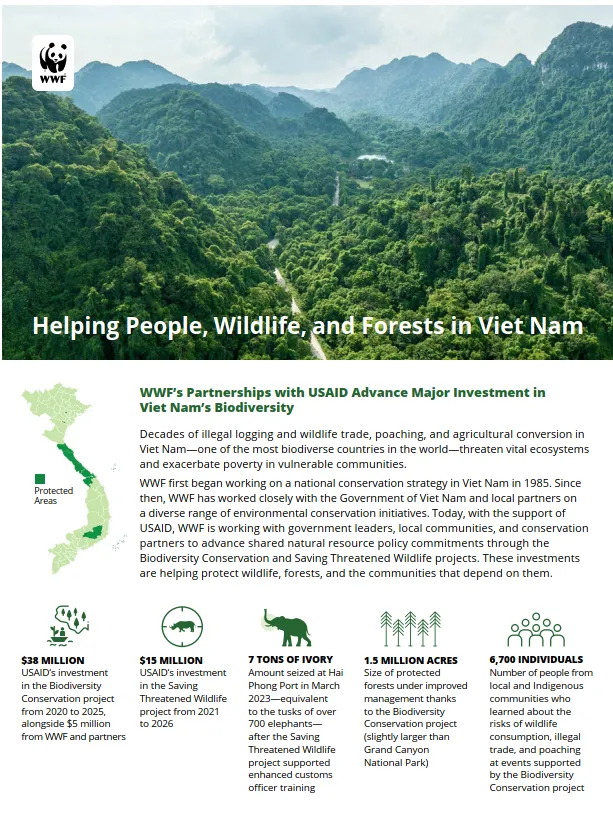
Decades of illegal logging and wildlife trade, poaching, and agricultural conversion in Viet Nam‚ – one of the most biodiverse countries in the world‚ – threaten vital ecosystems and exacerbate poverty in vulnerable communities. WWF first began working on a national conservation strategy in Viet Nam in 1985. Since then, WWF has worked closely with the Government of Viet Nam and local partners on a diverse range of environmental conservation initiatives. Today, with the support of USAID, WWF is working with the Government of Viet Nam, local communities, and conservation partners to advance shared natural resource policy commitments through the Biodiversity Conservation and Saving Threatened Wildlife projects. These investments are helping protect wildlife, forests, and the communities that depend on them.