Publications
-
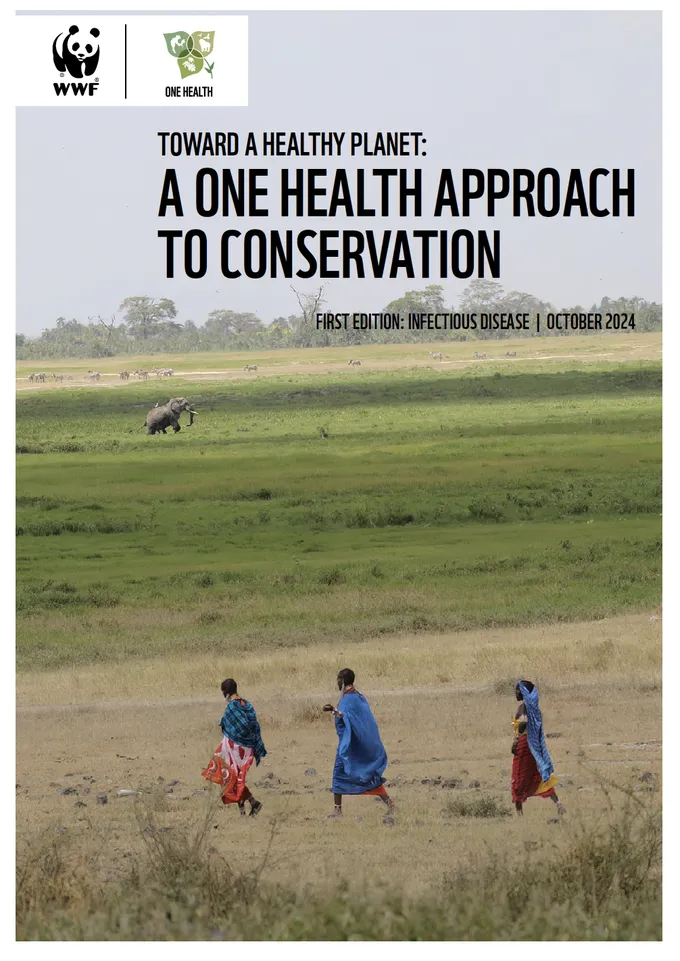
An integrated, unifying One Health approach recognizes the interdependence of human, animal, and environmental health. Conservation efforts targeted at this intersection have the ability to improve human health by strengthening wildlife and ecosystem resilience.
-
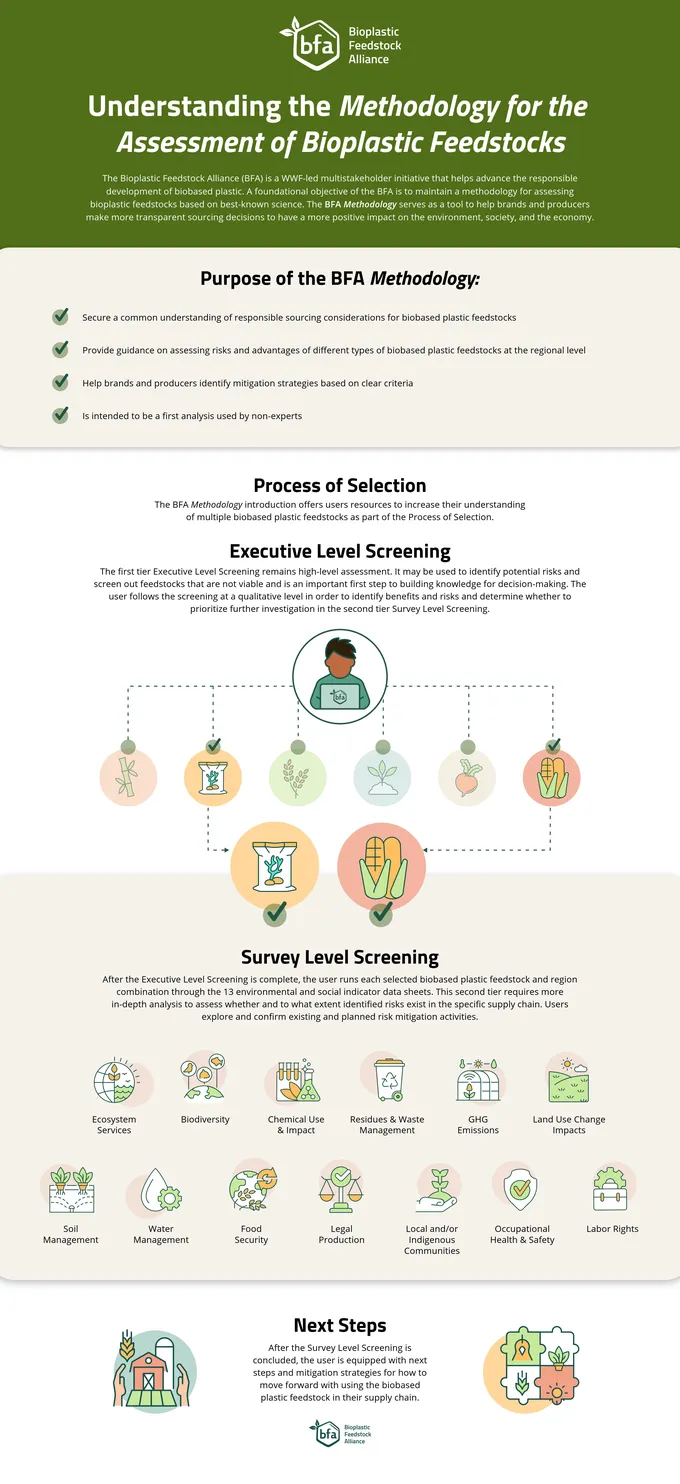
Understanding the Methodology for the Assessment of Bioplastic Feedstocks
-
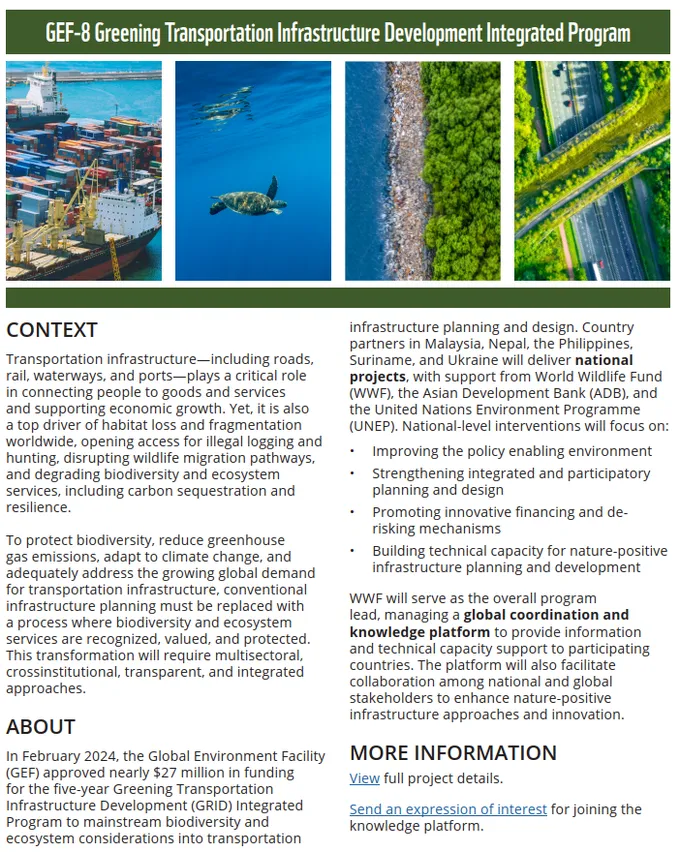
In February 2024, the Global Environment Facility (GEF) approved nearly $27 million in funding for the five-year Greening Transportation Infrastructure Development (GRID) Integrated Program to mainstream biodiversity and ecosystem considerations into transportation and design.
Learn more about the program's goals, national projects, and knowledge platform.
-

-
-
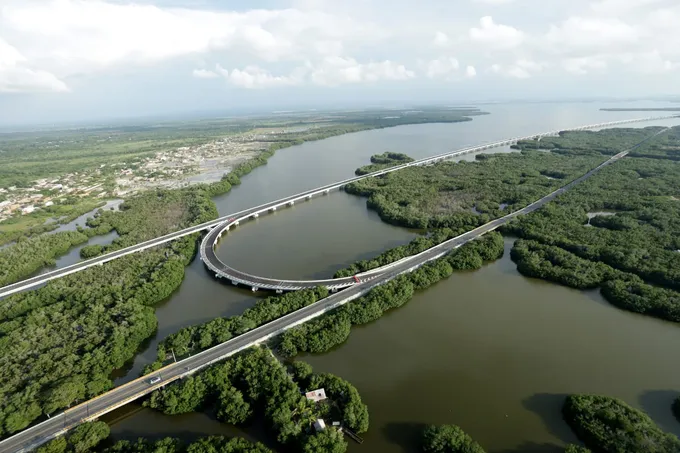
La infraestructura vial no planificada representa una de las amenazas mas importantes para las comunidades locales y los ecosistemas. Los Lineamientos de Infraestructura Verde Vial de Colombia brindan una solucion compresiva a esta amenaza, siendo una guia que integra consideraciones ambientales, clim√°ticas, sociales y de ingenieria en todas las etapas del desarrollo de la infraestructura vial.
-
Ill planned roads and other forms of linear infrastructure present substantial threats to local communities and ecosystems. Colombia's Green Road Infrastructure Guidelines provide a comprehensive solution to this threat, with comprehensive guidance to integrate environmental, climate, social, and engineering considerations through all stages of infrastructure development.
-
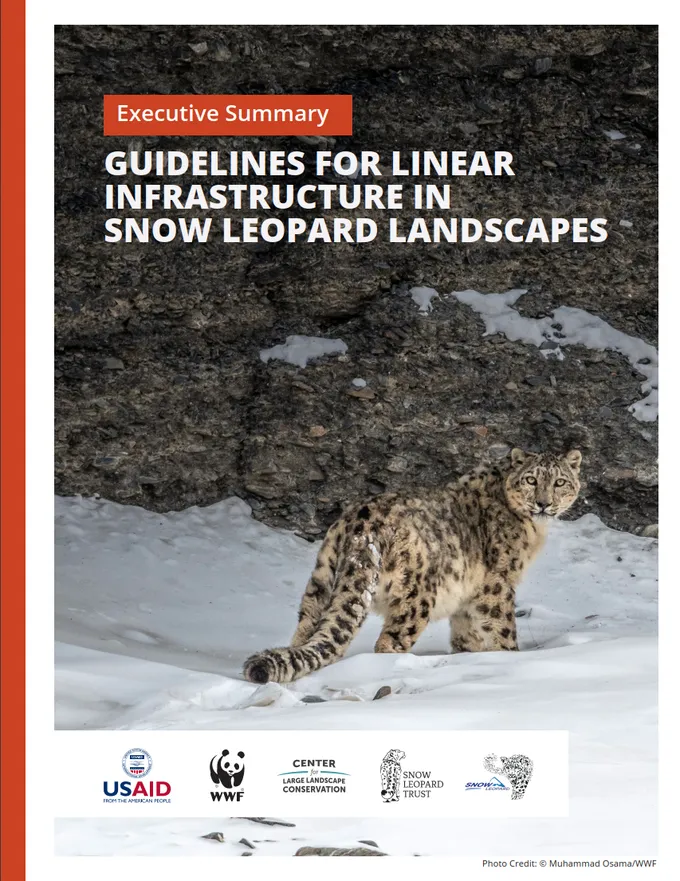
Linear infrastructure‚ – such as roads, railways, and power lines‚ – poses an array of threats to snow leopards, including habitat fragmentation, wildlife-vehicle collisions, the introduction of pathogens and pollutants, and more. Forthcoming guidelines will engage decision-makers and practitioners to not only protect snow leopards and their prey, but also preserve ecosystems that provide invaluable benefits for people, nature, and our climate.
-
This list has been compiled by the Infrastructure and Nature Coalition for COP16 participants seeking knowledge on how to support nature-positive infrastructure.
Thank you to the organizers of these side events for raising the profile of infrastructure as an impactful driver of biodiversity loss and degradation
-
Nature‚'s Technicians illustrates the vital roles that healthy wildlife populations play in a range of services crucial for our own existence‚ – from seed dispersal, pollination, and pest control to soil maintenance, nutrient cycling, and flood mitigation‚ – showing how they are the essential building blocks of functional ecosystems that are integral to the well-being of human societies.