Publications
-
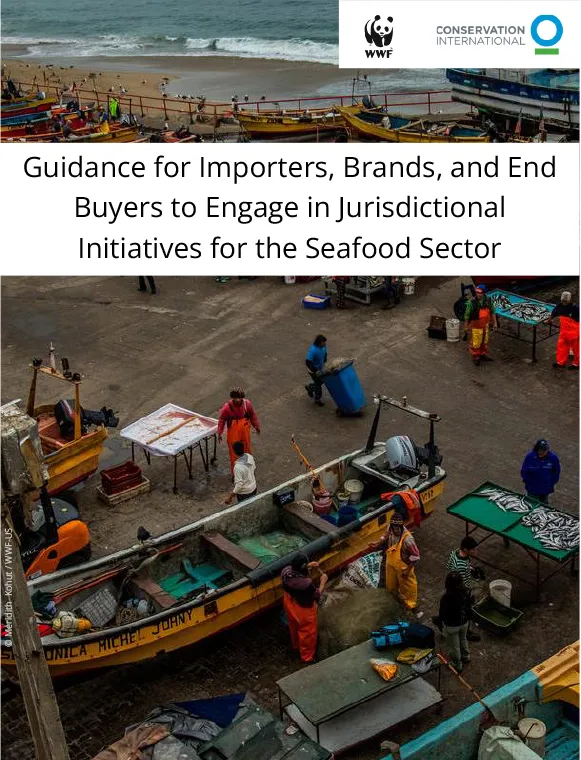
This guide aims to provide seafood importers, brands, and end buyers clarity on the rationale and importance, the process and key elements, and the engagement of key stakeholders for the establishment of a robust seafood jurisdictional initiative.
-
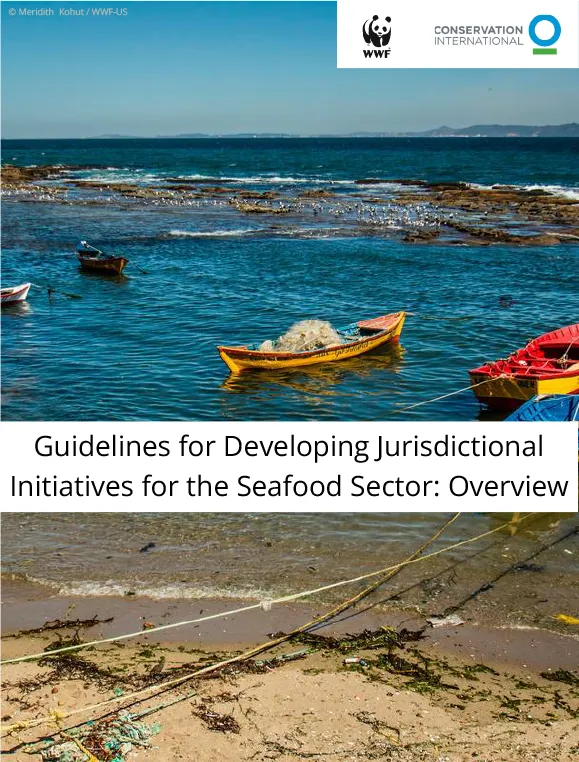
These Guidelines for Jurisdictional Initiatives offer new approaches that aim to address systemic barriers at scale while engaging seafood sector stakeholders broadly in improvement efforts.
-
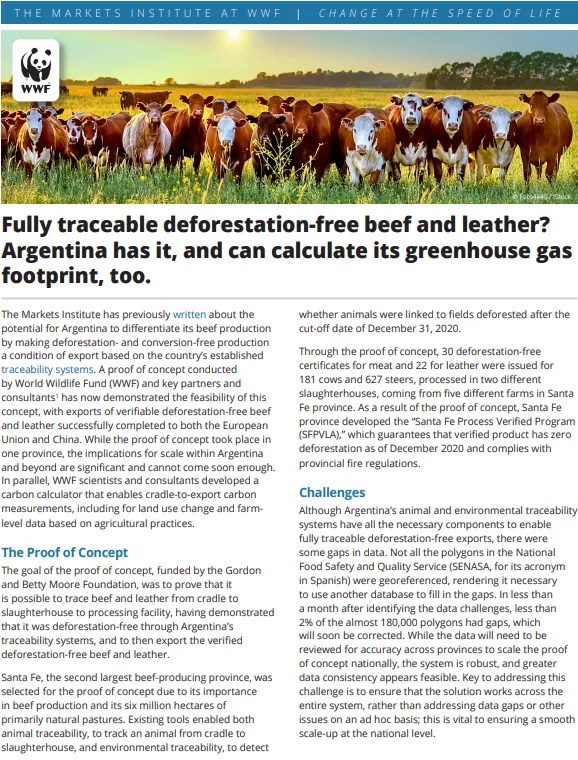
The Markets Institute has previously written about the potential for Argentina to differentiate its beef production by making deforestation- and conversion-free production a condition of export based on the country‚'s established traceability systems. A proof of concept conducted by World Wildlife Fund (WWF) and key partners and consultants has now demonstrated the feasibility of this concept, with exports of verifiable deforestation-free beef and leather successfully completed to both the European Union and China.
While the proof of concept took place in one province, the implications for scale within Argentina and beyond are significant and cannot come soon enough. In parallel, WWF scientists and consultants developed a carbon calculator that enables cradle-to-export carbon measurements, including for land use change and farm level data based on agricultural practices.
-
Carbon sequestration, when greenhouse gases are kept out of the atmosphere for significant periods of time, is needed to address climate change. In addition to producing a useful food and feed product and improving ocean health, farmed seaweed can contribute to sequestration efforts. Sequestration rates underneath farms vary by location, composition of sediment, and farm yield but are greater than in sediments without a seaweed farm.
-
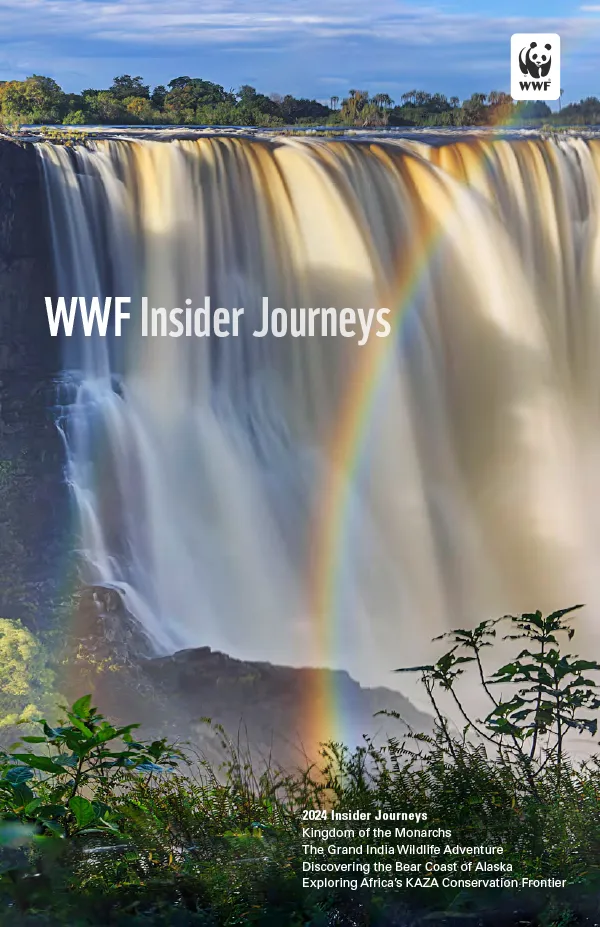
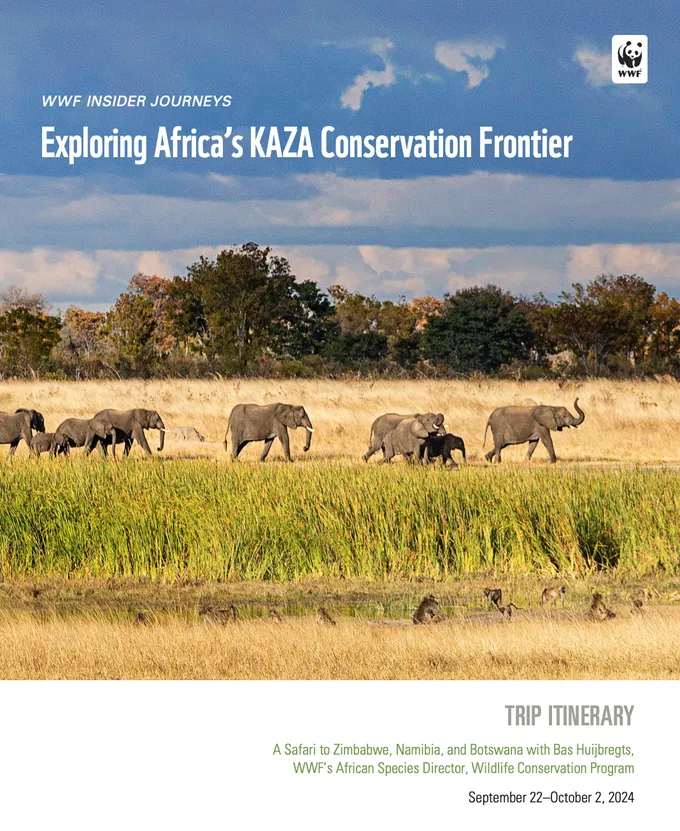
As a valued supporter, you are invited to join us on WWF Insider Journeys and witness the positive impact World Wildlife Fund is making with the help of your contributions.These wildlife- and nature-focused adventures are accompanied by WWF Experts and offer exclusive opportunities to see our work first- hand, including intimate encounters with the wildlife we pro- tect.You‚'ll meet individuals from local communities impacted by our conservation efforts as you‚'re immersed in the world of our staff and partners on the ground. Come explore the best of the natural world and the difference we‚'re making together.
-
This methodological guide, developed by WWF Peru with support from the USAID-funded Targeting Natural Resource Corruption project, serves to assess the corruption risks in the squid and mahi mahi fisheries value chains in Peru. While initially tailored to the specific context of Peru, this guide offers adaptability for broader application across sectors and contexts. It emphasizes and suggests adaptability, allowing users to modify the methodology to suit their specific needs and circumstances, including changing the order of methodological phases, adding more data collection steps, or applying alternative validation methods. This guide provides a simplified, yet comprehensive, overview of the corruption risk assessment process, though it cautions that practical implementation may demand careful planning due to its potentially labor-intensive nature. Ultimately, this guide serves as a valuable starting point for practitioners seeking to conduct similar assessments, drawing from WWF Peru's project experience and organized around four key methodological phases, with information on the sources used to design each part of the process.
---
This content is made possible by the generous support of the American people through the United States Agency for International Development (USAID). The contents are the responsibility of World Wildlife Fund (WWF) and do not necessarily reflect the views of USAID, the United States Government, or individual TNRC consortium members.
-
-
How food is produced and consumed impacts the future of humanity and the planet.
-
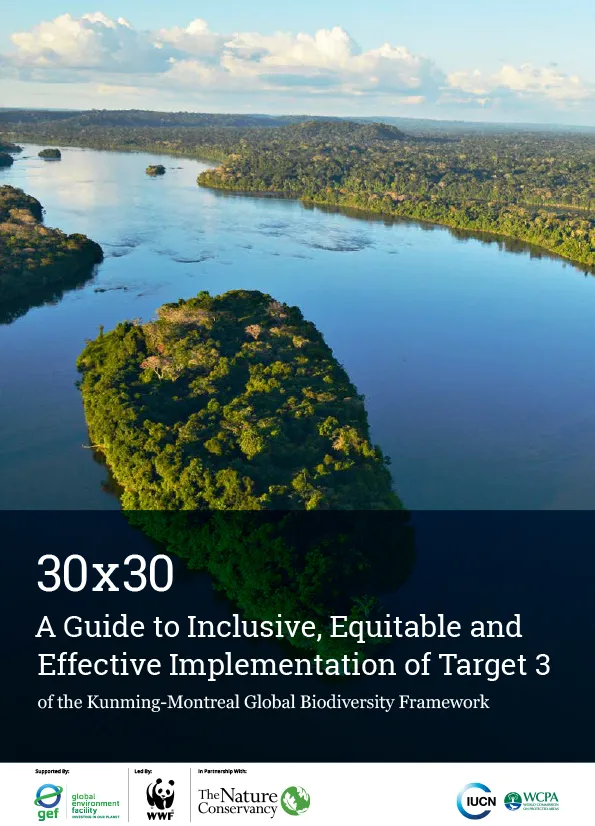
Known colloquially as the ‚Äò30x30 target‚', Target 3 of the Global Biodiversity Framework contains an ambitious commitment to conserve 30% of terrestrial, inland water, coastal and marine areas by 2030, "through ecologically representative, well-connected and equitably governed systems of protected areas and other effective area-based conservation measures, recognizing indigenous and traditional territories."
30x30: A Guide to Inclusive, Equitable and Effective Implementation of Target 3 of the Kunming-Montreal Global Biodiversity Framework is the first globally relevant guide on Target 3. Developed by WWF, IUCN World Commission on Protected Areas, and The Nature Conservancy, and supported by funding from the Global Environment Facility, this guide is intended to support governments and many other actors to contribute to this complex target in ways that are inclusive, equitable and effective.
The guide contains two main parts. Part 1 introduces Target 3 and provides practical advice about planning for and implementing Target 3. Part 2 engages with the details of each element of the target, digging deeper into the definitions and concepts. It also makes recommendations for how to integrate elements of Target 3 into National Biodiversity Strategy and Action Plans and about how to ensure Target 3 activities are also climate responsive.
-