Publications
-
-
-
-
-
-
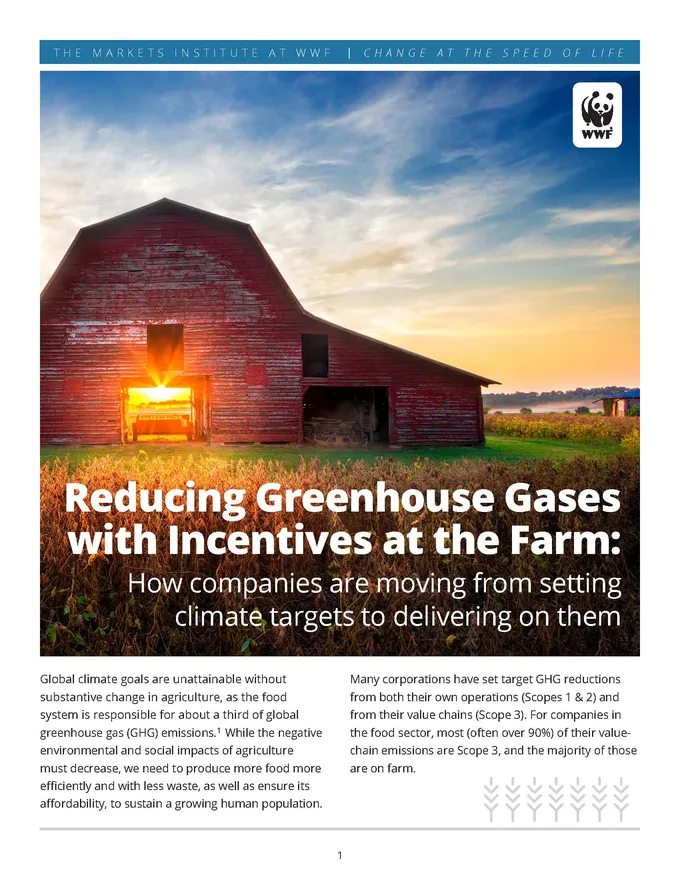
Over 70% of food-related GHG emissions are from agricultural practices. For companies that have set ambitious climate targets, there is a wide range of potential actions that can be taken to mitigate these emissions. However, these actions require financial capital, technical expertise, and culturally appropriate local adaptation. At the same time, farmers often operate with thin or negative profit margins, making their own investments into sustainability challenging. Appropriate programs and incentives designed to shift behavior on farms to mitigate GHG emissions will be critical.
After interviewing more than 90 experts from corporations, industry associations, and civil society groups, we developed a typology of incentives and examples of their use. This report provides a landscape analysis of on-farm incentive programs implemented by more than 20 companies across the industry.
-
FP207: Recharge Pakistan: Building Pakistan‚'s resilience to climate change through Ecosystem-based Adaptation (EbA) and Green Infrastructure for integrated flood risk management
-
This guide was developed for program managers and donors who seek to understand and assess the strength of internal control functions in government agencies responsible for enforcing laws against illegal wildlife trade (IWT). It provides detailed steps and guidance based on experience implementing assessments of internal controls, but a scan of the guide may also be helpful for conservation practitioners who want to understand more about how internal controls systems should work to reduce risks posed by corruption. Such an assessment can aid strategic efforts to enhance the integrity of government operations and to reduce the negative impact of corruption on the enforcement of IWT laws. Though this guide focuses on IWT, the same approach can be useful in other areas of natural resource management, such as forests and fisheries.
---
This content is made possible by the generous support of the American people through the United States Agency for International Development (USAID). The contents are the responsibility of World Wildlife Fund (WWF) and do not necessarily reflect the views of USAID, the United States Government, or individual TNRC consortium members.

-
The Plastic Policy Summit identified nine key interventions to reduce plastic pollution through immediate and long-term action items. Each section of the full report focuses on an intervention, providing an overview, the key components of the relevant breakout discussions, the action items that emerged, case studies, and additional resources.
-
One of the most important factors that prevents people from using evidence in organizational decision-making is that evidence is not perceived as relevant or important to their work (Fabian et al., 2019). It is important, therefore, that those who focus on generating and synthesizing evidence establish mechanisms that encourage direct engagement with target users of evidence. This briefing identifies factors that researchers should consider in developing narrative stories about research. At the end of the briefing are a variety of resources, tools, and techniques that can help in this process.