Publications
-
Today, we use the natural resources of 1.5 planets, depleting ecological goods and services faster than nature can replenish them. This is having a huge impact on nature and people, and threatening our very future. Better production will be vital if 9 billion people are to share this planet and its resources, equitably and sustainably, in the coming decades.
This report summarizes WWF's work on commodities with the biggest impact on areas of global conservation priority.
-
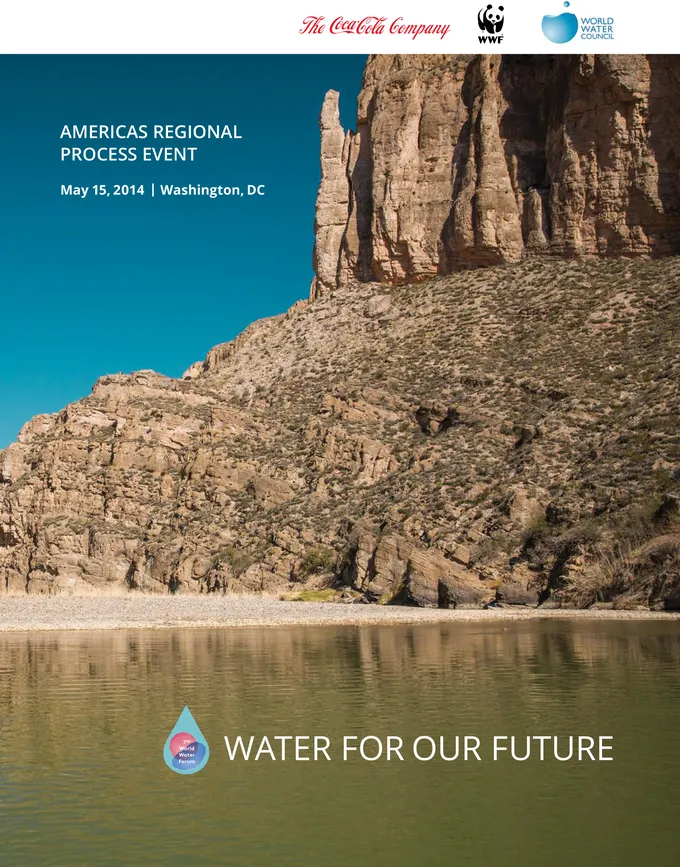
The World Water Council, World Wildlife Fund (WWF) and The Coca-Cola Company, with support from United Water and the US Army Corps of Engineers, invited diverse stakeholders working on water issues for panel discussions, conversations, and networking opportunities in Washington, DC, to discuss the future‚ – and how we can ensure water is part of it.
The daylong forum, Water for Our Future, focused on three of the 16 themes slated for discussion during the 7th World Water Forum: Green Growth, Water Stewardship and Industry; Water for Food; and Enough Safe Water for All. The global forum will be held in Korea on April 12–17, 2015.
As part of the regional planning process for the global forum, the conversations focused on North American perspectives and the efforts of US companies, NGOs, donors, government agencies, and US-based multilateral institutions. Nearly 150 professionals participated in person, while hundreds of others joined remotely. Together, we explored challenges and solutions and gathered input for the thematic agenda of the upcoming 7th World Water Forum.
-
WWF seeks to transform markets towards greater sustainability through partnerships with leading food and agriculture organizations and companies. By establishing ways to produce commodities at affordable costs with measurably reduced environmental impacts, and by creating significant demand for such products, entire commodity markets can improve their environmental outcomes on a large scale.
Dairy is one such commodity. Since 2009, WWF and the Innovation Center for US Dairy have been working to advance mutual conservation goals through a formal partnership to improve the environmental sustainability of the US dairy industry. Learn more about the partnership .
The Innovation Center for US Dairy is a sponsoring partner of the Sustainable Food for the 21st Century project and this white paper. WWF is solely responsible for the content of this paper. This paper presents the results from interviews with 52 thought leaders in the space of environmentally sustainable food production. The definitions and views regarding sustainable food production as shared by the interviewees include environmental, social and economic dimensions. WWF and the Innovation Center convened an advisory panel of food experts and thought leaders to identify solutions for sustainable food production systems for the 21st century, with a focus on US dairy. The summary of the advisory panel meeting is available here.
-
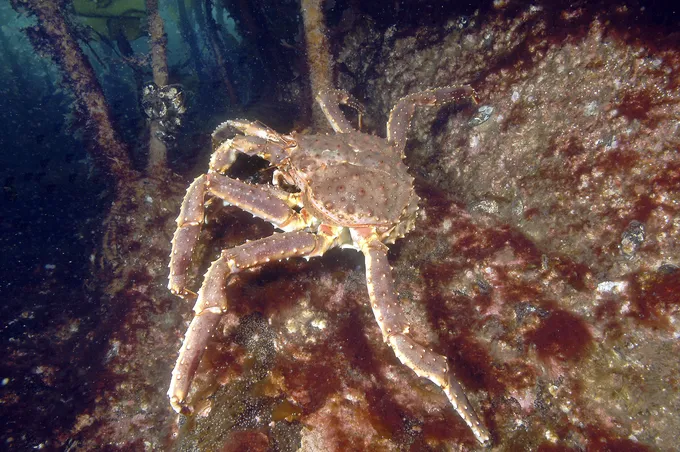
WWF investigated the trade flow of legal and illegal crab harvested in Russian waters throughout the North Pacific to better understand the impact on the global seafood market. Analysis used primary sources such as Russian crab stock assessments, publically accessible trade and customs data, satellite imagery of fishing boat movements, and interviews with experts to obtain a unique picture of the harvest of legal and illegal crab products.
-
Mountain gorillas live in a very restricted geographic range, and face pressure from surrounding human settlements who themselves are increasingly impacted by climate change. Explore this and other traits which make mountain gorillas vulnerable to climate change, as well as recommended climate-adaptive management strategies.
-
Snow leopards might be resilient to many of the direct impacts of climate change, but face increasing pressure as humans and livestock shift their activities to higher elevations. Explore this and other traits which make snow leopards vulnerable to climate change, as well as recommended climate-adaptive management strategies for snow leopard range areas. (3 page Brochure)
-
The Living Planet Report documents the state of the planet—including biodiversity, ecosystems, and demand on natural resources—and what this means for humans and wildlife. Published by WWF every two years, the report brings together a variety of research to provide a comprehensive view of the health of the earth.
Population sizes of vertebrate species—mammals, birds, reptiles, amphibians, and fish—have declined by 52 percent over the last 40 years. In other words, those populations around the globe have dropped by more than half in fewer than two human generations.
At the same time, our own demands on nature are unsustainable and increasing. We need 1.5 Earths to regenerate the natural resources we currently use; we cut trees faster than they mature, harvest more fish than oceans replenish, and emit more carbon into the atmosphere than forests and oceans can absorb.
Though the report confirms some disturbing trends, we can still change course.
WWF helps provide solutions for a living planet. We’re working with governments, businesses, and communities to reduce carbon emissions, prevent habitat loss, and advance policies to fight climate change. WWF focuses on protecting wildlife, conserving natural capital—from forests and oceans to freshwater and grasslands—and producing and consuming food more wisely. Together with our members and partners, we advocate for change and find solutions that will safeguard our planet and future.
-
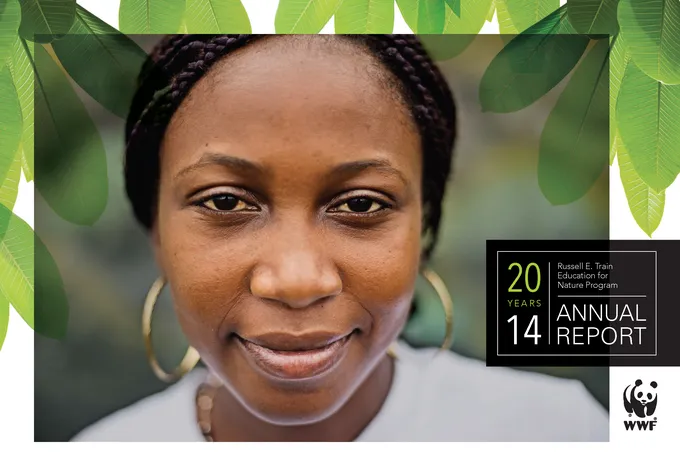
This year marks the 20th anniversary of the Russell E. Train Education for Nature Program (EFN). In this year’s annual report, we invite you to look back on the program’s outstanding accomplishments and to remember Russ Train, a conservation champion whose vision continues to inspire us all.
-
Despite all efforts made to date, the most recent acoustic data show the vaquita population to be declining at 18.5% per year. The best estimate of current abundance is 97 vaquitas of which fewer than 25 are likely to be reproductively mature females. The vaquita will be extinct, possibly by 2018, if fishery bycatch is not eliminated immediately. Therefore, CIRVA strongly recommends that the Government of Mexico enact emergency regulations establishing a gillnet exclusion zone covering the full range of the vaquita—not simply the existing Refuge—starting in September 2014.
-
Monthly monitoring of Bangkok‚'s domestic ivory market by TRAFFIC reveals a near trebling of the number of elephant ivory items for sale in the past 18 months and a steep rise in the number of outlets selling ivory in Thailand's capital city.
The number of worked elephant ivory products found for sale rose from 5,865 in January 2013 to 14,512 by May this year, while between January and December 2013, the number of elephant ivory retail outlets rose from 61 to 105.
The report provides evidence that the quantity of elephant ivory found exceeds the limited supply available under current Thai legislation that allows sale of ivory from domesticated animals, meaning the vast majority of elephant ivory being sold is illegal under international commitments.