Modernizing EXIM Bank for a High-Growth, High-Tech 21st Century
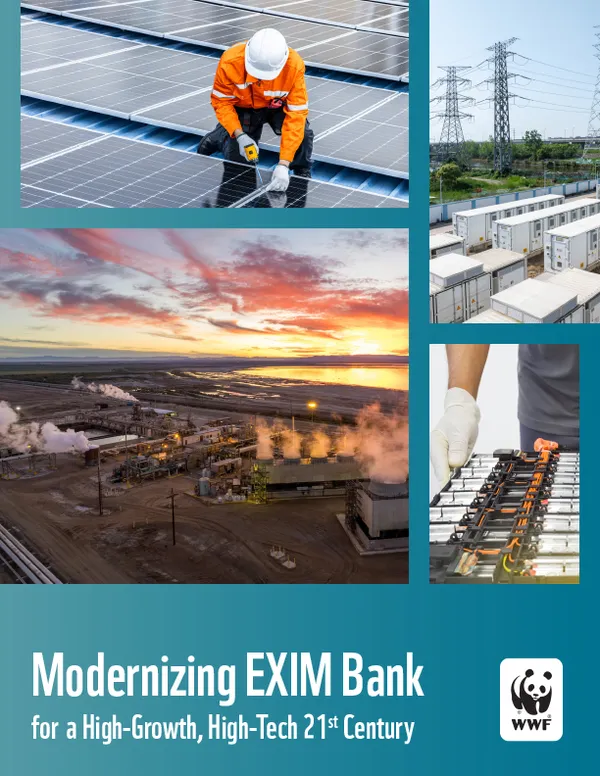
The United States Export-Import Bank (EXIM) has needed to adapt to change in global economic and political power dynamics across the decades to keep the US economy competitive and thriving. The global energy transition’s confluence with rapidly evolving high tech sectors introduce an emerging global economic dynamic that places EXIM at another inflection point. This inflection point intersects with the US Congress needing to reauthorize EXIM through new legislation by the end of 2026, creating a key moment of obligation and an opportunity to address EXIM’s current challenges.
According to the latest global energy production and consumption data released in late 2025: since the start of the year, global energy demand has increased by 2.6%, or 369 terrawatt hours, with that rise in demand met thus far exclusively by the deployment of new renewable energy generation. The International Energy Agency (IEA) predicts that tens of millions of jobs will shift globally and be transferred from legacy energy industries to newer, more efficient, and cleaner sectors. For example, roughly 20% to 40% of upstream oil and gas roles globally - or two million to four million jobs -- could be repurposed for geothermal development under a high-growth scenario, especially if next-generation geothermal technologies scale rapidly. Meanwhile, China maintains an early lead in supporting jobs in these sectors, by making close to half of the total global investments in these sectors and surpassing the US, UK, and EU’s investments combined.
Modernizing EXIM is crucial to ensuring that US emerging advanced energy and clean tech industrial sectors are competitive in the global economy, particularly in emerging and high demand sectors like energy storage, support services, and energy transmission, and will dictate whether the millions of jobs available in these sectors employ US workers or workers abroad.
This report examines prospective export markets for emerging advanced energy industries, explains some of the business challenges and finance needs of emerging tech industries, argues that global demand for advanced energy is strong and growing, and competition to meet these demands is fierce. Lastly, the report describes some of the policies and export credit finance products that EXIM’s foreign competitors use to bolster their countries’ emerging tech sectors, while offering recommendations for what EXIM can do to surpass US rivals.
This report was authored by Joshua Klein, with contributions from Benjamin Hunt (WWF-US).