Neonicotinoid Seed Treatments in North American Row Crops: A Literature Review of Yield and Profitability Outcomes
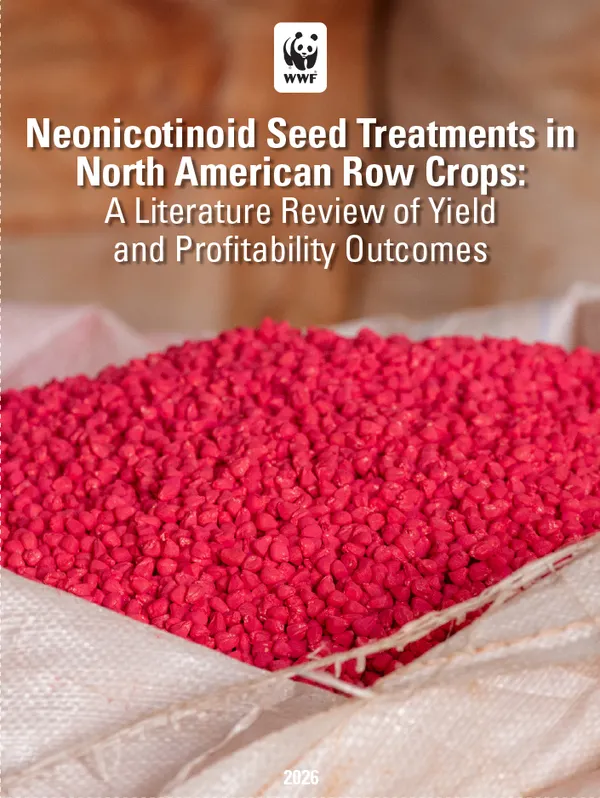
In the United States, almost 100% of conventional corn, 60% of soy, and 50% of wheat seed have a seed coating that includes neonicotinoid pesticides. These systemic insecticides were first introduced in the 1990s as a less harmful alternative to more traditional pesticides, but the beneficial impacts of these seed treatments on farmers’ yields have been shown to vary by geography, crop, and weather. In fact, since their release, many studies have shown that while neonicotinoids allow farmers to take a more preventative approach to pest-management through seed-coatings, their persistence in the soil and their highly water-soluble nature has, by many accounts, caused significant environmental harm and sometimes decreased crop yields. To explore these claims of benefits versus unintended environmental and economic consequences, this literature review has included North American studies that looked at whether neonicotinoid seed treatments (NSTs) impact yield and profitability for farmers with a focus on corn, soy, and wheat crops. To do this, we collected North American studies that compared the yield and/or economic return on investment between crops grown from seeds coated with neonicotinoid insecticides and crops grown from seeds without these products. The authors of this review hope that by doing so, we can guide a more thoughtful, assess-and-decide approach to use that will reduce the widespread impacts on pollinators, songbirds, humans, and more.
-
Neonicotinoid Seed Treatments in North American Row Crops: A Literature Review of Yield and Profitability Outcomes
2.3 MB PDF Download