6 freshwater fish migrations at risk—and why they matter
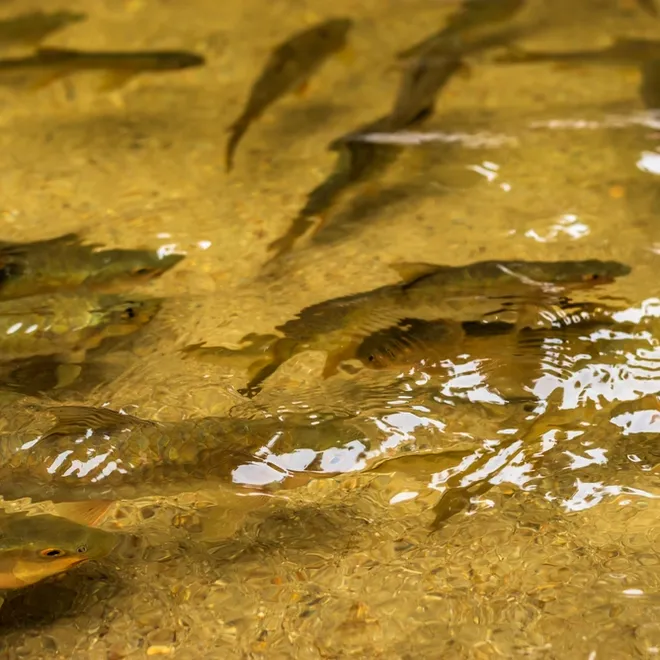
When people think about wildlife migration, they often picture wildebeest thundering across the Serengeti or birds flocking in the thousands across the sky. But many of the world's great wildlife migrations take place underwater in our planet’s rivers and waterways.
© Panya Pravarana
Key takeaways
- Hidden but vital migrations: Freshwater fish undertake long, complex migrations that sustain river ecosystems, biodiversity, and human livelihoods—but are often overlooked for conservation protections compared to land and bird migrations.
- Connectivity is critical—and under threat: Dams, altered river flows, pollution, and overfishing are fragmenting rivers, blocking migration routes, and driving steep declines in many species.
- A major conservation gap remains: Migratory freshwater fish are underrepresented in global protections, highlighting the urgent need to restore river connectivity and prioritize these species in conservation efforts.
© Andre Dib
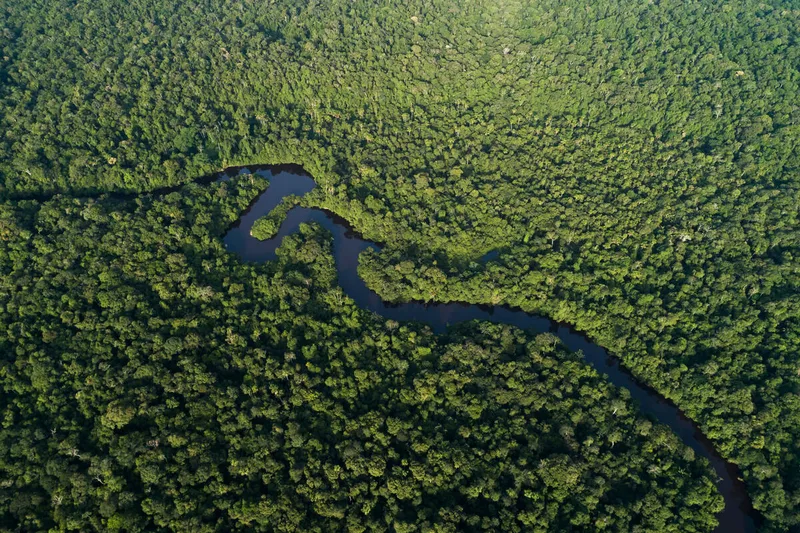
Freshwater fish rely on uninterrupted river corridors—sometimes stretching thousands of miles—to complete their life cycles. When dams, poorly planned infrastructure, and altered river flows impede fish travel and break rivers into fragments, migratory fish populations quickly collapse.
Many migratory fish populations are in steep decline yet remain underrepresented in international conservation frameworks. However, there is momentum to change this. At the most recent Convention on the Conservation of Migratory Species (CMS), a global treaty that coordinates conservation efforts for migratory species across borders, a Global Assessment of Migratory Freshwater Fishes published by WWF and partners was launched, which identifies transboundary freshwater fish that are priorities for conservation focus. While the convention has historically focused on terrestrial mammals and birds, there is now interest and action being taken to give freshwater fish species the attention they deserve.
This lack of representation highlights a broader challenge: migratory fish are often overlooked compared to more visible wildlife, even as their migrations sustain entire ecosystems and human livelihoods.
Here are six examples of fish featured in the global assessment, revealing just a few of the extraordinary journeys happening beneath the water’s surface, and why they deserve far greater attention and protection.
1. American eel

© RLS Photo/Shutterstock
The American eel (Anguilla rostrata) has a remarkable migration life cycle that spans thousands of miles across the Atlantic Ocean. It begins life in the Sargasso Sea, where eggs hatch into leaf-shaped larvae that drift with ocean currents toward North America. As they reach coastal waters, they transform into transparent “glass eels” and then into darker “elvers” that migrate upstream into rivers, lakes, and wetlands, where they can live and grow for many years. Eventually, as mature “silver eels,” they undertake a long journey back to the Sargasso Sea to spawn and die, completing one of the most extraordinary migrations of any North American fish.
American eel facts
Scientific name: Anguilla rostrata
Home range: Atlantic coastal rivers from Canada to the Caribbean; spawns in the Sargasso Sea
Size: up to ~5 ft.
Weight: up to ~15 lbs.
Migration fun fact: While it is known that they travel up to 3,000 miles between rivers and the Sargasso Sea at the end of their life to spawn, much is a mystery about how they or their offspring navigate back to their home rivers on the Atlantic Coast.
2. Golden mahseer

© Pavaphon Supanantananont/Shutterstock
The golden mahseer migrates seasonally upstream through Himalayan rivers to reach cool, gravel‑bottomed tributaries where it lays eggs. After spawning, adults often move back downstream to deeper pools and main river channels where they feed and grow. For generations, Mahseer have held deep cultural significance across South Asia, considered a symbol of good luck in several countries. However, as dams, overfishing, and water withdrawals disrupt their routes, one of the region’s most iconic migrations is becoming increasingly rare, and the species is now considered Endangered.
Golden mahseer facts
Scientific name: Tor putitora
Home range: Eastern Himalayan rivers (India, Nepal, Bhutan, Pakistan)
Size: up to ~9 ft.
Weight: up to ~120 lbs.
Migration fun fact: Known as the “tiger of the river,” these highly powerful fish can move up to 43 miles in a single 24-hour period upstream through rapids in cold mountain tributaries towards their spawning grounds. Their migration drives sport fishing tourism and supports local subsistence fisheries.
3. Beluga sturgeon

© Wild Wonders of Europe / Lundgren / naturepl.com / WWF
The beluga sturgeon migrates along the Danube River, which runs for 1,770 miles from Germany through Central and Eastern Europe to the Black Sea. Adults spawn upstream, releasing eggs that drift downstream as larvae, before juveniles move into the sea to grow. After 15-20 years, they return to their natal rivers for the first time to reproduce, and unlike other migratory fish, they fulfill these migration runs many times in their long lives. These migrations once supported highly valuable fisheries for beluga caviar, but dams have blocked access to spawning grounds, disrupting this cycle, in combination with severe overfishing, reducing wild caviar supply, and driving the species toward critical levels of endangerment. Today, legal beluga caviar can only be bought from aquaculture.
Beluga sturgeon facts
Scientific name: Huso huso
Home range: Caspian Sea, Black Sea, and Danube River Basin (Europe and western Asia)
Size: up to ~20 ft.
Weight: over 3,000 lbs.
Economic role: Source of beluga caviar, one of the most valuable foods in the world, worth hundreds of dollars per ounce
Migration fun fact: These fish can live 100+ years and historically traveled hundreds of miles upstream in the Danube to spawn. Today, only 529 miles of free-flowing river are accessible for their journeys, with the rest of the Danube River blocked by dams.
4. Giant piraiba catfish

© Zeb Hogan
One of the largest freshwater catfish in the world, the giant piraiba can grow over 11 feet and weigh over 400 pounds! The piraiba migrates enormous distances among feeding, spawning, and nursery areas. It relies on continuous mainstem river corridors and healthy floodplains. The piraiba is one of the Amazon’s largest predators and a cornerstone species for big‑river food webs. However, pollution from mining has caused toxins to build up in them, making them toxic and unsafe for people to eat. This catfish is also especially vulnerable to overfishing, dredging, and hydropower development, all of which disrupt migration pathways.
Giant piraiba catfish facts
Scientific name: Brachyplatystoma filamentosum
Home range: Amazon Basin
Size: maximum length recorded over 11 ft.
Weight: maximum weight recorded over 400 lbs.
Migration fun fact: Traveling thousands of miles, this top predator helps regulate fish populations across the Amazon River and is highly valued in commercial and subsistence fisheries across multiple countries.
5. Taimen

© Zeb Hogan
The taimen is the world’s largest salmon. Known as the “river wolf,” it sometimes hunts prey in groups. It lives its entire life in the cold, free‑flowing rivers of Mongolia, Russia, and parts of China, migrating between feeding and resting areas and upstream spawning grounds. Growing up to 6.5 feet and weighing over 220 pounds, it is a top predator and central to catch‑and‑release ecotourism. Its presence supports both ecosystems and local economies. In Mongolia, it is of cultural significance, but dams, mining, overfishing, and warming waters are disrupting its migrations, making this iconic species increasingly rare.
Taimen facts
Scientific name: Hucho taimen
Home range: Rivers of Russia, Mongolia, China, and Kazakhstan
Size: up to ~6.5 ft.
Weight: over 220 lbs.
Environmental role: Apex predator signaling healthy, connected river ecosystems
Economic role: Drives high-value catch‑and‑release sport fishing tourism
Migration fun fact: The Taimen moves tens to hundreds of miles upstream to its spawning habitat.
6. Goonch catfish

© Zeb Hogan
The goonch catfish moves through the fast‑flowing rivers of the Himalayas. It can grow over 6 feet long and travels between deep rocky pools and upstream reaches in search of food and spawning habitat. These movements help maintain river balance by regulating prey species, while also supporting local subsistence fisheries that many river communities rely on for food and income. In some places, the fish holds cultural significance as a powerful and elusive river species tied to local stories and fishing traditions. The species is also known as the giant devil catfish, as it is a voracious predator with its cavernous mouth and rows of razor-sharp teeth. Dams, gravel mining, pollution, and overharvesting are increasingly disrupting its habitat and migration routes. As flows are altered and rivers become fragmented, the goonch, despite its size, is becoming harder to find, and the species is considered Vulnerable.
Goonch catfish facts
Scientific name: Bagarius yarrelli
Home range: Himalayan and South Asian rivers (Ganges, Brahmaputra, tributaries)
Size: up to ~6.5 ft.
Weight: up to ~220 lbs.
Economic role: Supports local fishing communities as a high-value catch
Migration fun fact: The goonch catfish navigates powerful rapids and deep river channels over long distances to feed and spawn.
What comes next for migratory freshwater fish?
These six fish, and their hundreds of migratory cousins, reveal that rivers are migration highways, not static waterways. When dams, levees, and poorly planned development sever those highways, or when overfishing or other threats occur along their routes, migratory fish populations collapse—often taking fisheries, food security, and cultural traditions with them.
The Global Assessment of Migratory Freshwater Fishes emphasizes that protecting river connectivity means:
- Keeping free‑flowing river corridors intact
- Restoring environmental flows that trigger migration
- Reconnecting floodplains and spawning habitats
- Controlling overfishing
- Coordinating action across national borders
WWF works globally to turn these recommendations into action—supporting free‑flowing river protections, advocating for fish-friendly infrastructure, restoring floodplain connectivity, and working with communities, governments, and river basin organizations to manage populations and rivers at the scale fish actually migrate.
Protecting river connectivity is about sustaining the systems and wildlife that rivers support from headwaters to floodplains. Through work to protect free‑flowing rivers and restore connectivity, WWF is helping ensure freshwater migrations remain possible, and the fish are not forgotten.
© WWF-US / WWFGifts
Freshwater-themed Gifts
Support WWF's global conservation efforts and choose from symbolic adoptions, apparel, and more!