How loud is a lion’s roar? And 4 other lion facts
A lion's roar can be heard for miles

© Greg Armfield / WWF-UK
Key takeaways
- Lion communication — A lion’s roar is incredibly loud and can travel for miles, helping the big cats communicate and defend territory.
- Lion social structure — Lions are the most sociable big cats, living in prides where females stay for life and males disperse once mature.
- Lion ecological role — Female lions do most of the hunting, keeping herbivore populations in balance and preventing habitat degradation.

© WWF-US/Danielle Brigida
Lions are mighty cats, often seen as symbols of strength and power. They also play an important role in maintaining healthy ecosystems and sustaining biodiversity. WWF works with local partners and communities to protect lions by monitoring populations and reducing human-wildlife conflict.
Here are five facts you might not know about lions:
1. How loud is a lion's roar?

© Lee Ibrahim
Both female and male lions roar to communicate. Lionesses will roar to maintain contact, coordinate with pride members, and help defend their range, while male lions often use roars to advertise and defend territory.
2. Are lions sociable?
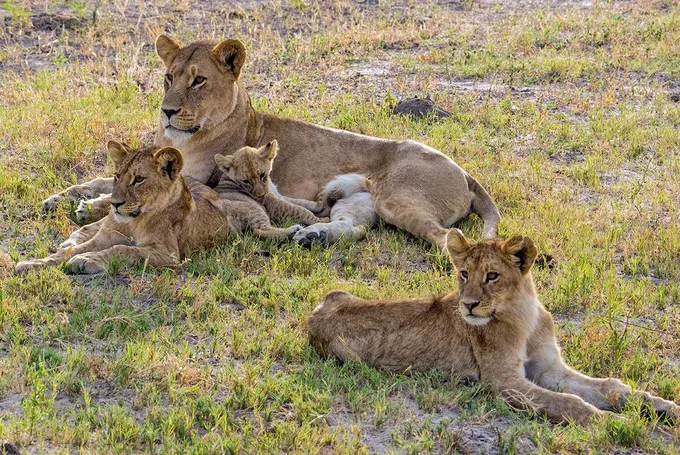
© Joel Schilling
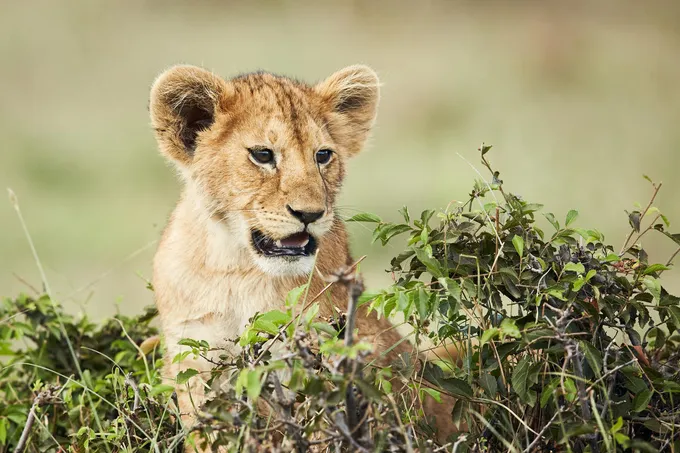
© Juozas Cernius / WWF-UK
Lions are the most sociable big cat species. They live in groups called prides, which can range in size from two to 30 members. They usually include three or four males, a dozen or more females, and their cubs.
Female lions stay with the same pride for their whole lives. Male lions, on the other hand, leave after maturing. They’re off to compete for control of another pride.
3. Do female lions hunt?

© Rex Lu / WWF
Female lions do most of the hunting. Lions prefer to hunt at night or early in the morning, and work in teams, preying on zebras, wildebeests, antelope, and other large herbivores. They usually hunt in the dark because it is easier to sneak up on prey. Lions’ eyes easily adapt to lower light, so prowling in the shadows is not an issue!
These big cats play a pivotal role in sustaining healthy ecosystems by ensuring that prey populations remain at a balanced size. Without top carnivores like lions, herbivore populations would increase unchecked. This would lead to overgrazing and, in turn, degrade habitats. Protecting lions protects the broader landscape, which also benefits people who rely on local natural resources.
4. How long do lions sleep?

© WWF-US / Jeff Muller
Lions sleep up to 20 hours a day. It’s a tiring life out there! Lions sleep for the vast majority of the day.
5. Where do lions live?

© NACSO/WWF in Namibia
Lions used to roam throughout Africa, Asia, and Europe. Sadly, they’re now found only in fragments of sub-Saharan Africa, along with a critically endangered subpopulation in West Africa and a very small population of Asiatic lions in India’s Gir National Park. That’s a mere 8% of their vast former range.
Lions’ ranges have shrunk dramatically due to human land use and climate change. By working with local communities to reduce human-wildlife conflict and conserve lion habitats, we can reduce the threats facing lions and help them thrive.
Learn more about lions
You can help lions

© WWF-US / WWFGifts
Adopt a lion
Support WWF’s global efforts to protect wild animals and their habitats and choose from kits with plush and more.