Meet the residents who call the Thirty Hills forest home
By
-
Alexander Nicolas

© PT. Alam Bukit Tigapuluh
Sumatra’s Thirty Hills is one of the most biodiverse regions on Earth, home to critically endangered tigers, elephants, orangutans, and many other iconic species. In 2015, WWF-Indonesia and partners created PT Alam Bukit Tigapuluh (ABT)—which translates to ‘The Thirty Hills Forest Company’—to manage and restore 100,000 acres of intact lowland forest in this landscape.
This forest is adjacent to Bukit Tigapuluh National Park and is considered a critical part of the larger landscape needed to support tigers and other wildlife over the long term.
Recently, the company completed its first-ever biodiversity monitoring survey for tigers and other key wildlife species in one part of the forest. Monitoring and protecting critically endangered species like the Sumatran tiger is an essential part of ecosystem restoration. Using camera traps and software and analysis tools, the team gathered its data over the past year with the goal of estimating tiger density in the area and assessing the abundance of prey species that tigers depend on.
“The discovery of three adult female and two male tigers along with prey and many other endangered and threatened species shows that the surveyed area is an important habitat for the survival of Sumatran tigers and other wildlife,” said Dody Rukman, CEO of the ABT company.
Over the course of the survey, the team implemented many activities, from training field staff in data collection and setting up camera traps to analyzing and reporting data and raising awareness of tigers and conservation measures among local communities.
In addition to tigers, the survey team found Sumatran elephants, Sunda pangolins, Malayan tapir, and Sunda clouded leopards, among many others. In total, 14 protected species were captured, including several species of prey that tigers depend on, like deer and pigs.

© PT. Alam Bukit Tigapuluh

© PT. Alam Bukit Tigapuluh
Species caught on camera

© PT. Alam Bukit Tigapuluh
The survey identified five tigers. These results highlight the possibility that more tigers could live in the area. "Finally, we got a picture of datuk (local people call tigers “datuk”, which means grandfather)," Fendy said. He documented tigers in camera stations that his team was responsible for, and also discovered tiger bites on camera traps.
Surveys like this bring us closer to wildlife, providing a window into the oftentimes secret lives they lead and revealing the wonder of nature all around us. Thirty Hills is a model for how people, such as the Indigenous Talang Mamak and Orang Rimba, can live in harmony with nature on wildlife-rich land for generations. A better understanding of the ecological information of critical species is fundamental to wildlife protection and to conserving the forest-dwelling livelihoods of the communities in the area. The Talang Mamak community helped with the camera trap surveys. They know the landscape better than anyone and provided significant aid to the team throughout the survey.
“We were very encouraged to see that human activity in the forest was recorded on our camera traps at a low intensity,” said Dody Rukman, CEO of the ABT company. “Often, camera traps set up in the forest capture not only wildlife images, but poachers and illegal loggers as well. We think the fact that there was little of this is evidence that ABT’s approach of collaborating with our neighboring communities to protect the forest is working.”
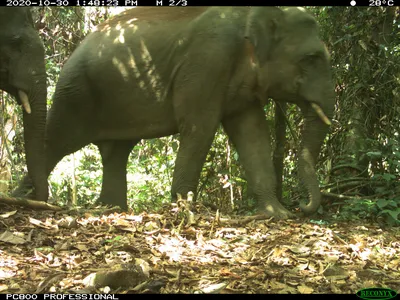
Sumatran elephant
© PT. Alam Bukit Tigapuluh
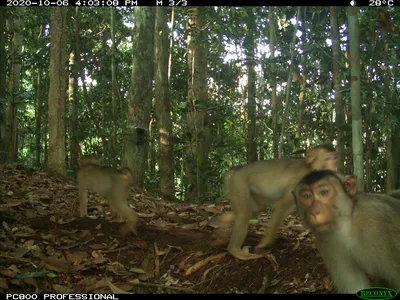
Pig-tailed macaques
© PT. Alam Bukit Tigapuluh
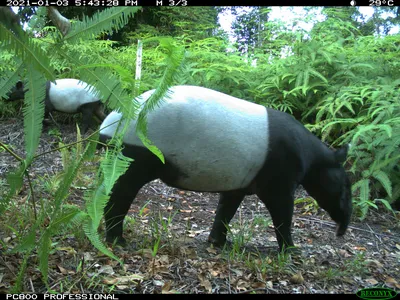
Malayan tapir
© PT. Alam Bukit Tigapuluh
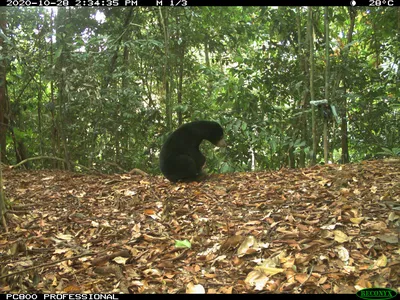
Malayan sun bear
© PT. Alam Bukit Tigapuluh
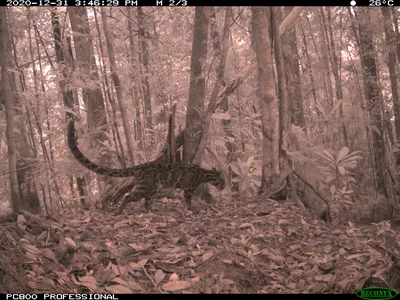
Sunda clouded leopard
© PT. Alam Bukit Tigapuluh
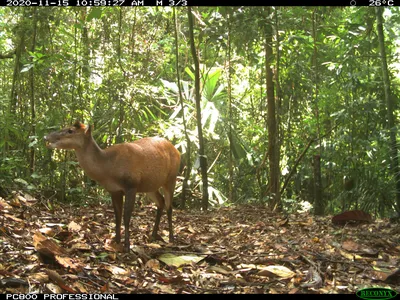
Barking deer
© PT. Alam Bukit Tigapuluh
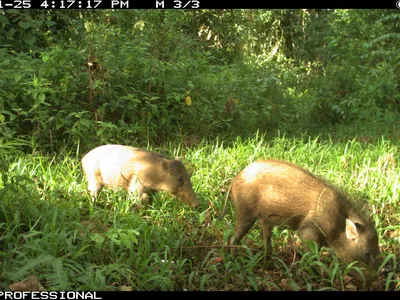
Sumatran wild pigs
© PT. Alam Bukit Tigapuluh
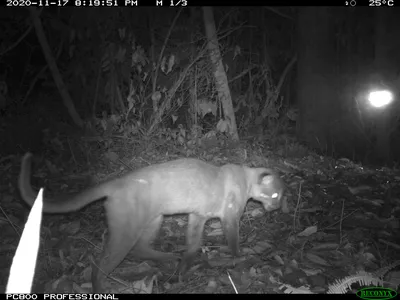
Sumatran golden cat
© PT. Alam Bukit Tigapuluh
The results of this particular survey will further support the management and conservation of wildlife in the landscape. The neighboring Bukit Tigapuluh National Park plans to complete its own tiger survey, too. Approximately 600 Sumatran tigers are believed to survive in the wild.
Further wildlife monitoring efforts are needed for more effective management, along with determining any emerging threats to wildlife and habitat. And we must engage local communities and key partners in the process.
The forest is and remains home to more than just the wildlife – it is home to the communities and field team as well.
"Humans are the center of protection in Thirty Hills," said Beno Fahriza, another field team lead. "Thirty Hills cannot be separated from its local people."

© PT. Alam Bukit Tigapuluh