Meet the cassowary, a bird with claws rivaling Freddy Krueger’s
They’re most active at twilight, have a claw that rivals Freddy Krueger’s, and are one of the few bird species that have killed humans—but don’t write off this flightless cousin of the emu as a thing of nightmares. Unprovoked, cassowaries are fairly shy and peaceful, and they play an important role in their tropical forest ecosystem.
First impressions
RANGE Endemic to northeastern Australia, New Guinea, and nearby islands
SIZE An average of 4–5.6 ft. tall
WEIGHT Females can weigh up to 167 lb., making the southern cassowary the world’s second-heaviest bird, after the ostrich
STATUS Of Least Concern on the IUCN Red List, but populations are declining in some places
THREATS Habitat loss, car collisions, and hunting
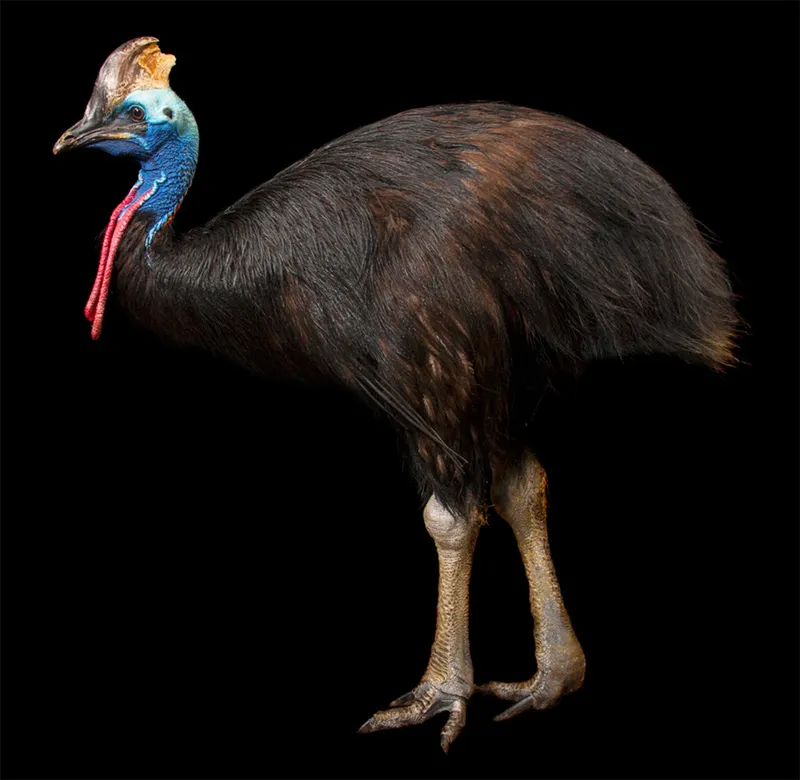
© JOEL SARTORE/NATIONAL GEOGRAPHIC PHOTO ARK
Southern Cassowary
Casuarius casuarius
CASQUE
Researchers aren’t sure why cassowaries grow these keratin-coated helmets, but they could be a sign of age or dominance
WATTLE
Dangling skin pouches may provide social cues or signal the bird’s mood
LEGS
Incredibly powerful legs allow the cassowary to jump more than five feet high, deliver strong kicks, and run up to 30 miles per hour
FEET
Each inner toe has a four- to five- inch claw, which the bird uses to defend itself and to dig for fallen fruit

Feathered fertilizer
Feeding primarily on fruit, cassowaries help to disperse the seeds of many rain forest plants, including some with seeds so large—avocado pit-sized—that only cassowaries can swallow them. Additionally, passing through the cassowary’s digestive tract can increase a seed’s likelihood of sprouting.

Please don't feed
Cassowaries have been called “the world’s most dangerous bird,” but the last recorded cassowary-related death in Australia occurred almost 100 years ago. Non-fatal attacks, while more common, are still infrequent and may happen when people try to feed the birds.

Paternal instincts
Unlike many species, male cassowaries are the primary caregivers for their offspring, sitting on eggs for about 50 days and tending to chicks for around nine months after they’ve hatched.
© CASSIANO ZAPAROLI (ZAPA)/NAT HAB
Explore more
Keep reading this issue of World Wildlife magazine