The survey
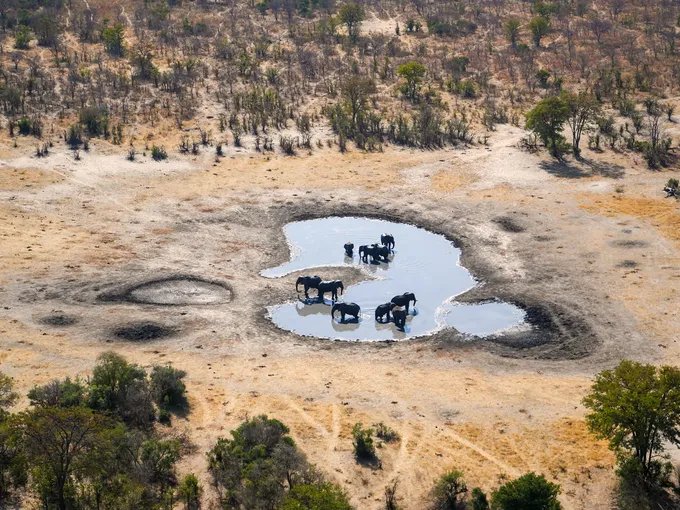
The 2022 KAZA Elephant Survey was designed to help estimate elephant numbers, but it also provided crucial information about where the mammals live, their migration patterns, and how populations are changing—all information that can be used to better protect them.

© KAZA SECRETARIAT
Survey design
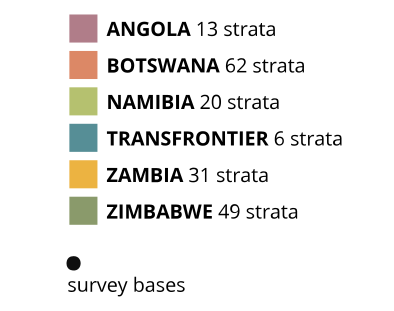
The KAZA landscape was subdivided into 179 sections called strata. Within each, observers conducted sample counts, a survey method that involves only counting elephants in parts of the survey area (called sample units) and then using those numbers to estimate the overall population size through statistical analyses.
-
310,865 square kilometers
surveyed across 5 countries

© WWF
Survey timeline
JUL ’21–AUG ’22 : Survey preparation
AUG–OCT ’22 : Survey execution
To maximize visibility of wildlife from the air, observers conducted the survey during the dry season months of August, September, and October, when most trees and shrubs in the landscape are leafless.
NOV ’22–JUL ’23 : Data analysis and review
Survey methods
Transect
The KAZA survey mainly used transect sample counts, in which pilots fly back and forth along parallel transect lines spaced between 2 and 5 kilometers apart within each stratum. Observers count elephants within a 150-meter-wide “search strip” of land on either side of the plane.

© WWF
Block
Block sample counts are used in mountainous areas, such as the Zambezi Escarpment, where difficult terrain and winds make low flying too dangerous. Observers count every elephant they can see in predefined areas, or “blocks,” which are selected randomly within a stratum.

© WWF
Survey results
The survey’s findings suggest that the overall elephant population in KAZA is generally stable. While the number of elephants in Zambia has decreased compared to previous surveys, populations in Angola, Botswana, Namibia, and Zimbabwe have all increased.
-
227,900 elephants
Estimated elephant population
in the KAZA landscape

© WWF
Measuring mortality
Observors assessed elephant mortality by counting carcasses, which accounted for around 10.5% of the total number of elephants counted. Angola, Botswana, and Zimbabwe’s Sebungwe region had the highest ratios of elephant carcasses, likely due to factors including poaching, habitat loss, human-elephant conflict, and disease and other natural causes.

© GARETH BENTLEY/WWF-US
The team also estimated other wildlife and large herbivore populations.
HIPPOPOTAMUS: 17,006
ROAN: 7,428
HARTEBEEST: 10,905
ZEBRA: 88,250
WILDEBEEST: 22,245
IMPALA: 100,028
BUFFALO: 78,264
SABLE: 39,966
GIRAFFE: 12,771

© Kumar Suman
© MIKE SPRENG
Explore more
Keep reading this issue of World Wildlife magazine