Meet the Peter Pan of salamanders, the axolotl
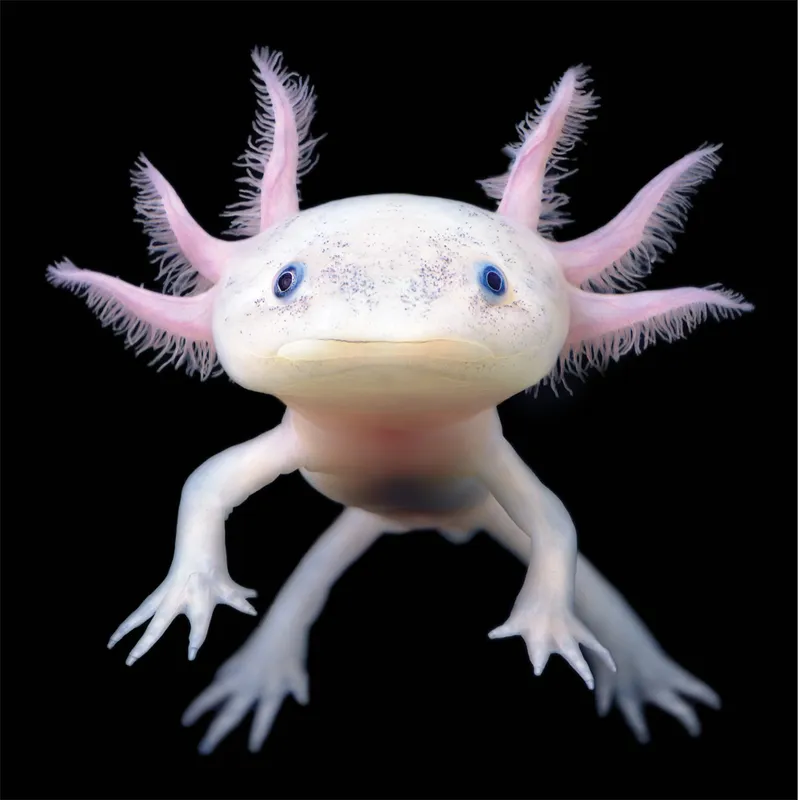
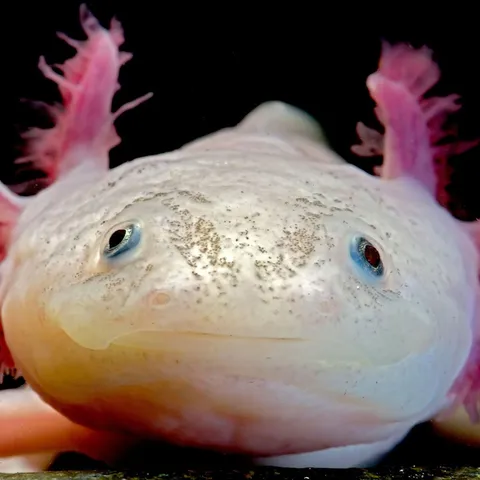
The axolotl (ACK-suh-LAH-tuhl) is the Peter Pan of salamanders. While most amphibians grow out of their aquatic phase to begin their lives on land, the axolotl largely retains its larval characteristics and spends its adult life in the water. It does, however, get bigger—up to a foot long.
© TIM FLACH
First impressions
RANGE Lakes and canals in the southern part of Mexico City
WEIGHT 2.1–8 oz.
DIET Carnivorous: worms, insect larvae, small crustaceans, fish
LIFE SPAN 10–15 years
STATUS Critically endangered in the wild
THREATS Habitat degradation, pollution, fishing, nonnative predators, the pet trade.
Color
Most axolotls are black or mottled brown, but there are also varieties with white skin and pink or red gills.
External gills
A few feathery, external gills on each side of the head provide the axolotl with oxygen and its signature look. Adult axolotls have lungs but rely primarily on these gills to breathe.
Legs
Axolotls don’t have legs when they hatch; they develop them a few weeks later.

The namesake
Axolotls were named after Xolotl, the Aztec god of fire and lightning, who could take on the form of a salamander. Xolotl was also associated with dogs, and “atl” is the ancient Aztec word for “water”—so “axolotl” is sometimes translated as “water dog.”

On the brink
While commonly found in household aquariums and research labs, axolotls are nearly extinct in the wild, mainly due to habitat degradation, pollution, and non-native predators in their limited geographic range.

What’s mine is yours
In addition to being able to regrow body parts—including their hearts, spines, and brains—axolotls can accept organs and limbs transplanted from other axolotls without risk of rejection, a trait that makes them of interest for medical research.
Help protect axolotls
You can help safeguard axolotls and other amazing species.
© John Cancalosi / Alamy Stock Photo
© ADRIANO GAMBARINI/WWF-US
Explore more
Keep reading this issue of World Wildlife magazine