Meet the Pyrenean desman, a small semiaquatic mammal with a sensitive snout

© Carlos Sanz / VWPics / Alamy Stock Photo
The Pyrenean desman has a nose for hunting, but not in the way you might expect. A cousin of moles and shrews, this semiaquatic mammal has a trunk-like snout that’s covered in vibration-detecting facial hairs and specialized touch receptors called Eimer’s organs. Together, these features help the insectivore feel, rather than smell, prey—and navigate the Western European waterways where it resides.
Pyrenean desman
Galemys pyrenaicus
HABITAT Mountain streams and rivers
RANGE Iberian Peninsula and southern France
SIZE A 4-to-6-inch-long body, with a tail of the same length
DIET Insects and their larvae, crustaceans, small fish
STATUS Endangered
THREATS Habitat destruction and fragmentation, pollution
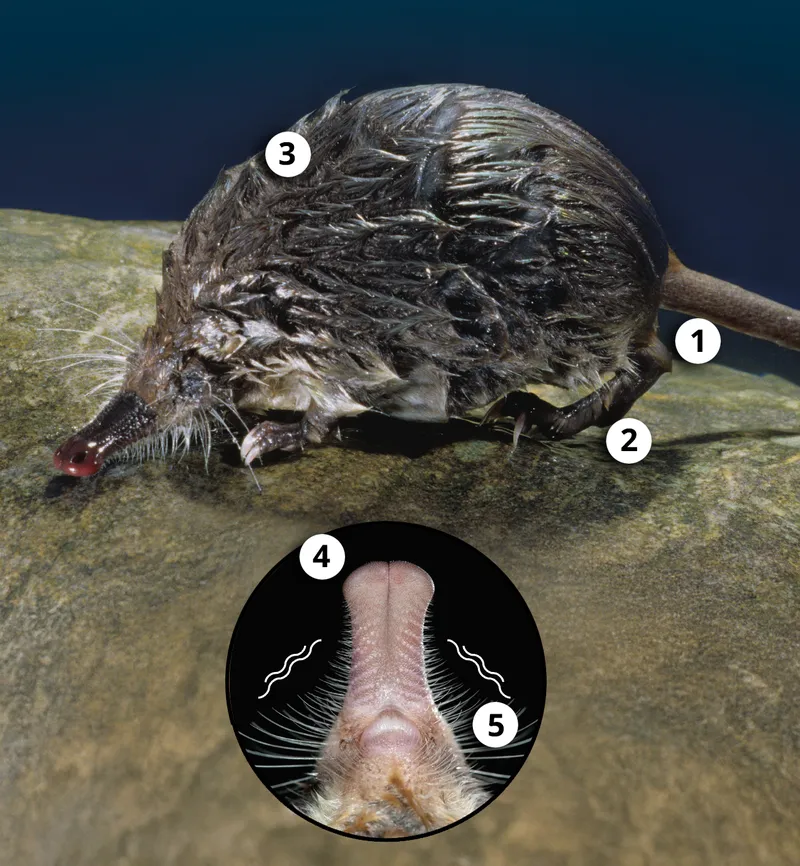
© Pyrenean desman on rock © Daniel Heuclin / naturepl.com; Snout © Buiten-Beeld / Alamy Stock Photo
1. TAIL Scaly and flat at the end, enabling the desman to maneuver through currents
2. HIND FEET Webbed and well-suited for swimming, with claws adapted for climbing and digging
3. FUR Waterproof to protect against cold water
4. SNOUT Long and flexible for rooting around in silt and mud for prey
5. VIBRISSAE Highly sensitive whiskers can detect movement

Sneaking by
Also known as the Iberian desman, this mammal is nocturnal and elusive, making sightings rare. Researchers rely on camera traps and environmental DNA for evidence of activity and to determine population estimates.

New dangers
Once at the top of the food chain due to a lack of native predators, the Pyrenean desman now faces new threats, including the expansion of invasive species like the American mink into its range.

Life in the fast stream
This petite swimmer prefers to live in fast-moving, oxygen-rich rivers abundant with aquatic insects and crustaceans. Though sometimes found in slower-moving lakes and canals, the animal—which can remain submerged for up to two minutes—steers clear of stagnant water.
© PETE OXFORD/NATUREPL.COM
Explore more
Keep reading this issue of World Wildlife magazine