What animal names reveal about humanity
Why do we call an elephant an elephant? Why did the narwhal become known as the “unicorn of the sea”? How did the praying mantis help to inspire kung fu in ancient China? And what can the names we give to animals tell us about ourselves as people?
Find Nature Breaking on Apple Podcasts, Spotify, YouTube, and more.
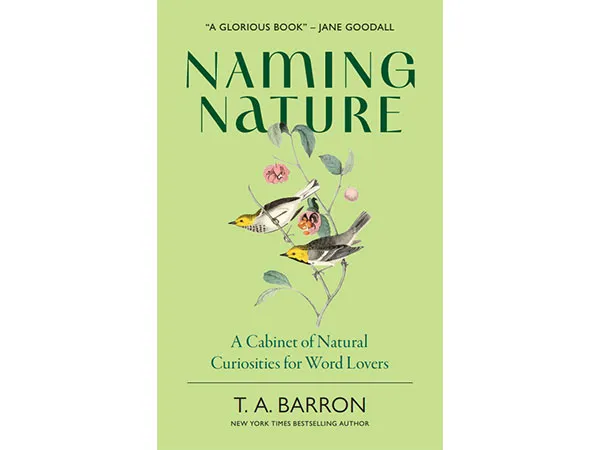
In this episode of Nature Breaking, host Seth Larson sits down with bestselling author, conservationist, and WWF board member T.A. Barron to discuss his new book, Naming Nature. Drawing on languages, folklore, mythology, and cultural traditions from around the world, the book explores the fascinating stories behind the names of plants, animals, and landscapes—and what those names reveal about humanity’s relationship with the natural world.
Tune in to hear how an oak tree near Oxford, England helped inspire T.A.’s passion for writing, how he developed the concept for Naming Nature, and how a run-in with a former NFL quarterback prompted him to reflect on what really matters in life.
Links for More Info:
© T.A. Barron
Donate and get "Naming Nature" by T.A. Barron
WWF Board Member T.A. Barron's beautifully-illustrated hardcover book is a love letter to nature and the language that describes it. Includes a special bookplate from T.A. and is available to choose with a gift to WWF of $1,000 or more.
TRANSCRIPT:
Seth Larson: How did elephants, narwhals, and other species get their names? And what do the stories behind those names tell us about our own history? That's the question at the core of a new book called Naming Nature.
Stay tuned to hear from the book's author T.A. Barron about what he discovered.
Seth Larson: Welcome to Nature Breaking, a podcast produced by World Wildlife Fund. I'm Seth Larson. The natural world is full of names. Some are practical, others poetic, but together they reveal how people across cultures have understood and related to the living world. And in many ways, those names don't just describe nature. They shape how we feel about it.
In his new book, Naming Nature, author T.A. Barron explores how languages and cultures around the world have named plants, animals, and landscapes, uncovering the deeper meanings behind those words.
T.A. or Tom is an award-winning author of more than 30 books, a lifelong conservationist and a member of WWF's board of directors. His work sits at the intersection of storytelling and stewardship, helping people connect more deeply with the natural world.
In this conversation, we'll talk about what first inspired his love of nature, how place can shape perspective, and what we can learn from the way people around the world name the wild. Before we get started, don't forget to subscribe to Nature Breaking wherever you watch or listen. And now here's my conversation with T.A. Barron.
I am thrilled to welcome T.A. Barron to Nature Breaking. It's so great to see you today
T.A. Barron: Thank you, Seth. I'm delighted to be here.
Seth Larson: Tom, I want to start with a pretty simple question for you. You know, you've spent the last few decades writing about nature and storytelling, and I wanted to ask what sparked your passion for nature in the first place, and kind of what kicked you down this path?
T.A. Barron: Wonderful question. Can I just start though by saying I love the title, Nature Breaking, that you have. And, and I love the multiple meanings of it, that it's, you know, it's breaking news and it's about nature being in peril and possibly breaking in places. And also, maybe more importantly, it evokes daybreak, right? A whole new day dawning.
Seth Larson: Absolutely. Yeah, we, we tried... that was the intent, so thank you for recognizing it.
T.A. Barron: I love it. I love it. Well, um, you know, uh, I feel like the intersection of stories and conservation work, the roll up your sleeves action and choices to help protect nature and our planet, that's really where the action is. And, and I guess what drives me is that stories carry such immense power. I know this not just as an author and a speaker, but more importantly as a dad. Stories carry immense power. Um, they are the best way for us to convey the biggest ideas that we have, whatever they happen to be. And I think humanity is wired to take in our biggest ideas through stories, not through reams of scientific data, as important as all that is, um, or news about the environment, as important as that is. Where we really take things into heart is through stories. And by the way, stories also reach people of all different descriptions, every kind, language, place, context, culture, religion. It doesn't matter. If you're telling a powerful story that lands in the heart, you reach people.
Seth Larson: Yeah, I think that's very true, and, uh, you know, you think about the stories that we have in our lives that came from not only a few generations ago, but, you know, we're just... a few weeks after we record this, there's a big movie coming out called The Odyssey, which comes from a fairly old story that's been around for, uh, a couple thousand years or so. Um, it's amazing how stories really are what we carry forward with us as people.
Tom, I've, I've heard you speak before about how your writing has been influenced by the time that you spent reading under an old oak tree when you were studying at Oxford, and I wanted to ask you here today to reflect back on that time and tell us why the combination of that tree, in that place, at that time, left such an impression on you.
T.A. Barron: I'm so glad to think back on that. I have to set the stage, Seth, by saying that I was lucky enough to grow up in a couple of places where nature was very present. New England on a, on a lovely little hillside where we had an apple orchard and, and lots of room to roam, and some beautiful ancient chestnut trees. And also in Colorado on a ranch in, uh, the view shed of Pike's Peak and its, and its range down there. And I remember so often climbing up the old ponderosa pine trees and, and, um, and, and-- or, looking with amazement at an old bristlecone and realizing this could be 3,000 or 4,000 years old, this tree. And what's, what stories could it tell?
So I was, I was set up for success to meet this marvelous ancient English oak tree when I landed at Oxford. One of the very first runs I took was up on a high hillside called Hinksey Hill that is actually the setting of a marvelous, uh, dairy farm and a tremendous view of the gleaming spires of Oxford down below.
And I came around a bend and saw this magnificent oak tree that had one branch just extended out to the side, uh, in a way that was like a wizard casting a spell. And it made me feel like that's a magical tree. But I... and I actually ended up naming it Merlin's Tree without any idea that someday, you know, 10 or 15 years later, I'd have the good luck of adding some of my own stories to the myth of Merlin. But...
Seth Larson: That's been a, a huge part of your, uh, your life as a writer has been spent telling those stories.
T.A. Barron: It's true. It's true. Now 13 books and counting in, in that realm. But um, I loved that tree just for its presence. The magnificent, um, statuesque air of it. But there was more than that going on there, which was that the farmer, uh, or the farmers over the centuries on that hillside had always left room for that tree to grow and stand strong. They cut a swath around it, a big triangle, where they never plowed and never pulled in their vehicles so that the roots were healthy. And I can't imagine that it was for any other reason than respect...
Seth Larson: Yeah
T.A. Barron: ...for that great tree.
And then you add in a fox's den that was on the backside of the tree, and a perfect place to just lean against and read books like, uh, T.H. White's Once and Future King while looking down on those spires. Of course, I fell in love with that tree.
Seth Larson: Yeah. And I'm amazed at the, the synergy of that moment where it inspired not only, uh, this thought about fantasy and the Merlin stories, but also, uh, all of the natural elements that were drawn into that setting, from the foxes to the tree itself and the farm. Um, and it just seems like that is emblematic of some of the work you've done as a writer since then.
T.A. Barron: It's true. It's true. It, uh, there was so much in there and, and as is usually the case with, um, a... someone in their youth, I had no clue about all of those influences at the moment. But I was, I was taking them in. I had no awareness on a conscious level, I should say. But they were definitely seeping into me. And I would also add one more thing...
Seth Larson: Sure.
T.A. Barron: ...which is one of the great good fortunes in my life was to have a mother who went back to school in her 60s to learn about geology.
Seth Larson: Wow.
T.A. Barron: She had no other... there was no good sense reason for her to do this. She had, you know, majored in French language and literature 40 years before as a student at Smith College in Massachusetts. And, and she loved literature, but she, over the years and during my childhood, grew more and more passionate about learning about the Earth. And in particular, she viewed the landscape, the mountains where we lived at the ranch in Colorado in particular, as a kind of a book. Really a kind of a book, and she was determined to learn how to read that.
Seth Larson: I love that.
T.A. Barron: And it was-- it made such an impression on me, both about the love of learning that you can never stop in life, but also about that sense of the world, nature, the landscape around us having stories to tell.
Seth Larson: Yeah.
T.A. Barron: And, and let's learn about them. So when I sat under that English oak tree, I was primed and ready to go deeper.
Seth Larson: That's great.
T.A. Barron: Thanks to her. It was great.
Seth Larson: Well, so fast-forward to present day, all these years later, and your new book that you've written most recently is called Naming Nature. And it explores how different cultures and languages over time have named the natural world. I want to first ask what inspired you to take on that subject matter?
T.A. Barron: All my life, honestly, I've had two great passions. And one of them is nature, and one of them is words. It's really amazing to me how powerful both of those rivers flowing through my life have been. And I realized about a decade ago, you know, there's really a confluence of those two rivers where they...
Seth Larson: Huh.
T.A. Barron: ...Flow together and where the love of nature and the love of words actually could make some absolutely, uh, amazing, astonishing stories. And, and so I, I started digging into it. Um, I never had a thought that a publisher actually would go for it until, uh, a few years ago when actually an, a British publisher reached out to me and said, "You know, we're thinking about something about the ways, uh, creatures in nature are named, and would you be interested? You seem to have the background here." And, and I, I said, "Oh, yes, this is a call I've been waiting for quite a while." And so, so really that's uh, that's one of those, um, examples of how the universe sometimes does give you that phone call.
And now, uh, the, the real point here, though, is that love of nature throughout humanity's history has taken many forms, right? We can think of all the different ways, ranging from podcasts, to books, to movies, to poems, to gardens, to poetry, to dance, to sand mandalas...
Seth Larson: Yeah.
T.A. Barron: ...to recipes, blessings. You think about it. There are so many ways that people have, have, um, had a sense of deep reverence for nature and celebrated it. But one of those ways, Seth, is often overlooked, and that is the names that we give to nature. And the more I explored this subject of naming nature, I realized, whoa, those stories are, are maybe overlooked, but they are astonishing, and they're right here. Right here ready to whisper their secrets in our ears. And those secrets have so much to tell us. Not just about the creatures that are named. Not just even about the languages that are used, which are fascinating. But also about ourselves as the namers, and the assumptions that we bring into the naming process. And, and, and so that's why in the book I dip all, into all sorts of other resources like the folklore and mythology and indigenous names and beliefs around different names.
Seth Larson: Yeah. I'd love to get into a couple of those stories now. Um, and, uh, one of the things I really love about your book is the way it underscores the… that interplay between people and nature, and, um, the fact that our names for nature do often make an effort to evoke specific characteristics that we might be observing. One of the examples that you point out is the moonflower is a flower that only blossoms at night when the moon's out. That makes a lot of sense how that got named. But just as often, the characteristics we're trying to describe in nature seem to get reflected back on us and end up influencing our own behavior in really interesting ways.
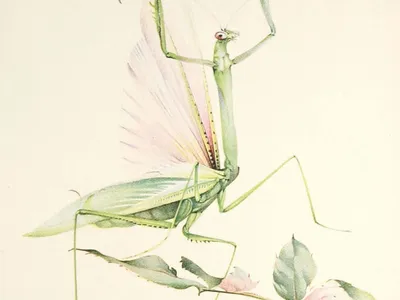
One of the examples you cite is how the movements of the praying mantis actually influenced the creation of Kung Fu 1,500 years ago in China, which I had no idea about. Um...
T.A. Barron: Right.
Seth Larson: Can you reflect a little more on that interplay and how nature and people influence each other and kind of what we can learn from that interplay today?
T.A. Barron: Oh, yeah. This is where truth really is stranger than fiction.
Seth Larson: Yeah.
T.A. Barron: Uh, and also, I would say more entertaining too. Um, well, just start with that moonflower that you tossed out. That, that's just the surface, uh, because when you go underneath, um, the surface and look at all the indigenous languages and the stories that are told about moonflowers that do open only at night...
Seth Larson: Mm-hmm.
T.A. Barron: ...They're almost always deeply reverential. They're almost always about, uh, the devotion to God or about the beauty of starlight, um, the full of awe and reverence.
Seth Larson: Hmm.
T.A. Barron: Except for one, which is, um, one particular local name for the moonflower that translates to a child's diaper. Go figure.
Seth Larson: Yeah.
T.A. Barron: But it's not always a happy story like that, I, I would have to say. And one of the most powerful examples is actually elephant.
Seth Larson: Okay. Tell us about the elephant. How, how does that name come to be?
T.A. Barron: You know, maybe, maybe the best thing I could do would be to read the passage on elephant, if that's ok?
Seth Larson: Please do. Yeah.
T.A. Barron: Okay. You think you know about this creature, the elephant? You don't. You really don't, and I know this is World Wildlife Fund, uh, that does a lot to help protect those elephants. But you really don't know the elephant until you know the amazing story of its names.
No land animals on Earth are bigger than elephants. Like their extinct relatives, the well-named mammoths, they are truly enormous. Found in Africa and Asia, they regularly walk great distances over grassy plains and forests, which is why the collective term for them is, quote, "a parade of elephants." And wherever they go, they leave tracks across many vital and varied landscapes.
Likewise, the names for these majestic creatures have left tracks across many vital and varied languages, including Ancient Greek, Old Norse, Hebrew, Old French, Latin, as well as other possible languages, including Phoenician, Egyptian, Germanic, Slavonic, and Sanskrit. But my favorite names for elephants come from the African languages.
Inspired by the enormous size of these creatures, which remember, are big enough to topple and crush trees. The names in Zulu, Tsonga, and Tswana all focus on sheer immensity, and they all mean basically, "Get out of the way." The Zulu name for elephants, indlovu, is related to the verb crashing through. And there's much more to it, but that's-- you get the feeling. Get out of the way.
But here's where the story darkens a bit. The most revealing, and I would say most disturbing aspect of European names for elephants, European names, is that for many centuries the word simply meant ivory. Around 700 BCE, when Homer and Hesiod wrote about elephas, they were describing just the commodity of tusks.
So the name applied only to that commodity that people could buy or sell in the marketplace, but not to the magnificent creature that produced those tusks. It took a long time, at least two thousand years, before people started using the word elephant to describe the entire living creature that is one of our most cherished fellow creatures.
This reduction of animal to commodity eliminates any consideration of the elephants themselves. It denies their existence as creatures with amazing abilities, as our companions in life on this planet, and as sources of inspiration to people everywhere. What a loss that is to effectively erase from our awareness a creature that's so impressive and so compelling. It actually breaks my heart.
Consider this. Elephants are so intelligent that they can vocalize specific names for their companions, recognize themselves in the mirror, and even paint pictures by holding the paintbrush with their trunks. And they are so sensitive that they show real grief whenever they lose family members, visiting the bones of their lost ones and stroking them gently.
It's easy to understand why elephants are cherished symbols of wisdom and intelligence in many cultures around the world, figuring prominently in religions and mythologies ranging from the Kamba people in Kenya to the Hindus in India to the Buddhists in Thailand. And they are beloved by young and old on every continent.
Even so, today, elephants, as we know, are in danger of extinction. The two main causes are the continued slaughter by poachers who crave their tusks and the ongoing destruction of their natural habitat. Will we humans do whatever it takes to protect these wondrous, intelligent, beautiful creatures? It's up to us to decide. The consequences of our choices will be, in every sense, enormous.
Seth Larson: I love that passage. Thank you for sharing that, Tom. Um, I share, uh, uh, your enthusiasm for those names that evoked awe or even fear of the power that those elephants, those animals had and still have. Um, but also your sadness about the fact that some of those European names reduced such an amazing creature down to just a commodity, a product that could be sold and manipulated for our own enjoyment as people.
Um, and, uh, uh, we have been working for a long time, particularly here at WWF and conservationists around the world, to get to a better place and to create a better future for elephants. But those, those are the same, uh, those attitudes are the same, um, underlying challenge that we continue to work against because poaching remains a huge problem for elephants, and it's one of the biggest factors, uh, undercutting their sustainability.
T.A. Barron: And, and you wouldn't expect that the story of the name elephants would actually be so revealing about that hugely important point and that crucial set of decisions that we as humans need to make if we're going to protect our planet and ourselves.
Seth Larson: Yeah. No, very well said. Um, I'm curious, uh, beyond the story of the elephant, uh, can you share one or two other examples from your book of names or the inspiration behind those names that, that really stuck with you as you were researching and writing this book?
T.A. Barron: Sure. And I will add that not all of the stories in this book are about endangered creatures, but many of them are. And one of the things that's powerful about names, of course, is naming inspires connection.
Seth Larson: Mm-hmm.
T.A. Barron: And connection inspires passion. And then passion inspires protection.
Seth Larson: Yes.
T.A. Barron: So if we take seriously the names of creatures, especially our great beloved friends like the elephants, we're gonna do more to protect them. Let me give you a, a sea creature this time.
Seth Larson: Please.
T.A. Barron: Okay? The, the narwhal.
Seth Larson: Yeah, one of…
T.A. Barron: Which is such a marvelous creature, and it's otherwise known, as you know, as the unicorn of the sea. This is an amazing story of an animal's name. So rare they're almost never seen, narwhals swim through the icy waters of the Arctic. Because of their elegant tusks, which can grow into a lance up to 10 feet, three meters long, they've been dubbed unicorns of the sea.
They rarely migrate, preferring to stay in Arctic waters of Norway, Greenland, and Canada. Their truly distinctive feature is that impressive spiraling tusk, which is in fact a super sensitive tooth.
For ancient Viking sailors, though, the most striking qualities of narwhals wasn't their tusk, but it was the mottled gray and white skin, which the Vikings thought was similar to the skin of a drowned sailor. Revealing about the cultural assumptions of life and times then.
Seth Larson: Yeah
T.A. Barron: For those people. They, uh, often saw narwhals and associated them with that color of the, the skin of a drowned sailor and called these animals nar-val, combining the Old Norse words for corpse and whale.
Seth Larson: Huh.
T.A. Barron: Now it gets really interesting. About a thousand years ago, when those Vikings first brought the tusks of narwhals into European markets, the elegant beauty of those spiraling tusks sparked a great deal of attention. People started to wonder what wondrous creatures could have grown them, and indeed, whether those creatures could possess their own special magic.
That's when things get really interesting. At that time, popular legends around the world told of a fantastical one-horned beast from India that combined the features of many different animals. Those legends were quite famous and had been around for a long time, having begun in South Asia and China at least 3,000 years before the time of Christ.
Most likely, by the way, those legends originated from someone who had long ago sighted a wild rhinoceros or a wild ox. The Romans eventually dubbed that legendary beast Unicornus.
Now, with those beautiful narwhal tusks suddenly appearing in Europe a thousand years ago, it didn't take long for bards and traders to amend the old legends and paint its modern image of a unicorn. Soon, that mythical being was widely celebrated as a, an elegant, graceful steed with a perfectly virtuous spirit and a single gleaming horn.
Now, all of this is proof that truth really is stranger than fiction. In the wondrously unpredictable ways that language and nature can twine together over time, the tusk of a cetacean from the Arctic Ocean somehow merged with the story of a bizarre beast inspired by a rhinoceros from India, resulting in the enduring image of one of humanity's most cherished mythical creatures.
The magical powers attributed to unicorns are no more surprising than the true story of how they came to be described as we know them today.
Seth Larson: That is absolutely fascinating. That is so interesting. Um, I love how your book and these stories illuminate so much about our own history as people and the stories we've been telling each other for centuries, and how they actually came to be. That is so interesting to me.
T.A. Barron: Hmm. Yeah. Oh, my heavens. I, I... Can you, can you handle one or two more? Because I, I can...
Seth Larson: Yeah, let's... let's do one more and then I have a couple other questions for you.
T.A. Barron: Ok, marvelous. Um, let's do... You know what? Um, I'm gonna go with hummingbird.
Seth Larson: Oh. My mom's favorite bird, she has, uh, hummingbirds in her backyard every summer that keep her entertained, so she'll love this one.
T.A. Barron: She'll definitely love this one, the hummingbird, for a small creature, carries an immense amount of story. Spectacularly colorful, capable of intricate aerial acrobatics, and so courageous that ancient Aztec warriors wore their feathers into battle. Hummingbirds are winged miracles. Throughout time and across diverse cultures, they have been celebrated and admired, and rightly so. No other kind of bird can beat its wings up to 80 times per second, producing that distinctive hum, or hover in the air, perfectly positioned to sip nectar from a flower, or fly backward or even upside down.
And what glorious names in English their iridescent wings have inspired. The names for hummingbird species deserve to be spoken aloud as if they were poetry and visualized as if they were paintings. Glittering-bellied emerald, amethyst woodstar, red-tailed comet, green-crowned woodnymph, horned sun gem, fiery-throated metal tail, rainbow-bearded thornbill. And that's only a tiny sampling of the evocative names for these favorite wonderful birds.
But my personal favorite hummingbird name is not in English, actually. It's a Spanish word for the smallest kind of hummingbird of all, a creature known in English as the bee hummingbird. It's found on Cuba. In Spanish, this little wonder is called zunzuncito. Can't you just hear it buzzing? That name truly buzzes with the sound of whirring wings. Zunzuncito. So there you go.
Seth Larson: Yeah, I think they were literally trying to replicate that sound of the hummingbird through the, through the, the word to describe it. I want to talk a little bit more about something you said a few minutes ago. You, you mentioned the, the connection between naming an animal or a, or a plant and giving it a name and developing a passion for it, and then that passion leading to instinct to protect it. And that is something… that connection, that through line is something we talk a lot about here at WWF. We always talk about the fact that people will protect what they love, and I think that's exactly what you were describing there. I wanted to ask you to speak a little more about that and why you think nature so important, and, and more importantly for this conversation, how can language play a role in helping people recognize that nature needs us now to conserve it?
T.A. Barron: It's often said that nature needs us, and it is true, especially in a time of biodiversity collapse and other problems that we are witnessing today. But it's deeper than that. I think we need nature.
Seth Larson: Yeah.
T.A. Barron: First and foremost. And our very survival depends on it, right? Our biodiversity and our ability to have pollination and foods that come from that. Clean air and water, forests that help us breathe, all of the rest.
But it's even deeper than that, I think. It's not just our physical survival that's at stake with nature, it's our humanity. Because nature gives us such immensity of inspiration. Nature can really hold it all. Nature lifts our sights and renews our hopes and I know nature has always been my greatest teacher and inspiration, as well as my greatest healer when I'm in difficult times.
Nature has been able to hold my troubles in a beautiful and restorative way. Now, when you ask about language and nature, though, I think it goes back to Jane Goodall's magnificent revelation that the definition we used about what makes humanity special up to that time was wrong. That definition up to the 1960s when she made her classic discoveries observing the chimpanzees, was that humanity was the only creature on Earth who could use tools.
And as we all know, she just blew that idea to smithereens. Well, coming forward to now, today, here on this podcast, I, I have to say, I think that our ability to use tools is important, but it's certainly not what defines us. What defines us is our ability to tell stories.
Seth Larson: Yeah.
T.A. Barron: Stories that are abstract and have metaphors, and most importantly, stories that carry big, lasting, enduring, powerful ideas. Ideas that can inspire us, ideas that can help us see the world in a different way, ideas that can inform our choices. And that's why we need to tell more powerful, compelling stories about nature, about our fellow creatures, and about our life on Earth.
Seth Larson: Yeah, I completely agree with that. So Tom, I have just one last question for you here today, and this one requires a little bit of backstory to set it up, so I hope our audience will stick with me as I just, uh, explain this one a little bit. But basically, as I was researching for this conversation and getting ready, I, I read a number of things before talking to you today. I also, uh, searched on my podcast app on my phone to see if you'd done previous podcast interviews, and I listened to some of those. And one of the previous interviews I came across that you did back in 2017 was an interview you did for a podcast called The Andrew Luck Book Club. And I was, uh, upon beginning to listen to it, I was delighted to discover that, um, not only did you have a great conversation in that podcast, but it was hosted by the same Andrew Luck who was the quarterback for the Indianapolis Colts for a number of years. I didn't know that he hosted a book podcast. It was kind of a, a wonderful discovery.
Um, I gather that you and Andrew met while you were visiting the Great Barrier Reef. I definitely would love to hear more about that story. But I'll give you my main question. Because as I was listening to that conversation between you and Andrew, at one point you talked about your decision to leave your business career, I think in 1990, and take this chance on becoming a writer. And you talked about what it means to live a meaningful life and what, what that requires.
And I'm gonna paraphrase a little bit, but you basically said that the two most important things we have as people are our time and our soul, which I thought was very profound. And you said it's important that we make the most of both those things by following our passions in life. And Andrew seemed very taken by that bit of advice that you gave, and just a couple years after you spoke with him, he retired fairly early from his football career. I think he hadn't even turned 30 yet. It was a big surprise to people. I know there were a lot of Colts fans out there that were disappointed that he retired at such a young age. Um, I gather that he's quite happy and seems to be leading a very happy life, so, uh, all good for him. Um, my question for you is, I ask this with my tongue firmly planted in my cheek... have you considered the possibility that you may have inspired Andrew Luck to leave football early and chart a different path? I, I have to ask because I know Colts fans everywhere are dying to know.
T.A. Barron: Oh, heavens. I have no idea, but I sincerely doubt that a conversation with a wayward author in Colorado, um, helped Andrew make up his mind to do a really profoundly important thing in his life. But we did have a serious conversation, and he's a wonderful man.
Seth Larson: Mm-hmm.
T.A. Barron: I was so impressed with him. I only knew him through his great ability to throw passes, but I was, um, delighted to wind up at the same place as him while snorkeling and scuba diving off the Great Barrier Reef. And we had some wonderful conversations. Immensely thoughtful, and that's why he invited me to join his podcast. But as to your bigger question, um... so I'm denying all responsibility there for anything. Um...
Seth Larson: Of course.
T.A. Barron: And, and I'm sure I have no responsibility, so it's easy to do. But, but Seth, um, you know, I think a healthy sense of mortality is a real gift because it gives you a sense of the, uh, preciousness and the immense miracle that life really is.
Seth Larson: Mm-hmm.
T.A. Barron: Even a long life, uh, say someone lives to be 120 years, that's just beneath even a blink of an eye for geologic time. And it's, um, it's really important to think about our lives as brief and fragile as they are, as this supreme opportunity. Our gift to be all we can be, to make choices that really are true to ourselves.
And that's why I said, um, all we have is our time and our souls, because those are the two enduring qualities that can together inform us to be all that we can be in the world and in life.
So, uh, it's really that simple, and that's, that's why I realized in my own life... I could never throw a football like, like Andrew Luck, but I was in a position of responsibility in a business in New York. And while I enjoyed a lot of aspects of that work, I really missed writing. And I started getting up really early in the mornings to write at 4:00 or 4:30 in the morning, and I'd write for an hour or an hour and a half before getting changed and dressed and shaving and going to the office.
Seth Larson: Yeah.
T.A. Barron: And, and you know, I came to realize that that hour and a half was the most precious time of my day. It was the one time where I was using all of me. Whereas in my job I was using just 20% of my mind and, and very little of, or any of my heart. Writing involved all of my mind and heart. And with a sense of mortality, I thought, "You know, this is, this is not a good... not a good situation. Something's wrong with this picture." I even had a visualization at that time of myself as an old man sitting on a porch somewhere, uh, at a, on a cabin, uh, looking out at the wildflower meadow and, and thinking about my life, knowing that it was almost done, and realizing, you know, if I come to that point and never really gave this writing thing a chance, I would be just thunderstruck with regret. And I... it would be the worst nightmare possible because it was so clearly something I loved, a passion I had. I had to at least give it a try.
Now, all I had to show for my writing life at the beginning was a whole stack of rejection letters, but I knew there was something underneath that, uh, made me want to go back to it and give it a go. And that was, what, 36 years ago and 32 published books ago. So it's been a better life than I ever could have dreamed of.
Seth Larson: Yeah. That's a, a wonderful uplifting note to end on. I think that the choice you made there and the career you've had since then are really inspirational to me and to, I think, probably a lot of people who will listen to this and who have met you over time. Um, I think all of us, I hope, will have the same, fearlessness in pursuing our passions, um, that you've had. And, uh...
T.A. Barron: Let me interrupt though, Seth. I just want to... because don't put me on any sort of a pedestal. I think it's just simply about knowing what's important to yourself. And if you're aware of that, you realize this is my time, this is my gift, and I want to align my choices with what I love and my passions, and only good things will come of that. Only good things.
Seth Larson: Yeah. Well, Tom, thank you for sharing those words of wisdom with me and with our audience here today. Um, your book, Naming Nature, is available now. Thank you for bringing us behind the scenes a little bit and sharing some of your favorite nuggets from that book. I've really enjoyed hearing about them and learning about them. Um, I appreciate your time.
T.A. Barron: Thank you, Seth. I've enjoyed talking with you immensely.
Seth Larson: That's all for today. Thanks again to T.A. Barron, not only for his time in our interview today, but for writing such a rich text for our conversation to spring from. The names that we humans have given to the natural world have a really fascinating story to tell, and Tom has done us a great service by collecting those stories and distilling them into his latest book, Naming Nature. I hope you enjoyed hearing some of those stories here today. Thank you so much for listening and together let's keep building a more sustainable future.