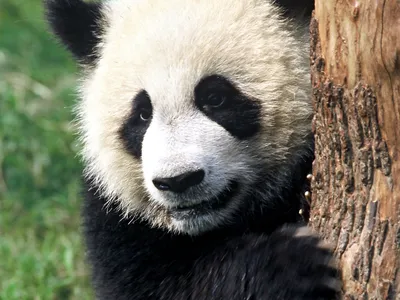
Why giant pandas are a conservation success story
When you think of endangered species, chances are the giant panda comes to mind. With their black‑and‑white coats, bamboo obsession, and internet‑famous antics, pandas are among the most beloved animals on Earth—and they’re also one of conservation’s most hopeful success stories.
Find Nature Breaking on Apple Podcasts, Spotify, YouTube, and more.
In this episode of Nature Breaking, we’re diving into the surprisingly weird and wonderful world of giant pandas with Colby Loucks, Vice President and Deputy Lead of WWF’s Wildlife Program. Together, we unpack what makes pandas so unique—from their “fake thumb” and bamboo‑only diet to their solitary lifestyles and playful personalities.
But this isn’t just about adorable panda videos. We also talk about how decades of conservation work helped giant pandas rebound from the brink of extinction, why they were reclassified from endangered to vulnerable, and what their recovery teaches us about protecting other species. Along the way, Colby shares firsthand stories from the field—including what it’s really like trying (and failing) to spot a panda in the wild.
Links for More Info:
TRANSCRIPT:
Seth Larson: Welcome to Nature Breaking, a podcast produced by World Wildlife Fund. I'm Seth Larson. If there's one animal that seems to have captured hearts around the world, it's the giant panda. With their distinctive black and white coats, gentle demeanor, and almost comical love of playing in the snow, pandas have become global icons of wildlife conservation. And of course, they're the inspiration behind WWF's logo. But beyond their lovable nature, giant pandas are fascinating animals. They spend most of their days eating a single food: bamboo. And they live in some of the most biodiverse mountain forests in China.
And while pandas are often celebrated as a conservation success story, their survival hasn't been guaranteed. It's the result of decades of dedicated work by governments, scientists, and conservation groups. So today we're gonna dig into some of the most interesting facts about giant pandas, what makes them so unique in the animal kingdom, and how conservation efforts have helped bring the species back from the brink. I'll be joined today by Colby Loucks, Vice President and Deputy Lead of WWF's Wildlife Program. Colby will help us separate myth from fact, explain why pandas matter for entire ecosystems, and walk us through how conservation has made a real difference for these beloved bears.
Before we dive in, don't forget to subscribe to Nature Breaking on YouTube, Spotify, Apple Podcasts, or wherever you listen. And if you have ideas for future episodes or if you just want to tell us your favorite panda fact, email us at [email protected]. Thanks for listening.
All right, Colby Loucks, welcome to Nature Breaking. It's awesome to have you here today.
Colby Loucks: Thanks. Good to be here.
Seth Larson: So we're here to talk about pandas. I was talking to some colleagues earlier this week and we've been doing this podcast for almost four years now, and we somehow have never devoted an episode to giant pandas. I don't know how that has come to pass because it is ever present in, you know, our WWF logo.
Colby Loucks: Yeah.
Seth Larson: And we've got one on the wall back there. Very central to our identity as a conservation organization. Really excited to be getting into this topic with you today. And to get us started, I'm hoping you can give us a little bit of a Panda 101 and just tell us, you know, where are giant pandas found out in the wild and what are their lives like?
Colby Loucks: Sure, yeah. Thanks to be here and I'm glad we're coming full circle to get pandas in the mix on the Nature Breaking podcast.
Seth Larson: Yeah.
Colby Loucks: So pandas are found only in China. They are endemic to China. China is very happy and proud about that.
Seth Larson: Mm-hmm.
Colby Loucks: And they used to be found throughout all of China, almost from Beijing all the way down to Shanghai. Pretty much anywhere that's flat has been... the habitat has been lost and they're now found in the mountains around the edge of the Tibetan Plateau. So they live in mountainous habitat.
Seth Larson: Yep.
Colby Loucks: The mountains are very similar to the mountains we have in the eastern United States and the Appalachians, very oaky, a lot of beech. Those kinds of trees, you would find very similar trees. So they're very similar habitat as we have on the eastern part of the United States.
Seth Larson: Okay.
Colby Loucks: Except there's bamboo in the understory and there's these black and white bears hanging out, which is very different. All we do is get the brown bears and black, well, black bears on the east coast.
Seth Larson: Sure.
Colby Loucks: They are solitary. So they like to be by themselves. About once a year they find a weekend, they get together and mate.
Seth Larson: Okay.
Colby Loucks: So they're a solitary bear. They're like the most unbear bear on the planet.
Seth Larson: Explain what that means.
Colby Loucks: So I say what that means is they don't hibernate because they eat bamboo. Bamboo is like... whenever you ask a panda, and I've done a chance to have to ask pandas a lot of times, what's their favorite thing? The answer is always bamboo. Bamboo lunch, bamboo breakfast, lunch, dinner, snack at night, snack in the morning. So they, but they, all they eat is bamboo. Bamboo is low in nutrients, that means they have to eat all the time.
Seth Larson: Ah.
Colby Loucks: 'Cause of that, they can't hibernate.
Seth Larson: It's interesting.
Colby Loucks: They also have this really funky thing. They have a fake thumb. They have a wrist bone, so take a bone that has grown out and is literally acting the same thing as a thumb.
Seth Larson: Huh.
Colby Loucks: And so that allows 'em to grab and hold a bamboo almost like a human, if you ever see... yeah. You've seen those photos, right? They look like they're literally a human holding a bamboo. It's a wrist bone.
Seth Larson: Huh.
Colby Loucks: And they're born about the size of a stick of butter.
Seth Larson: Yeah.
Colby Loucks: And then they become about 330 pounds.
Seth Larson: That's incredible.
Colby Loucks: Super unique bear, they love bamboo. And yeah, that's their lives.
Seth Larson: One of the things that I think everyone knows about pandas is we all see these videos in our social media feeds, or on TV or wherever you catch it, you'll see these pandas playing a lot in... particularly in zoo environments. You'll see them playing in the snow, if there's ever a snowstorm. They'll be going down slides in their sort of built habitats or just like rolling around on the ground and just having a ball.
Colby Loucks: Mm-hmm.
Seth Larson: And I'm curious if they're doing that out of a sense of real joy, if they're deriving pleasure from it? And also, is that something that they only do in zoo environments or is that something that they actually do in the wild as well?
Colby Loucks: I've seen those videos and there's a lot of crazy videos of pandas on online and there's something interesting. They're the most, maybe the most ridiculous bear on planet. I mean, I think there's something in, I think they truly enjoy having fun and playing around. You don't really see even other bears in captivity doing the same things that pandas do. That said the, when they're in a zoo, pandas are on a meal plan essentially. They're getting, they're like your kid that's in college. He or she can eat all they want, they love it. They don't have to go out and scavenge and figure out and make their own food.
Seth Larson: Mm-hmm.
Colby Loucks: Same with zoo pandas. They're getting a lot more energy than they normally would get in the wild 'cause I was mentioning the bamboo's low, they have to eat a lot just to get enough energy.
Seth Larson: Yeah.
Colby Loucks: I think that they... you see a bit more of this natural play in zoos that more than they would do in the wild. And honestly, I don't, sometimes you see like a panda, stick his head through a tire, get stuck and you're like, what's going on there, man?
Seth Larson: Yeah.
Colby Loucks: And they're hilarious but I do think in the wild they, it's mimicking the strategic play. Like they learn, need to learn how to climb trees, get down from trees, crawl over things get up and down steep habitat, they do kind of sled and sliding down a mountain is actually kind of the most efficient way sometimes.
Seth Larson: Huh.
Colby Loucks: So I think it's... it has parallels to wild play. It's just that, I think they get a little more energy in the zoos and, maybe you know maybe they're natural performers. I don't know.
Seth Larson: Yeah. No, that's interesting. So there's a... an evolutionary basis maybe in some of this behavior because it does relate to the way they would be acting in the wild. But when you take that wild environment out of their lives, they're still finding ways to engage in those behaviors, but maybe having a little more fun with it and it just looks sillier maybe when you're not surrounded by trees and forests.
Colby Loucks: Exactly right. And I think that... but I think they even take it up another level even. I feel like they even... Like I said, they're natural performers. Like they could stop at you know, here, and then they could just take it up a level and just do, we... I'm just gonna fall off backwards off this branch and I don't know what's gonna happen. And they do stuff, you're like, huh?
Seth Larson: Yeah.
Colby Loucks: Hilarious. Yeah. I love them for it.
Seth Larson: Yeah.
Colby Loucks: Yeah.
Seth Larson: Well, at WWF we obviously focus our conservation work on saving species in the wild. So I want to talk a little bit about that now. And first I just want to ask why it's so important to work on conserving giant pandas in the wild. And beyond just, you know, they're a charismatic species and people feel this affinity for them. There's an actual utility in conserving pandas in the wild too, right. Can you talk a little bit about that?
Colby Loucks: Yeah, pandas are, like I said, they're found in these mountain areas of China and they are what we call an umbrella species. So if you have an umbrella, anything that's under your umbrella is tends to be protected. So anything under the umbrella of the habitat that pandas live in tends to be protected. And there's a lot of amazing biodiversity, it's one of the most biodiverse places on the planet. And so when we conserve the panda, we conserve the red panda. We conserve... like the most, diverse areas, for pheasants and salamanders and trees and all the bamboos. And it's been a haul, I have to say. In the 1980s I think the giant panda was the global symbol of 'uh-oh, what's going on?'
Seth Larson: Yeah. Yeah.
Colby Loucks: There was only about 1200 of them left in the wild. And then over time, we're now around 1900, and so there... we've seen a progression of increased habitat, increased numbers in the wild. And so when we see that happening, all the other species that live with them are being protected. WWF was the first international NGO to be allowed to work by the Chinese government in China in 1961, or no sorry, 1980. And so we've been working on panda conservation for almost 50 years.
Seth Larson: Yeah.
Colby Loucks: If I do my math. And that involves working with communities, working with rangers, trying to protect the habitat, trying to protect corridors and working in developing ecotourism, alternative livelihoods. We've done a lot.
Seth Larson: Yeah.
Colby Loucks: It's paying off.
Seth Larson: Yeah. And in 2016, I believe, pandas were actually downgraded from endangered on the IUCN Red list to vulnerable, which obviously still speaks to the fact that they're not in amazing shape in terms of their population stability. But that was seen as a really significant success story because they were on that endangered list for decades. And like you said, they were kind of this uh-oh species...
Colby Loucks: Right.
Seth Larson: ...that symbolized almost a failure of conservation. And so for them to, after decades of dedicated efforts by governments and organizations like WWF, for them to get downgraded from endangered to vulnerable, that was a big moment, right?
Colby Loucks: Yeah. I mean I think they've become a symbol of hope.
Seth Larson: Yeah.
Colby Loucks: And I think that's a testament to long-term investment in conservation has its payoffs. When so many things are going down, pandas were going up, right? So we have more pandas there. The protected areas went from about 30 to about 67...
Seth Larson: Mm-hmm.
Colby Loucks: ...protected areas. The amount of area is, that's habitat for pandas, about two thirds of it is in the protected nature area system. That's about the size of Bhutan. So we're doing a lot of... making a lot of headway and having, I think a very hopeful conservation success story with pandas and then all the other things that live with them.
Seth Larson: Yeah, and has that provided sort of a roadmap that can be applied to other species as well?
Colby Loucks: I think it has. I think we're seeing the same, same trajectory play out with the tigers.
Seth Larson: Yeah.
Colby Loucks: We about just over a decade or so ago kind of said, hey, we need to work on tigers. We need to find a, give 'em a pathway, find more habitat, government will, connectivity and policies to support habitat expansion for tigers, reduce the illegal wildlife trade. And what we've seen is, I think we've met our goal, which we set about 12 years ago to double the amount of wild tigers.
We're trying to replicate that with elephants and other big charismatic megafauna, which is just a fancy term for things that we all know and love and remember reading about when we were kids...
Seth Larson: Yeah.
Colby Loucks: ...that engender support for conservation of them, but all the other species that they live with.
Seth Larson: Yeah. Well, Colby, I don't want to keep you here too long today, but before I let you go, what else should our audience know about giant pandas?
Colby Loucks: Let's see here. I think that if you have an opportunity to go see 'em, there's a few zoos in the United States have them. I think you should definitely take that opportunity, learn all about them and hopefully enjoy some crazy antics...
Seth Larson: Yeah.
Colby Loucks: ...of pandas. And just learn about the, that there are conservation success stories out there. This is one that I think obviously is near and dear to our heart working with WWF. I would say that some people ask me like, what's up with the black and white?
Seth Larson: Yeah.
Colby Loucks: It's really funky. And it's camouflage. I can just relay a just short personal story is...
Seth Larson: Please.
Colby Loucks: So earlier in my career I did a lot more work on giant pandas in China, in the field, I was going on panda surveys, I was mapping their habitat. I was out there. And I was with one of my colleagues who had a radio-collared panda. And we were out with the nature reserve staff and it was in the Qinling Mountains. It was snowy and this thing's beeping. I'm excited 'cause I'm about to see my first wild panda, which is not easy. We come around the curve, oh, it's just crossing the, this frozen river. I'm like sweet, it's out in the wild. I'm gonna see this thing. And so we come around this little bend and basically it crossed the river and went up the slope, snowy slope right in front of us. I could see the, I could see the footprints in the snow.
Seth Larson: Wow.
Colby Loucks: And it was like mere feet or meters away from us on the snowy slope. So I was like we should go up.
Seth Larson: Yeah.
Colby Loucks: And then all the other guys, like all the nature reserve guys were like, yeah, no. And I'm like, come on! It's... they're like, how far away is it? It's 20 feet up this up this thing. I'm like, I'm 20 feet from a panda. Let's just go up to this panda. So they all were like, have at it. Go for it. So I started going up this snowy slope with the bamboo. And I made it like five feet. I couldn't, I was slipping, I was falling, snow was falling on my face. But I couldn't see anything. And even... that thing could have been sitting, it was from the GPS it was sitting 15 or 20 feet from me. I had no... I could not see it. So yeah, we came back. They all laughed at me 'cause they knew I was never going to get through that.
Seth Larson: So even being that close, you couldn't see it...
Colby Loucks: Couldn't see.
Seth Larson: Because of the way they're fur camouflages?
Colby Loucks: They camouflage it. Probably. There's a lot of snow. The bamboo was pretty thick. And no doubt, you know, knowing pandas, the jokesters that they are, as soon as we left it probably somersaulted a couple times and did a sledding thing down to where we were and was like, watch us leave or something. But, yeah, it's just a little short story.
I think it's 'cause everyone wonders like what's going on with the coloration. And I would say it's the coloration is actually, if you shaved a panda, it's the coloration of their skin. So their skin is black and white. It's not just the fur.
Seth Larson: I didn't know that.
Colby Loucks: So yeah, if you shaved a panda bald, it would have the same coloration, black and white.
Seth Larson: That's really interesting.
Colby Loucks: There you go.
Seth Larson: All right. Colby Loucks. This has been a really fun conversation. Giant pandas, I love learning about this stuff. Thanks for walking us through it today.
Colby Loucks: Yeah, thanks for having me here.
Seth Larson: That's a wrap for today's episode. Thanks to Colby for joining the show. This was a really fun conversation, and I think I laughed more than I have during an interview in a long time. And maybe that speaks to why so many of us feel connected to giant pandas in the first place. There's just something incredibly charismatic, lovable, and just plain fun about them.
Of course, as we heard today, even though giant pandas are no longer considered endangered, there's still plenty of work to do to secure their habitats and give their populations a chance to grow further. So let's keep our eye on the ball, and together, let's keep building a more sustainable future.