COP30 week one: Progress and key challenges
Reflections from the climate summit in Belém


© WWF-US/Marcene Mitchell
As the first week of COP30 wraps up, negotiators, civil society groups, and Indigenous leaders are taking stock of what’s been achieved—and what remains stubbornly unresolved. The talks have unfolded against the vivid backdrop of Belém: tropical heat, sudden downpours, and the heartbeat of the Amazon all reminding us why these negotiations matter so deeply. Here’s where things stand at halftime.
A surge in national climate plans—progress with caveats
One encouraging development is the jump in new Nationally Determined Contributions (NDCs) for 2035. Since October, the number of countries submitting plans has nearly doubled—from 66 to 115. Together, these countries represent roughly 60% of the global population.
But this still leaves almost 80 countries without updated targets, and the collective ambition of the submitted NDCs does not yet put us on track for net-zero emissions by 2050. The gap remains real.
Still, the scale of participation signals something important: most nations are still engaged in the global effort to fight climate change. Where there is engagement, there is hope.
As climate ambition ebbs in some parts of the world, the next challenge is clear. Countries must strengthen their commitments, and subnational governments and businesses must work hand-in-hand with national leaders to deliver on what’s already promised.
Climate finance: everywhere and nowhere
Finance was the undercurrent of nearly every conversation this week, yet it struggled to find a clear negotiating home.
The divide among developed countries was apparent—particularly over how much climate finance they intend to provide to developing nations for cutting emissions and adapting to climate impacts. The questions of adequacy and predictability remain unresolved, and large financing gaps for nature and adaptation continue to loom over the talks.
Until these gaps close, ambitious plans will remain just that—plans.
A major moment for nature
One of the most powerful moments of Week One came when President Lula of Brazil officially launched the Tropical Forest Forever Facility (TFFF), with an initial capitalization of several billion dollars.
The vision is bold: reward countries for keeping forests standing, and channel funds directly to Indigenous Peoples and local communities. The fund aims to protect one billion hectares of tropical forest across more than 70 countries.
Next week brings a series of nature-focused thematic days—on oceans, forests, and freshwater. With Brazil setting the tone, this could truly become the “nature COP” we’ve been hoping for.
Adaptation and resilience: urgency meets political reality
Recent extreme weather events—from Hurricane Melissa in Jamaica to Typhoon Fung-Wong in the Philippines—cast a long shadow over the negotiations. Evacuation orders, lost harvests, and destroyed homes were on everyone’s minds.
Yet talks on the Global Goal on Adaptation remain stuck. Countries still disagree on how to measure progress toward a safer, more climate-resilient world. Technical experts have provided recommendations, but the next phase is political—finding indicators that are fair, equitable, and centered on the needs of the most vulnerable.
The biggest task for Week Two: securing adaptation finance. Current commitments—around $40 billion—must triple to at least $120 billion by 2030. And crucially, this support cannot come in the form of loans that push low-income nations deeper into debt. Adaptation finance must help break the cycle of disaster—not worsen it.
Energy transition: pushing for renewables without harming nature
Discussions on scaling up renewables and accelerating the clean energy transition continued throughout the week, though many of the big decisions remain for Week Two. The central question is how to expand clean power in ways that protect ecosystems and respect local communities, especially in regions rich in transition minerals.
The momentum toward renewables is real—but so is the need to get this transition right.
Indigenous voices, protest, and the moral center of the COP
For the first time since COP26 in Glasgow, large-scale demonstrations returned to the climate talks. Indigenous groups repeatedly disrupted proceedings, demanding stronger recognition of their rights and a full phase-out of fossil fuels. Civil society organizations marched toward the venue on Saturday, calling attention to the climate injustices already affecting the Global South.
Meanwhile, delegates experienced Belém’s climate firsthand—sweltering heat inside poorly ventilated halls and knee-deep flooding in the streets after afternoon storms. It was a visceral reminder of why adaptation and resilience are not abstract terms. They are lived realities.
Looking ahead to Week Two
The first week brought hopeful signals, frustrating stalemates, and a renewed urgency for action. The second week is where make-or-break decisions will be made—on finance, on adaptation, on nature, and on the overall ambition of the COP.
As the world watches, the question remains: will governments rise to meet the moment, bridge the gaps, and deliver the decisive action demanded in the second half of this crucial decade?
How you can help
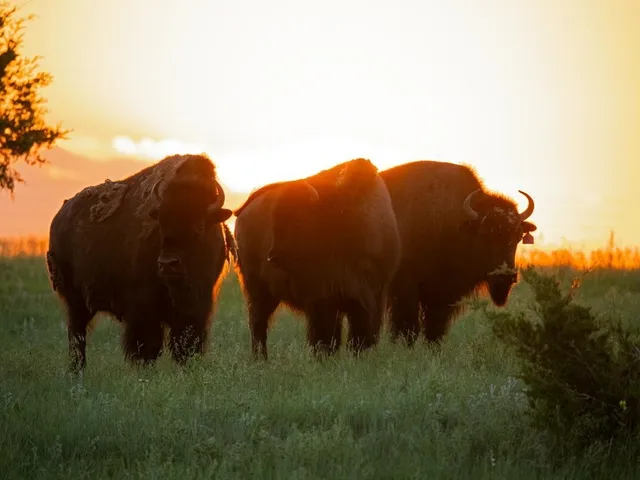
© WWF-US/Clay Bolt
Support Tribes restore buffalo to the Great Plains
The Indian Buffalo Management Act would strengthen support for Tribal Nations who are working to bring buffalo back from the brink of extinction.