How coffee agroforestry is helping orangutan populations recover in Indonesia
By
-
Callie Cho

© WWF Indonesia/JEJE
Forests—grand, mysterious, and vital—cover a third of the Earth and shelter most of the world's diversity of life on land. For the billions of people who depend on them for food, fuel, and livelihoods, forests are as essential as they are irreplaceable.
But forests are under serious threat from human activities. Unsustainable practices like illegal logging, agricultural expansion, and infrastructure developed without nature in mind are rapidly degrading forests, creating destructive feedback loops of landslides, floods, and fires that threaten both ecosystems and forest-dependent communities.
In Indonesia, these pressures are intense. Expanding palm oil plantations, logging, mining, and increasingly frequent fires are carving away at critical habitat. One charismatic primate that suffers the consequences of deforestation and degradation is the endangered Bornean orangutan (Pongo pygmaeus wurmbii).
Here's the good news: Sustainably grown coffee provides a diversified source of income, helping to prevent deforestation and protect orangutans.

© WWF Indonesia/Jane Ridho
Agroforestry for orangutans
In the Indonesian forests of Borneo’s West Kalimantan, orangutans compete for disappearing habitat with palm oil plantations, mines, and logging concessions. Because of these activities, these orange forest-dwellers are threatened by habitat loss, poaching, and human-wildlife conflict. Restoring orangutan habitat, especially the Berubayan-Batu Nyambu Biodiversity Corridor (BBNBC), is critical for population recovery, as this area connects these orangutans with neighboring populations. For endangered Bornean orangutans, whose survival depends on connected, healthy forest corridors, every lost acre matters.
To help safeguard orangutans and their critical forest habitat, experts at WWF collaborated with local communities to find solutions that were beneficial for both orangutans and people. During the search for sustainable solutions, one unexpected ally emerged from beneath the forest canopy: coffee.
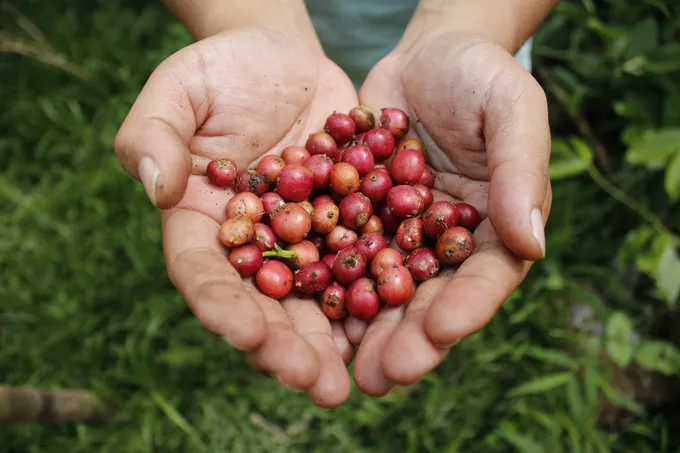
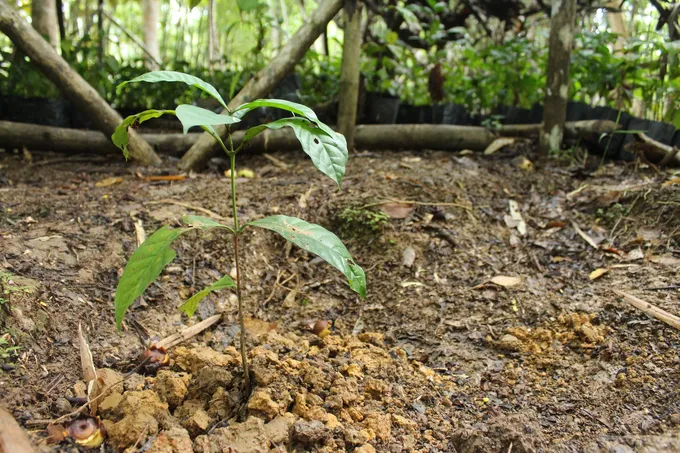
When grown sustainably, coffee can help restore soil, protect habitat, and support local livelihoods, turning a global commodity into a tool for conservation. Agroforestry is a sustainable farming practice that integrates native trees and other crops with coffee plants, thereby enriching the soil and increasing carbon stocks in the land. Agroforestry coffee not only improves the quality of the land and prevents deforestation but also provides diversified sources of income from the various crops, providing more sustainable livelihoods for farmers: a win for nature and for humans!
© WWF Indonesia
© WWF Indonesia
Coffee and community
To promote coffee agroforestry as a diversified sustainable income, WWF organized training sessions for community groups from Sebadak Raya and Beringin Rayo villages that border the priority conservation areas. Villagers developed business models, wrote proposals, and designed coffee agroforestry plots using eco-friendly fertilizer. They also learned about new sustainable farming opportunities, such as cultivating mushrooms, producing honey, and extracting rubber.
Reinforcing this training with real-world examples, WWF organized a visit to the Forest Farmer Group—a community coffee cooperative in Kayong Utara District—bringing together 20 members from surrounding villages (Beringin Rayo, Tanjung Beulang, and Sebadak Raya). There, participants learned about best practices in coffee plantation management, production processes, business operations, and marketing. Inspired by what they saw, villagers returned home motivated to improve their own coffee cultivation practices.
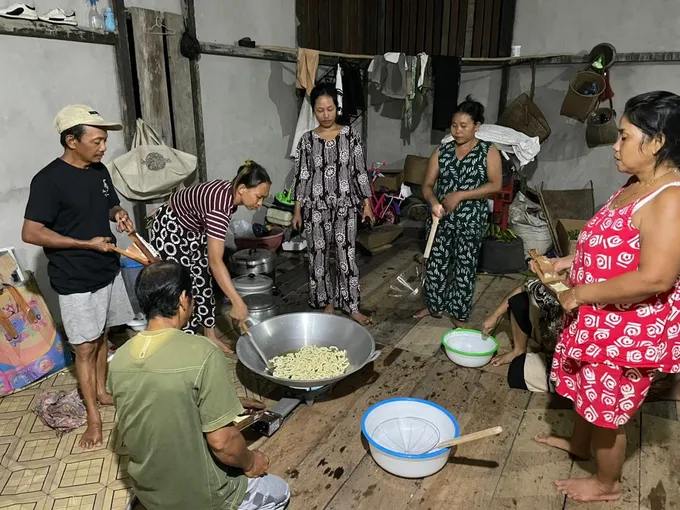
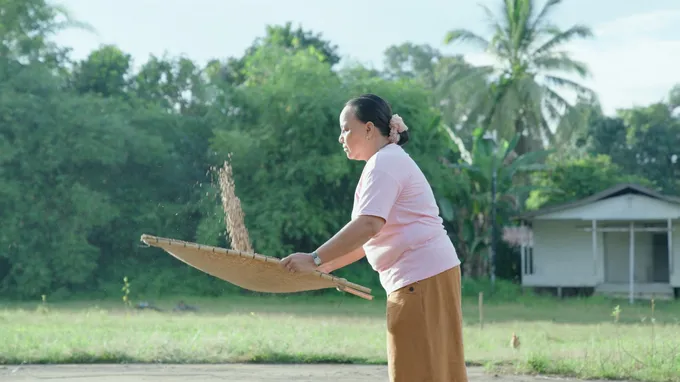
To further increase community capacity and complement coffee agroforestry, WWF conducted training in natural resource processing for women’s groups in three villages (Tanjung Beulang, Kayong Utara, and Kayong Hulu). In these sessions, local women learned to process natural forest materials like dogfruit, taro, and bamboo leaf into consumable products like crackers and chips, helping supplement household incomes.
Through shared knowledge and community building, local Indonesian communities built successful and sustainable coffee agroforestry businesses. Some farmers even showcased their coffee at the annual Jogja Expo Coffee Week exhibition, a conference for coffee lovers, producers, and business owners in Indonesia. The farmers’ coffee beans received high praise, being recognized for their tastiness and good quality, even though they were in the early stages of the agroforestry process.
© WWF-Indoneisa / Jane Ridho
© WWF-Indonesia / Haris Supiandi
Coffee for conservation
By addressing local community needs, WWF ensured that essential orangutan habitats in Indonesia like the BBNBC remain intact. Training communities in sustainable livelihoods such as coffee agroforestry improved local incomes while reducing the need to clear forest land. This success story demonstrates that effective conservation must work with local communities, not around them. When done right, protecting nature and supporting people go hand in hand.

© WWF Indonesia/Tess McCormick
How you can help
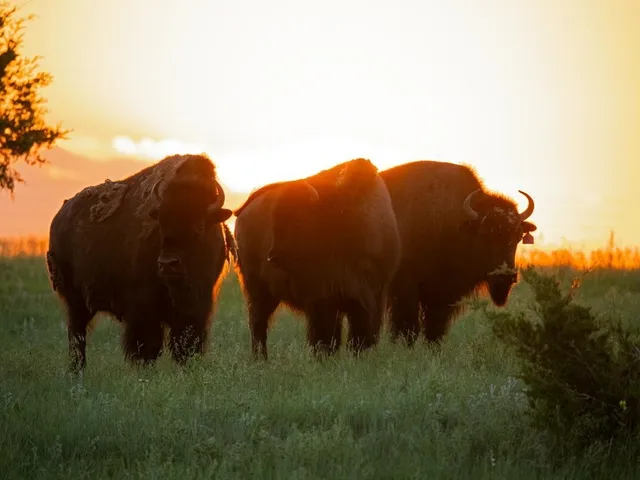
© WWF-US/Clay Bolt
Support Tribes restore buffalo to the Great Plains
The Indian Buffalo Management Act would strengthen support for Tribal Nations who are working to bring buffalo back from the brink of extinction.