Looking for love
What animals can teach us about romance
By
-
Callie Cho

© Judith van de Greindt / WWF-Netherlands
From rom-coms to reality tv to real life, everyone is searching for “the one.” But how do we find this elusive partner, and what makes them special enough to choose above all others?
While every love story feels unique, romance follows a surprisingly universal pattern. First comes attraction—that initial spark of interest. Then courtship—the dating phase where two people connect and build intimacy. Finally, commitment—the decision to stay together through ongoing communication and loyalty.
These stages feel distinctly human, woven into the fabric of our identities and cultures. But is that true? What if I told you that the same chemicals that flood our brains when we fall in love course through prairie voles when they bond? Or that pufferfish create elaborate art to impress a mate?
Let’s explore our deepest romantic ideals through the lens of the animal kingdom. By examining how other species attract, court, and commit, we'll uncover which aspects of love are uniquely ours, and which transcend species divides. The answers might surprise you.
Attraction: ‘The spark’
When it comes to romance, we all have our types—tall or short, brown eyes or blue eyes, homebodies or adventurers. But no matter who we’re attracted to, we’re all searching for that ‘spark,’ that undeniable chemistry that marks the first step of a romantic relationship. But what causes this spark? Let’s turn to animals to answer this question.
Just like animals, our attraction is guided by traits that would make someone a good partner. For us, this includes physical attractiveness, but also personality, hygiene, shared values, and many others. For animals, reproductive fitness is the main driver of mate choice, which is expressed in a variety of ways depending on the species. In some cases, sexual selection has led to the evolution of some outrageous ornamentation, like the elaborate plumage of peacocks, the far-reaching antlers of male deer, or the protruding proboscis of bull elephant seals.
But no matter our type, our emotions of romantic love are rooted in deep neural systems that we share with other animals who form “pair bonds.” Pair bonds are close, selective relationships formed between two individuals, and they are not unique to humans—many birds and even some other mammals form pair bonds. Scientists can study the brain activity of animals in pair bonds to better understand the neural underpinnings of our own experiences of romantic love.
In a study on the pair bonding prairie vole (Microtus ochrogaster), scientists identified key hormones that help regulate our feelings of love and attachment. Oxytocin and dopamine work together to connect the image of their partner with intensely positive feelings—the reward of being together, a chemical cocktail that creates a lasting bond. Vasopressin plays a different role, driving mate-guarding behaviors that look a lot like what we'd call jealousy. These same hormones work in our brains too, triggered by our romantic partners in exactly the same way.
No matter the species, chemistry is chemistry.
© Shutterstock/MD.Shofiqul islam Shozib
© Casper Douma / WWF-Netherlands
Courtship: The mating game
We all want to feel valued in our romantic relationships. No matter your love language—from quality time to gift giving—any display of affection can make us feel seen and special. Well, animals are the same way! From dancing to fighting to artistic displays, animals woo their potential partners with some truly bizarre but wonderful behaviors—all for the chance of romance!
Let’s meet three suitors, each with their own signature style:
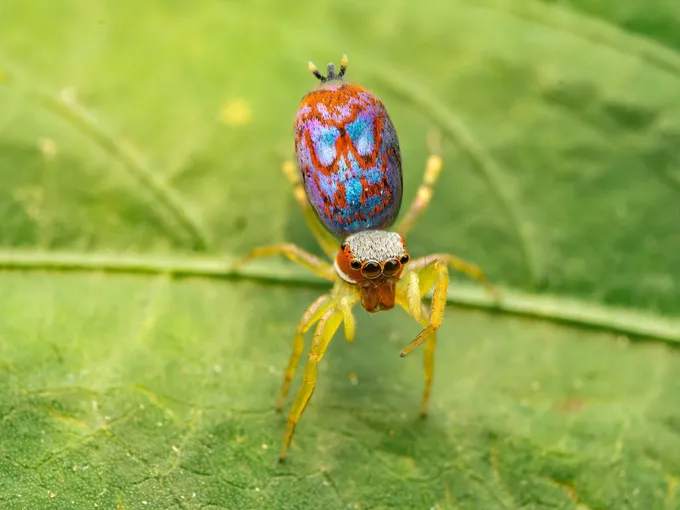
The Dancer. The peacock spider (genus Maratus) may be small (smaller than a grain of rice), but man can he move! A formidable dancer, he situates himself on a high surface and swiftly raises his third pair of legs (he has four pairs) above his head and proceeds by shaking his multi-colored abdomen, a behavior known as ‘opisthosomal bobbing’. When he has captured the attention of a female, he begins his dance: moving back and forth with his third legs waving in the air and his vibrant abdomen shaking from side to side in a ‘fan dance’, the peacock spider mesmerizes his potential mate with his moves. The display can last up to 50 minutes, or until the female decides to mate. Unfortunately for him, if a female is unimpressed with his disco, she may decide to eat him!
The Fighter. While some animals court with grace, others court with force. The adult male red deer (Cervus elaphus), known as a stag, begins his courtship by laying claim to an area (a ‘stand’), which he will fiercely protect along with his harem. If a rival stag decides to challenge him, a duel ensues. First, the two males will roar—the first step to assessing the strength of the other. If they seem evenly matched, the duel proceeds to parallel walking, where the opponents will size each other up by walking side-by-side, periodically roaring, spraying strong-scented mixtures of urine and semen on and around themselves, and rolling in mud and vegetation. If still no one backs down, the stags will clash: in an impressive display of strength, the stags lock antlers attempting to throw the other off balance or injure them until a victor emerges.
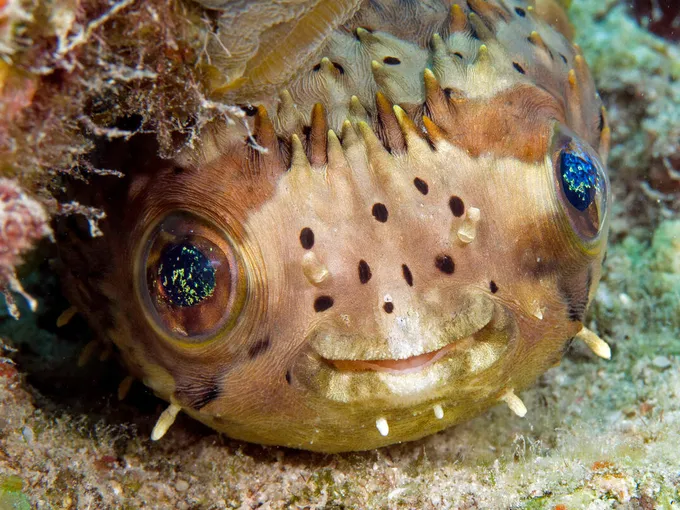
The Artist. Unlike the hot-blooded fighter, the artist prefers to hold court not through displays of strength, but through delicate and precise craftsmanship. One of nature’s most skillful creators is the endearingly globular pufferfish (genus Torquigener). To attract a mate, the pufferfish carefully crafts an impressive design along the sea floor, flapping his fins to create geometric patterns. The pufferfish constructs a striking circle—up to 2 meters in diameter—consisting of radial peaks and valleys adorned by shells and coral fragments. If the female is successfully wooed, the two will spawn and she will lay her eggs in the center of his nest.
Scientists continue to be intrigued by the mating rituals of animals, and there may be something for us to learn here, too. After all, whether it's a carefully chosen gift, an impressive display of dedication, or simply showing up consistently, courtship is about demonstrating: "I see you, and you're worth the effort.”
So, which animal trope speaks to you? Are you Team Dancer, Team Fighter, or Team Artist?
Commitment: Partners for life… Or not
For many humans, the most crucial step in a romantic relationship is commitment. No matter how much our tastes vary, “the one” must be faithful to us, and us alone.
But interestingly, this devotion to monogamy is primarily a human aspiration. In the animal kingdom, species who "mate for life" are few and far between. In fact, experts estimate that only 5% of all mammal species (excluding humans) are believed to be monogamous, compared to nearly 90% of all bird species.

© Wim van Passel / WWF
So why do some animals commit while others don’t? Perhaps unromantically, monogamy in nature is only favored when it leads to greater reproductive success for a species. This means that monogamous animals are ones where significant parental investment is necessary to successfully raise young. For birds, this tends to be the case: vulnerable chicks require around-the-clock protection from one parent, while the other is tasked with foraging for food to feed the family. Monogamous birds include penguins, cranes, pigeons, parrots, swans, geese, doves, and albatrosses.
However, like in human relationships, these pair bonds do not always withstand the tests of time. Though these animals may be socially exclusive, in reality, avian affairs are surprisingly common. These fleeting infidelities may represent genetic insurance: for him, spreading his seed could maximize his quantity of potential offspring, while for her, a fling may allow her to maximize the quality of her offspring by copulating with a more attractive male than her husband (ouch)! For birds, even divorce is on the table—if breeding or parenting attempts fail, the two lovebirds may waddle their separate ways.
So where does this leave us? While nature may not subscribe to monogamy, for many humans, it remains a cornerstone of romantic love. Monogamy is the dominant relationship structure across cultures and integral to how many of us build families and societies. Perhaps this is where human and animal love truly diverge—not in the initial spark of attraction or the thrill of courtship, but in our capacity for chosen, sustained commitment.
Sources
The 3 Fundamental Aspects of Romantic Love. Psychology Today – Experimentations Blog
The Neurobiology of Love and Pair Bonding from Human and Animal Perspectives. Biology — MDPI
What Animals Mate for Life? Meet the Most Devoted Couples in the Animal Kingdom. Discover Wildlife
Do Birds Mate for Life? Discover Just How Faithful They Really Are. Discover Wildlife
Peacock Spider (Maratus spp.). Encyclopaedia Britannica
Multi-Modal Courtship in the Peacock Spider, Maratus volans (O.P.-Cambridge, 1874) PLOS ONE
Eight of Nature’s Grooviest Dancing Animals. BBC Science Focus
How you can help
© WWF-US/Clay Bolt
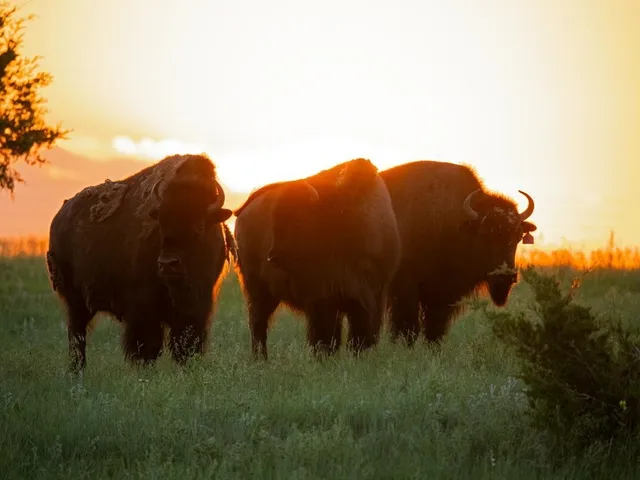
Support Tribes restore buffalo to the Great Plains
The Indian Buffalo Management Act would strengthen support for Tribal Nations who are working to bring buffalo back from the brink of extinction.