Getting material choices right: increasing end market demand for recycled content
Q&A with Erin Simon - Part 2
Erin Simon is Vice President and Head of Plastic Waste and Business at World Wildlife Fund, where she leads WWF's No Plastic in Nature initiative and works with companies across industries to drive systems-level change on plastic pollution. In part 1 of this series Erin introduced us to WWF’s recently released Vision Statement on the Responsible Use of Alternative Materials to Address Plastic Pollution. In part 2 our discussion with Erin shifts from alternative materials to another important lever for responsible material sourcing: recycled content.

© Courtesy Erin Simon
Erin Simon
Vice President and Head of Plastic Waste and Business at World Wildlife Fund
End market demand for recycled content is often cited as the missing piece in building a circular economy for plastics. How broken is that market right now, and what's it going to take to fix it?
Demand isn't absent — it's fragmented, inconsistent, and not backed by enough policy muscle to hold. The U.S. has a 9% plastic recycling rate. And that's not for lack of ambition. We've had years of high-profile corporate commitments to increase their use of recycled content. The gap between what companies pledged and what the market actually delivered tells us that voluntary demand, on its own, is not sufficient to sustain the system.
Part of the challenge is a lack of committed, stable buyers for recycled content — and you can't grow plastics recycling if you don't have people buying it on a consistent basis. When virgin resin is cheap and unregulated, brand owners will drift back to it, especially under cost pressure. We've seen that happen repeatedly.
The fix requires a few things working in concert: non-negotiable demand; EPR frameworks that fund the collection and sorting systems that produce quality feedstock; procurement aggregation across companies so that commitment becomes the kind of investable signal that justifies building real capacity, and mandatory recycled content requirements as a way to show commitment.
The economics of recycled versus virgin plastic are notoriously difficult. Can you walk us through why recycled content costs more and what it would take to close that gap?
It comes down to where each material's costs sit in the supply chain. Virgin PET benefits from low-cost and highly subsidized fossil feedstocks and mature petrochemical supply chains, making it cheaper to produce. And, the cost to landfill (land fill tipping fees) is often cheaper than the cost to recycle. On the other hand, producing food-grade recycled PET requires strict contamination control and energy-intensive recycling steps, making it more expensive than virgin resin manufacturing. And critically, the price gap between recycled and virgin PET is closely linked to global oil prices; as crude oil prices fall, virgin PET becomes more competitive, while high oil prices narrow that gap.
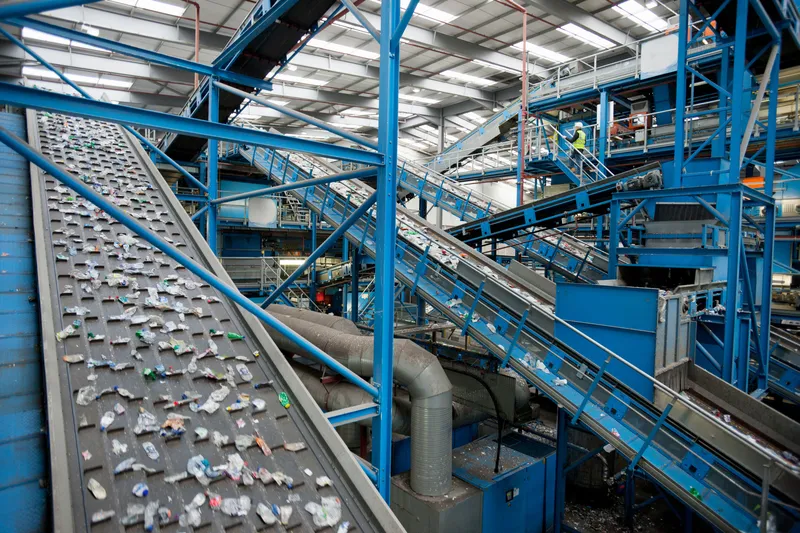
© Juice Flair/Shutterstock
So recycled content is always competing on a tilted playing field. The costs of collection, sorting, cleaning, and reprocessing are real and relatively fixed. The cost of virgin plastic moves with oil markets and is subsidized, implicitly, by the fact that producers bear none of the cost of the pollution and waste their products create.
The key to making plastics recycling economically viable is to create demand. Although EPR legislation helps incentivize collection of plastic packaging, without a market for that material, the only thing we're going to end up with is a lot more material with nowhere for it to go. That's the fundamental equation. Infrastructure investment is necessary but not sufficient. You need the end market pulling the material through the system, not just the collection system pushing it out.
North American recyclers could process 1.7 billion additional pounds of plastic per year, about one-third more than current capacity utilization. This is not a capacity problem. It's a demand problem. And solving a demand problem requires policy tools that make recycled content the economically rational choice, not just the reputationally desirable one.
Tariffs have been a major disruptor for the recycled plastics market over the past year. What's WWF's read on what's happening and what it means for the circular economy?
It's a genuinely complicated picture, and it illustrates something important: the recycled materials market is fragile in ways that makes it more vulnerable to additional market fluctuations. When trade policy shifts, the recycled content market absorbs the shock in ways that can set back progress. Uncertainty due to market conditions factored into several PET reclaimers closing in 2025.
What this moment really underscores is how much the recycled materials market depends on policy consistency. Unlike virgin plastics — which benefit from established, mature supply chains, subsidies and well-understood trade flows — the US secondary materials market is still nascent enough that uncertainty can be destabilizing. The goal isn't to insulate recycled content from trade dynamics forever, but to build domestic market foundations strong enough that the system isn't knocked over by every policy shift.
What role does Extended Producer Responsibility play in unlocking durable end market demand?
EPR is probably the single most important policy mechanism we have for creating the kind of structural change the market needs. Right now, the economics favor virgin plastic — it's cheap to produce and carries none of the cost of collection, sorting, or disposal. EPR shifts the financial responsibility of material waste management from consumers and municipalities to plastic producers, which fundamentally changes that equation. Essentially, it helps establish a more consistent and higher value supply of recycled content. This supply needs to be matched with demand to fulfill its market value, however.
For companies that are genuinely trying to get this right — choosing materials responsibly and building toward circularity — what does "getting it right" look like in practice?
Rising energy costs, supply chain instability, regulatory pressure, and technological advances are converging to reshape the cost dynamics of plastic production in ways that we hope will, over time, narrow the gap between virgin and recycled. But we can't afford to wait for markets to solve this on their own.
Solving this issue has never been about pulling one lever for change but about implementing all the changes to make sure choices made in material use are matched with policy advocacy, commitment, and investment to keep that material in the system as long as possible.
It starts with asking the right questions before making a material decision. Not just "is this better than plastic?" but: Can this material be effectively recovered in the markets where my product is sold? Is there an end market for that recovered material? Have I accounted for the full lifecycle impacts, including land use, water, carbon, and human health? Does this solution work for communities that don't have robust waste infrastructure, not just for cities with single-stream recycling?
These questions can guide successful implementation. Connecting product design and waste management innovation will be critical in addressing this global issue. That means designers, procurement teams, and sustainability officers have to be working with the people who understand what actually happens downstream, including the recyclers, the waste managers, the communities that live near processing facilities.
And then there's the commitment piece. Declaring a recycled content target or a material switch is only as meaningful as the investment behind it. Alternative materials can play a beneficial role in the circular economy when certain conditions are met to ensure environmental risks are mitigated. Meeting those conditions requires real investment: in supply chain development, in infrastructure, in advocacy for the policy tools — EPR, recycled content mandates, production caps on virgin plastic — that create the enabling environment for all of it.

© Thippakone Thammavongsa / WWF-Laos