
Rebuilding the right way
Why sustainable building materials management should be at the forefront of crisis recovery
World Wildlife Fund, Northwestern University, RMIT, and UNOPS recently released a paper, Global Call to Action: Sustainable Building Materials Management in Post-Disaster Situations. Anita van Breda, one of the study’s authors, explains why this is an issue we all need to start thinking about now.

© WWF / Simon Rawles
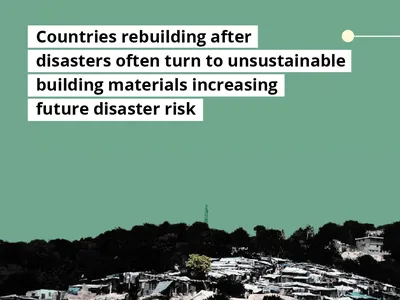
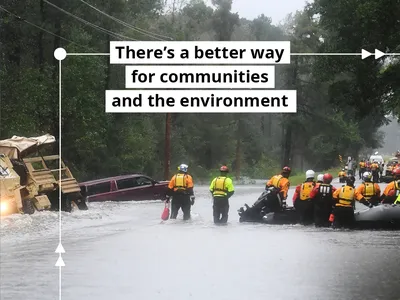
Communities around the world every day depend on infrastructure, roads, bridges, housing, that may have taken decades or in some cases, centuries, to build. But it could all be destroyed or damaged in a matter of hours when disaster strikes. Along with loss of life and injury, destruction of a communities infrastructure is one of the most serious issues in any humanitarian crisis. The pressure to rebuild quickly is acute and justifiable, but there can be unintended long-term consequences when reconstruction building material is not thoughtfully considered.
The material challenges of rebuilding…
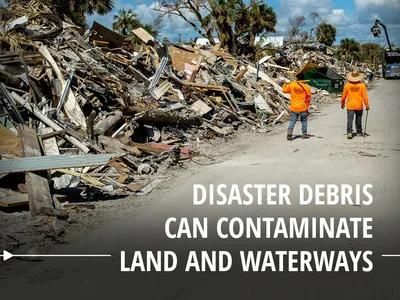
In a matter of days, disasters can generate the equivalent of five to fifteen years’ worth of construction waste. Massive amounts of debris, some of it hazardous, must be removed, recycled, repurposed or disposed of immediately and properly to avoid further damage to people and ecosystems.
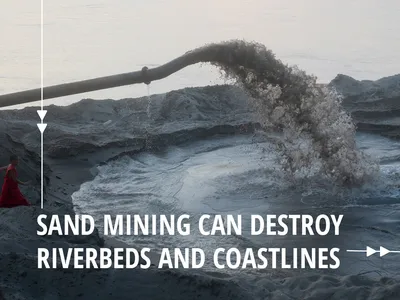
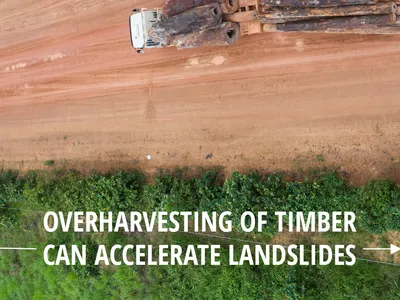
At the same time, there is an equally sudden imperative to bring in just as much new building material. Post disaster rebuilding can trigger shortages of essential materials like cement, sand, bricks, timber, and steel. This in turn can drive sharp price increases and encourage environmentally and socially destructive extraction.
© WWF
© WWF
© WWF
© WWF
© WWF
© WWF
…and the immaterial challenges
A key impediment to effective reconstruction has nothing to do with the building materials themselves, but rather with gaps and weaknesses in policy and governance. Government decision makers have not updated policies and disaster management frameworks to match the unique challenges of post-disaster rebuilding. Unfortunately, despite recognizing sustainability as a major priority in reconstruction, regulations and guidelines rarely mirror what happens on the ground.
A global call to action
A major barrier to managing building materials sustainably after disasters is the disconnect between the construction sector and the disaster management structure. But there are several policy changes at the national and global level that could close the gap and reduce the unintended destructive consequences hurting both people and nature in the rush to procure building materials.
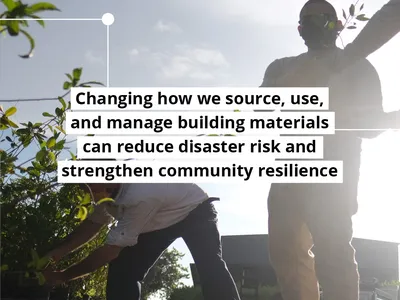
Sustainable building materials management should be treated as a core part of rebuilding safer and carried through regional, national, and local disaster plans. Post disaster rebuilding should align with national disaster risk reduction, climate, and environmental goals by prioritizing local, environmentally responsible materials and circular construction practices, rebuilding more safely and with less environmental and social impacts.
To make this happen, the Shelter, Land and Site Coordination Cluster should elevate sustainable materials management as a key performance measure in reconstruction, raise awareness among governments and humanitarian partners, and support local producers as part of preparedness and disaster risk reduction efforts.
At the same time, global construction bodies should develop disaster preparedness guidance for the construction sector that addresses material shortages, supply chain disruptions, and price volatility.
Finally, a shared global hub could track post disaster materials challenges, update practical guidance, and mobilize greater public and private investment in sustainable materials and debris reuse for reconstruction.
Rebuilding for the future
Disasters and crises will continue to happen around the world; reducing risk and vulnerability is key. Planning for sustainable materials management can reduce environmental damage, reduce risk for local communities, stabilize reconstruction costs, and align recovery with disaster risk reduction and climate commitments. When urgency is at the forefront, such planning allows communities to rebuild without sacrificing ecosystems, livelihoods, and long-term safety.