Community hatcheries for endangered freshwater turtles in the Mekong River
© WWF-Laos
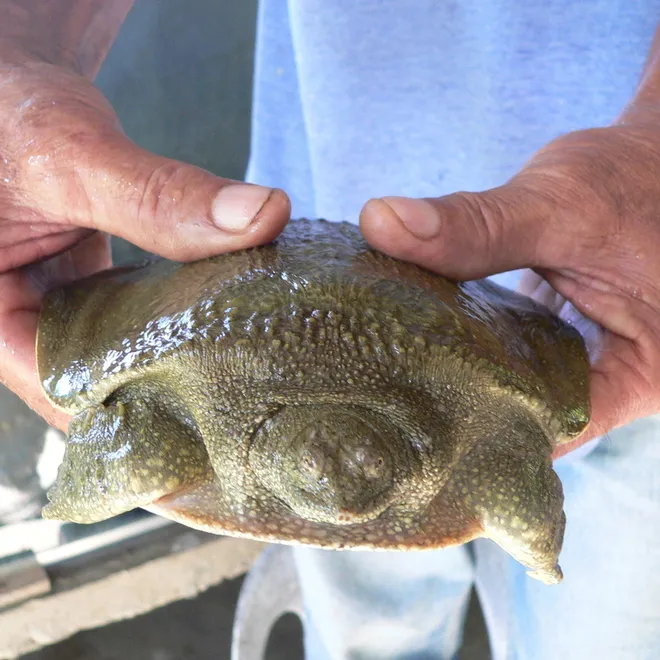
The critically endangered Asian giant softshell turtle and the vulnerable Asiatic softshell turtle persist in only a few remaining strongholds, one of which is the Siphandone stretch of the Mekong River in southern Laos. Both species nest on exposed sandbars between June and July, hatching in late August—the hottest and most hydrologically unstable period of the year. However, rising sand and air temperatures, heatwaves, and increasingly erratic river flows are overheating nests, reducing hatching success, and distorting sex ratios through temperature-dependent sex determination, in which warmer incubation conditions skew populations heavily female. These pressures compound an already severe set of threats: hunting, bycatch, habitat degradation, and destructive fishing practices.

© WWF-Laos
To protect both species at their most vulnerable life stage, WWF-Laos and the Wildlife Adaptation Innovation Fund are establishing community-run hatcheries on temple grounds and in village areas across the Siphandone landscape, covering 193 acres of critical sandbar and flooded forest habitat. Eggs will be carefully relocated from high-risk, exposed sandbars into climate-smart hatchery enclosures built from locally available materials like bamboo, wooden posts, river sand, and thatch. Each hatchery will be positioned about three to six feet above flood level to reduce inundation risks and will feature natural shading structures, sand beds that replicate natural nesting conditions, and fencing to protect eggs from predators and human interference. Sand moisture levels will also be monitored and controlled to prevent desiccation. Upon hatching, turtles will be released back to their original sandbar habitats within 24 hours.
The hatcheries will be run by Community Turtle Conservation Teams established in target villages, building on existing community patrol groups with trained local members who conduct weekly patrols during nesting season and bi-weekly patrols year-round. Patrol teams will monitor and report illegal harvesting and destructive fishing practices using SMART tools, identify and map active nesting sandbars using field surveys and traditional ecological knowledge, and safely collect and relocate high-risk nests following strict protocols. Community reflection meetings every six months will bring together village authorities and team members to review monitoring data—including egg survival rates, hatching success, and incubation temperatures—and adapt management accordingly.
The project is also investing in lasting community connection with these species. A "Turtle Guardian Team" comprised of students will participate in school outreach, interactive educational workshops, and World Turtle Day campaigns, including social media content, drawing competitions, and a short conservation video featuring local voices. Together, these community-led interventions will increase hatchling success, stabilize sex ratios, and build the local knowledge and governance structures needed to protect these species as the Mekong's climate continues to change.