Expanding nesting opportunities for hyacinth macaws in the Paraguayan Cerrado
© WWF-Paraguay
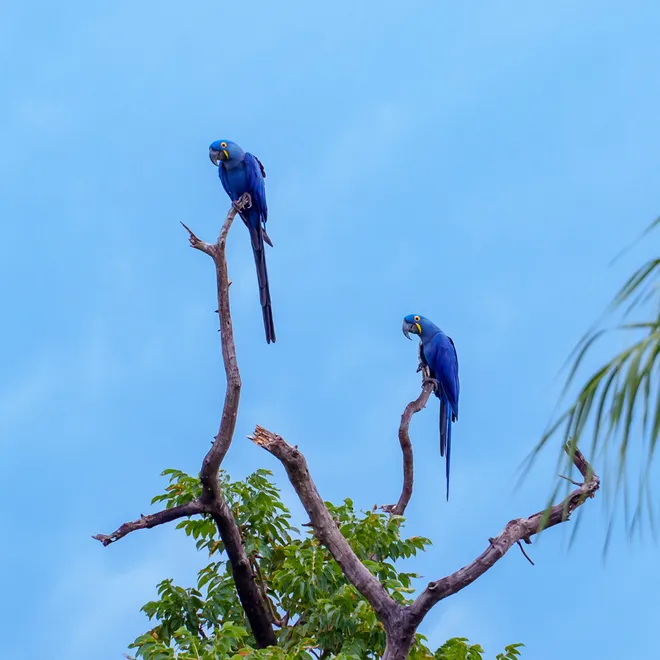
The Cerrado is the world’s most biodiverse savanna—home to 5% of the planet’s species—and provides essential connectivity between South American biomes, including the Amazon and Atlantic Forests. Among its inhabitants is the hyacinth macaw, whose populations are under threat from poaching, habitat loss, and increasingly destructive wildfires exacerbated by climate change. These challenges disrupt nesting patterns and the availability of large trees that macaws depend on for breeding, posing serious risks to their long-term survival.
In the Paraguayan region of the Cerrado, the Estancia Arrecife Natural Reserve is a critical site for hyacinth macaw conservation. The reserve, located in a key biodiversity corridor, is the only place in the country where nesting activities of these macaws have been recorded in recent years. Wildfires, particularly in 2020, have devastated large portions of the macaws' habitat and affected breeding success. With support from the Wildlife Adaptation Innovation Fund, One Earth Conservation and WWF-Paraguay addressed these issues that are threatening macaw populations.

© WWF-Paraguay
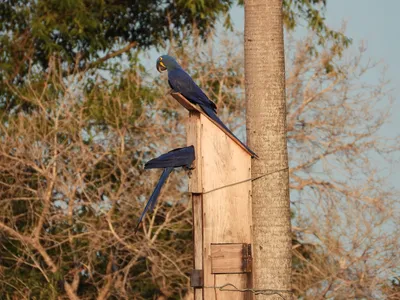
First, 172 students, six government workers, and nine park rangers engaged in environmental education campaigns to raise awareness about poaching, illegal trafficking, wildfire threats, and habitat destruction for macaws. The project then focused on restoring and enhancing macaw nesting sites through several key activities, including the repair of three structurally weakened natural nest trees and the construction and installation of 20 nest boxes in areas where natural tree cavities were lost. The boxes were designed to specifically match the dimensions of natural macaw nests, a technique proven successful by a previous project in Brazil. One trained staff member installed all the nest boxes to limit the sharing of sensitive information and safeguard the locations of the nests from illegal wildlife traffickers.
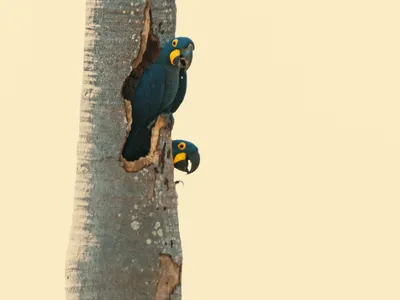
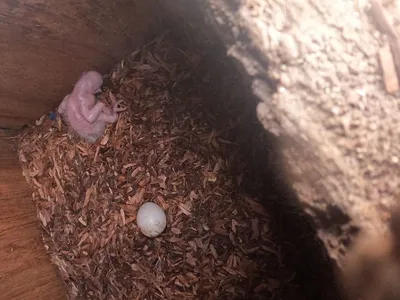
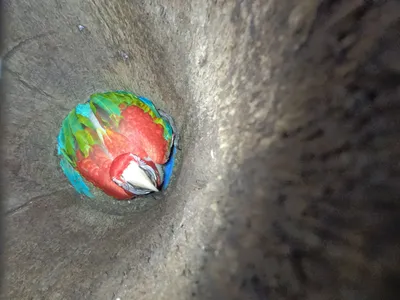
Continuous monitoring took place during nesting seasons, using endoscope cameras to track the health of eggs and chicks. In one of constructed nest boxes, the first ever wild occupation of a hyacinth macaw in a nest box in Paraguay was recorded, highlighting the critical role of supplemental nesting structures in the area. An additional five natural nest cavities were occupied by hyacinth and scarlet macaws. By combining local engagement, education, and hands-on conservation work, the project is helping to support long-term breeding success and rebuild macaw populations. These interventions can be scaled up to safeguard macaws in other key regions of Paraguay.
Macaws occupying artificial and natural nest boxes and cavities
© Chaco Films/WWF-Paraguay
© One Earth Conservation
© WWF-Paraguay
© One Earth Conservation