Gharial crocodile translocation to Banke National Park, Nepal
© Shanshank Poudel/WWF-Nepal
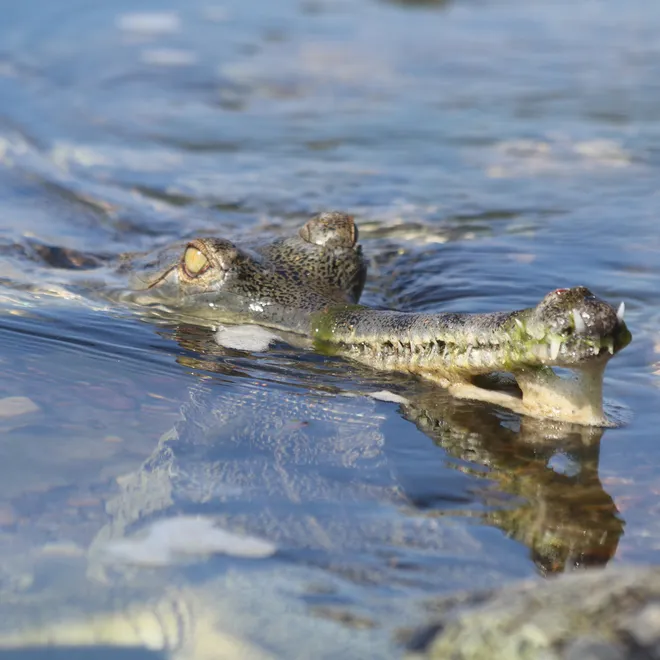
Formerly found in rivers across Nepal, Pakistan, Myanmar, India, and Bhutan, the gharial crocodile has faced significant population declines, and today is extinct in most of these areas, occupying just 2% of its historic range. Gharials are listed as a critically endangered species with low genetic diversity, and this vulnerability is increasing in the face of climate change as the crocodiles are sensitive to changes in temperature, among other climate impacts.
With support from the Wildlife Adaptation Innovation Fund, WWF-Nepal and the Department of National Parks and Wildlife Conservation worked to address these challenges by translocating 10 gharials to a new and more suitable habitat: the West Rapti river in Nepal’s Banke National Park. This location was chosen because it has smaller temperature swings than their habitat in Nepal’s Chitwan National Park, adequate sandy banks for basking and nesting, limited human activity and influence, and was once part of their natural range.
A team of wildlife biologists, freshwater specialists, and climate experts chose a 17.4-mile stretch of the West Rapti River in Banke National Park to translocate 10 adult gharials—nine female and one male—from the Gharial Breeding Centre in Chitwan National Park. The translocated gharials were tagged for monitoring purposes and, before release, underwent an acclimatization period in enclosures with low water current, allowing them to acclimate to the new environment.
To ensure the success of the project, law enforcement agencies, park officials, and the local government were engaged with the project to strengthen gharial protection, as certain stretches of the river are adjacent to community forest areas. Additionally, awareness campaigns, which included the dissemination of posters, brochures, and videos highlighting the project, were conducted among local communities near the park to promote their involvement in gharial conservation efforts and reduce potential human-wildlife conflict. A total of 19 community members and 103 students participated. These interventions have been crucial in igniting community engagement for gharial conservation efforts and have fostered a collaborative approach to conservation among the relevant stakeholders.
An expert also trained four citizen scientists to monitor the gharials’ movement. These citizen scientists have recorded regular sightings of at least 5 of the gharials and observed indirect signs of their presence, such as slide marks and footprints. This suggests a successful adaptation that is aligned with the approximately 50% observed survival rate for released gharials in Nepal.
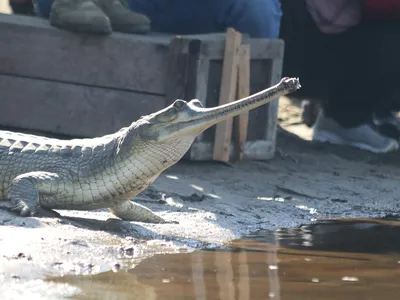
Gharial being released in the West Rapti river.
© Shanshank Poudel/WWF-Nepal
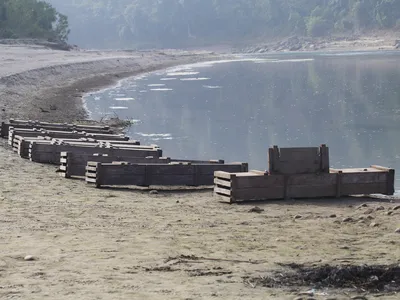
Ventliated wooden box used for translocation of gharials.
© Shanshank Poudel/WWF-Nepal
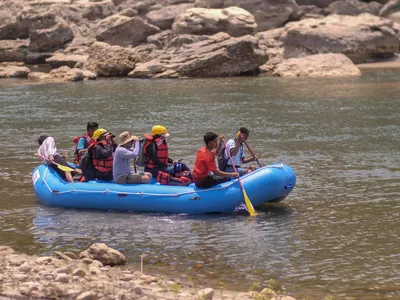
Boat survey monitoring with citizen scientists.
© Shanshank Poudel/WWF-Nepal