Improving habitat and forage for Grevy’s zebra with semi curricular bunds and gully restoration in northern Kenya
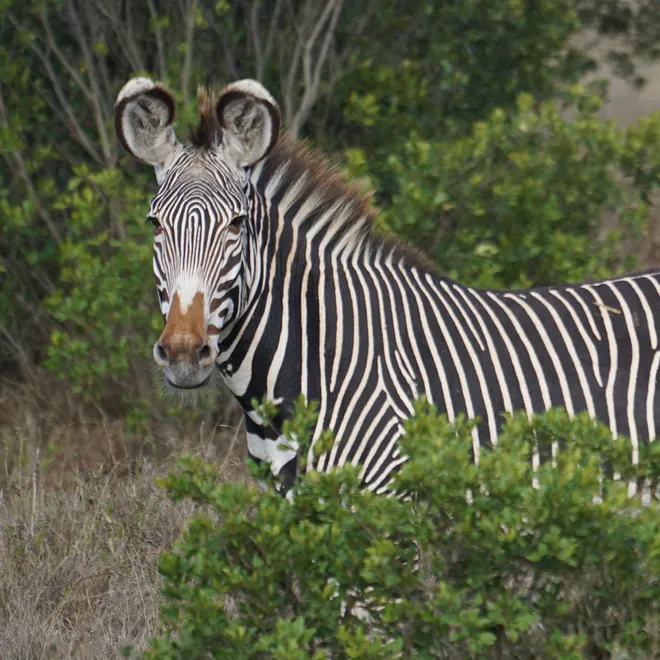
© Nikhil Advani / WWF-US
Northern Kenya is becoming hotter, drier, and more unpredictable, with prolonged droughts, erratic rainfall, and frequent extreme weather accelerating land degradation. Perennial grasses are disappearing, leaving bare soil that heats quickly, increases evaporation, and prevents recovery. This degradation intensifies competition between livestock and the endangered Grevy’s zebra for dwindling forage, while longer dry seasons force animals to travel farther for food and water. At the same time, expanding erosion gullies poses a direct and growing threat to zebra foals, which can fall into these deep channels.
In response, the Wildlife Adaptation Innovation Fund and the Grevy’s Zebra Trust are combining complementary restoration techniques in three villages within Nanapa Conservancy, a key habitat and movement corridor between Isiolo and Laikipia Counties. Semi-circular bunds—low earthen structures that capture rainfall and slow runoff—will restore 30 hectares of degraded rangeland by creating moist conditions for indigenous grasses to re-establish. Around 300 kg of drought-tolerant Cenchrus ciliaris seed will be sown ahead of seasonal rains to maximize germination, while construction is carried out during dry periods when conditions are most suitable.
Alongside grassland restoration, a pilot program will stabilize three priority erosion gullies that threaten zebra foals and drive further degradation. A tiered approach will be used, with gabions for heavily eroded gullies, rock check dams for moderate flows, and brushwood barriers for smaller channels. These structures will be reinforced with native vegetation to anchor soil and promote natural recovery, reducing erosion, and restoring landscape stability.
Beyond the ecological outcomes, 90 community members across the three villages will be trained in climate-adaptive land restoration techniques, three Village-Based Committees will be formed to manage and expand the work independently, and Samburu women will be trained and employed as Grassland Champions to guide restoration work. Community members will also participate in exposure visits, hands-on training, and ongoing management through the Village-Based Committees. Monitoring throughout the project will track vegetation recovery, soil health, and wildlife use, including Grevy’s zebra responses. By the project’s end, 74 acres will be restored, key gullies stabilized, and local capacity strengthened, creating a scalable, evidence-based model for climate-resilient rangeland restoration across northern Kenya.