Weatherproofing artificial cliff nests for gyrfalcon in Sweden
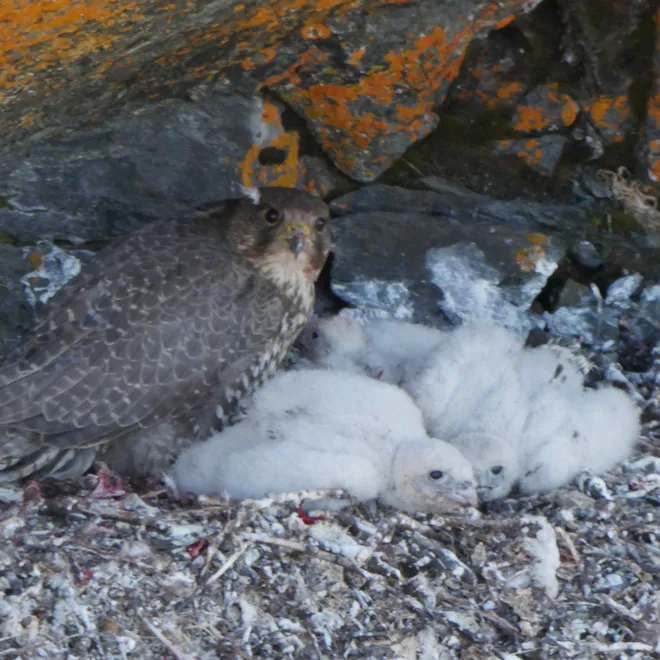
© WWF-Sweden / Tom Arnbom
The gyrfalcon—the world's largest falcon—is one of Sweden's most endangered birds, with only an estimated 160–200 adults remaining in the country's alpine regions. Unlike most Arctic species, gyrfalcons do not migrate south in winter, making them uniquely exposed to the rapid climate changes reshaping the Arctic.

© WWF-Sweden / Tom Arnbom
Warmer, wetter springs are proving especially dangerous. Heavy rainfall during breeding season soaks exposed cliff-ledge nests, causing chick deaths from chilling and nest collapse. Rain that freezes into hard ice crusts reduces access to the ptarmigan and rodents that gyrfalcons depend on to feed their young. At the same time, accelerating freeze-thaw erosion is destabilizing the cliff faces where these birds nest, destroying the old raven nests that gyrfalcons traditionally reuse year after year. With fewer secure nesting sites and increasingly hostile spring conditions, breeding failures are becoming more common—and the species' long-term survival in Sweden is at risk.
WWF-Sweden, with support from the Wildlife Adaptation Innovation Fund, is installing weather-resilient, artificial nest platforms on cliff faces in Vindelfjällen Nature Reserve — one of Sweden's largest protected areas. Modeled on a proven design from Norway, the structures will mimic natural raven nests with stabilized nest bowls, secure anchoring, and good drainage. Each nest will be positioned at a site specifically selected for good overhang cover and shelter from wind and precipitation, directly targeting the weather-driven nest failures that have been identified as a key driver of the species' decline.
Up to 15 platforms will be installed at these locations during the post-breeding season (late summer through December) to avoid disturbing birds currently nesting. The sites will be identified through drone, acoustic, and ground surveys, and assessed for substrate stability, exposure, and orientation before installation. Camera traps and low-disturbance vantage-point monitoring will track whether falcons adopt the new structures and whether breeding outcomes improve. The project will also produce a replicable Nest Design & Placement Guide and a standardized monitoring protocol, so that the approach can be sustained and scaled across other gyrfalcon territories in the future.