Corporate climate action

© Shutterstock / Soonthorn Wongsaita / WWF
Collaborating with business
To achieve the highest ambition of the Paris Agreement and avoid the worst impacts of climate change, we must reduce emissions by 50% by 2030 and reach Net Zero no later than 2050. This requires decarbonizing every sector of our economy and mobilizing every segment of society to do it.
Business must be at the forefront of that change.
For more than 25 years, WWF has worked with leading companies to reduce greenhouse gas emissions, source more renewable energy, and advocate for broader systems change to address climate change. Every company has a role to play in transitioning to a net-zero economy, but climate change will only be solved through collective action. We need to rapidly scale both ambition and action, and that happens faster when we work and learn together.
As the world’s leading conservation organization, with global expertise across climate, forests, food, freshwater, and oceans, WWF is uniquely positioned to help companies address the causes and impacts of climate change.
As a founding partner of the Science-Based Targets initiative (SBTi), the Renewable Thermal Collaborative (RTC), and the Clean Energy Buyers Association (CEBA), WWF has deep experience convening companies to scale ambition and action. WWF also leads the Climate Business Network (CBN), bringing together companies committed to dramatically reducing emissions across the value chain.
WWF's climate, energy, and business work

© Canva Pro
Climate Business Network
WWF's Climate Business Network (CBN) is a hub to help corporate members accelerate individual and collective climate action through expert guidance, peer learning, and sharing of best practices.

© canva pro
The Renewable Thermal Collaborative (RTC)
Co-convened by WWF, The RTC serves as a global coalition for companies, institutions, and governments committed to scaling up the use of renewable heating and cooling to dramatically cut carbon emissions.

© Shutterstock
Clean Energy Buyers Association (CEBA)
CEBA connects businesses with experts in private, government, and academic fields to decarbonize supply chains and switch to clean energy.

© Canva Pro
Science Based Target Initiatives (SBTI)
SBTi helps private businesses reduce carbon emissions and greenhouse gasses based on cutting edge climate science by reviewing plans and comparing them to the latest data.
WWF in action
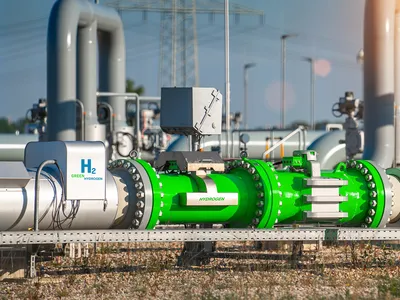
© Shutterstock / Audio und werbung
Supporting strategic end uses is key to making hydrogen hubs the building blocks to scale
New federal policies are making hydrogen fuel cheaper to produce, but its still limited capacity means it has to be deployed where it can do the most good.

© Paul Brady
Decoding treasury's proposed guidance for the clean hydrogen production tax credit
Confused about how the Inflation Reduction Act (IRA) saves companies money on taxes by using clean hydrogen? Here is a handy guide.

© Michel Gunther / WWF
3 major policy trends to watch for in China's renewable energy market
China’s innovations in managing the clean energy industry can guide American innovation in our own.

© Michel Gunther / WWF
SBTi Forest, Land, and Agriculture Guidance (FLAG)
FLAG Guidance, developed by WWF, provides the world’s first framework for companies in land-intensive sectors to set science-based targets that include land-based emission reductions and removals.