Publications
-
-
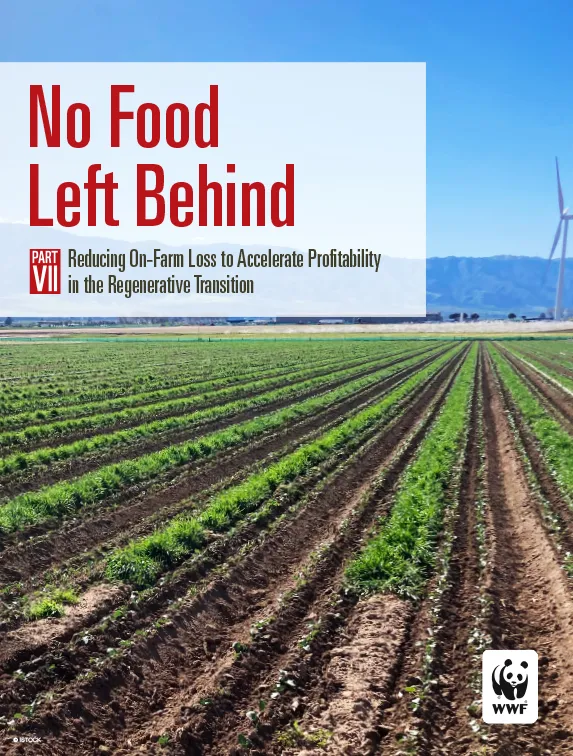
Wildlife populations have declined by 73% over the past 50 years, mainly due to habitat loss driven by food production, which also contributes significantly to deforestation, water pollution, and greenhouse gas emissions. With a growing human population, the challenge is to boost food production sustainably, such as through regenerative agriculture, while addressing the 40% of food that‚'s wasted. A WWF study, and the seventh in a series, draws from four examples in the field of farmers transitioning to regenerative practices to show how circularity could help reduce food loss and improve economic resilience. However, producers face financial challenges, and support from buyers and policymakers is essential to reduce on-farm losses and scale regenerative practices.
-
-
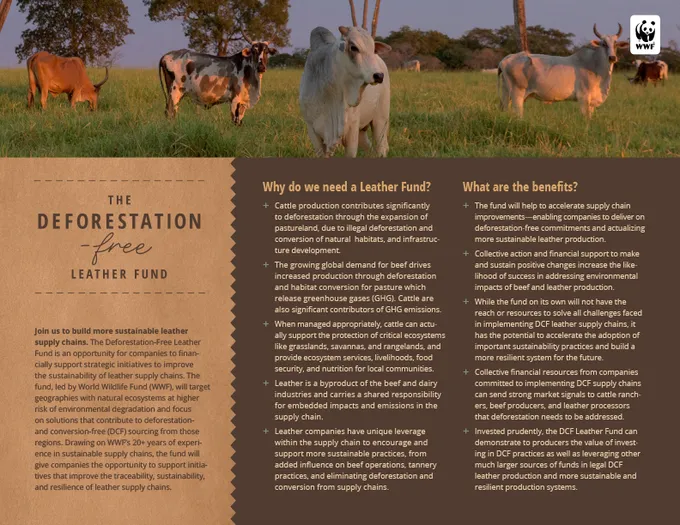
The Deforestation-Free Leather Fund is an opportunity for companies to financially support strategic initiatives to improve the sustainability of leather supply chains. The fund, led by World Wildlife Fund (WWF), will target geographies with natural ecosystems at higher risk of environmental degradation and focus on solutions that contribute to deforestation- and conversion-free (DCF) sourcing from those regions. Drawing on WWF‚'s 20+ years of experience in sustainable supply chains, the fund will give companies the opportunity to support initiatives that improve the traceability, sustainability, and resilience of leather supply chains.
-
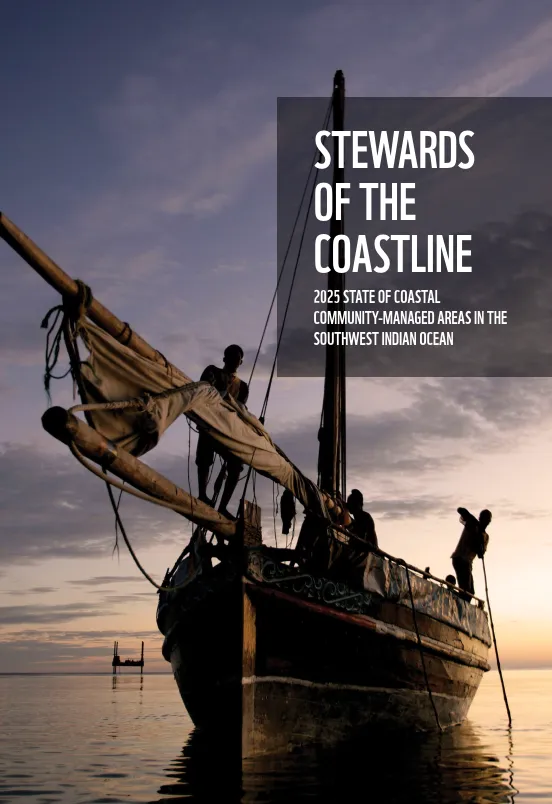
The Stewards of the Coastline provides the first regional assessment of community-led marine governance in the Southwest Indian Ocean (SWIO) region that leverages the power of the ElinorData.org platform. Based on data from 52 community-managed areas across five countries, this report highlights the strengths, challenges, and opportunities for community-led marine governance, showcasing successes while highlighting key areas for improvement. It provides a clear roadmap for action, outlining the steps that governments, non-governmental organizations, funders, and other stakeholders must take to ensure communities have the rights, resources, and support they need to safeguard marine ecosystems and sustain their way of life. A collaboration between WWF, CORDIO East Africa, and many other partners advancing marine conservation in the Western Indian Ocean, this report underscores the power of collaboration and local stewardship in ensuring resilient coastal ecosystems and thriving communities.
-
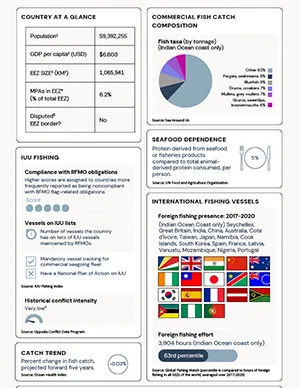
Conflicts over marine fisheries will increase as fishing pressure, climate change, and IUU fishing impact stocks. The following documents summarize the conditions that contribute to the risk of fisheries conflict in the next five years in 10 African nations. Data and analysis are available at OceansFutures.org.
-
-
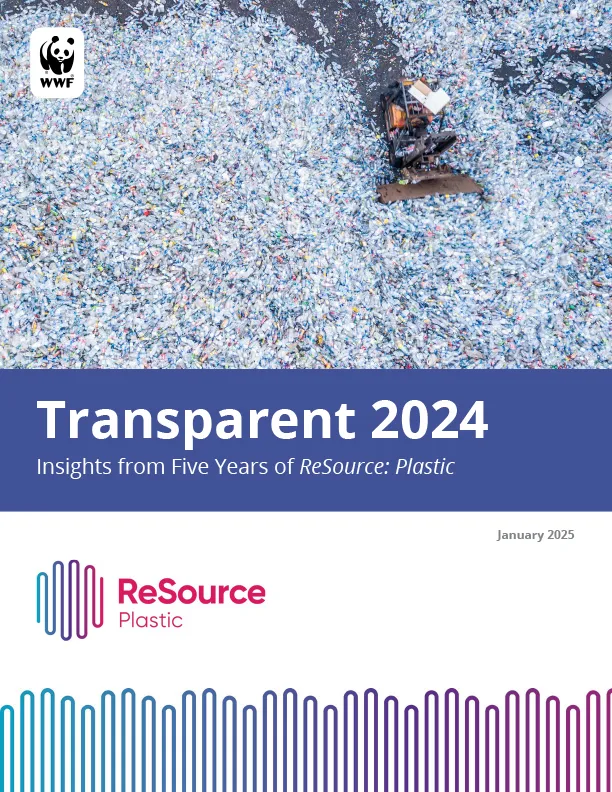
World Wildlife Fund (WWF) is working toward a vision of No Plastic in Nature by 2030 and is leading the charge to help reimagine how we source, design, dispose of, and reuse the plastic materials communities most depend on. As part of the effort to bring data and collaboration to the forefront of corporate action, ReSource: Plastic publicly reports on the progress of its Member companies year over year. The Transparent report series is ReSource‚'s annual publication that details and tracks progress on Member activities and harnesses this new data to provide recommendations for action‚ – both internal to company supply chains and across wider multi-stakeholder efforts.
-
-
The International Federation of Consulting Engineers (FIDIC) Asia Pacific Conference 2024, "Governance for Climate Shocks," took place in Kathmandu from November 18 to 20, bringing together experts from more than 20 countries to discuss strategies for developing climate-resilient infrastructure. The conference covered governance, engineering innovations, and climate adaptation strategies, emphasizing the need for sustainable practices that balance economic growth with environmental preservation.