Publications
-
While considerable progress is being made toward more low carbon, resilient infrastructure development, there are still major gaps in current planning approaches to be addressed to make progress against multiple goals in critical global agreements on climate, biodiversity, and sustainable development. Natural capital and ecosystem services continue to be undervalued and poorly understood, especially the benefits they provide in supporting resilience for people and infrastructure in a rapidly warming world.
This report (lo-res version), with support from GIZ, outlines a new planning approach integrating considerations of natural capital and ecosystem services, climate risks and resilience, and sustainable development needs to support social-ecological system scale planning. It provides key recommendations for global and local institutions influential in infrastructure development, from multilateral development banks and other funders to NGOs and the private sector, to address these gaps and facilitate an improved planning approach.
-
While considerable progress is being made toward more low carbon, resilient infrastructure development, there are still major gaps in current planning approaches to be addressed to make progress against multiple goals in critical global agreements on climate, biodiversity, and sustainable development. Natural capital and ecosystem services continue to be undervalued and poorly understood, especially the benefits they provide in supporting resilience for people and infrastructure in a rapidly warming world.
This report (hi-res version), with support from GIZ, outlines a new planning approach integrating considerations of natural capital and ecosystem services, climate risks and resilience, and sustainable development needs to support social-ecological system scale planning. It provides key recommendations for global and local institutions influential in infrastructure development, from multilateral development banks and other funders to NGOs and the private sector, to address these gaps and facilitate an improved planning approach.
-
There is a growing realization that individual supply chain actors lack the power to fix large-scale environmental degradation such as deforestation, depletion of wild fish stocks, and plastic pollution on their own, yet these problems pose real risks to entire industries, company reputations, and long-term profitability.
Pre-competitive platforms offer a diversified strategy and a faster path to innovation and progress. One such collaboration that has demonstrated clear value for businesses is the Global Salmon Initiative (GSI), a platform representing nearly 50% of global salmon aquaculture production. This is a case study of their challenges, successes, and a case for change at a scale that would not be possible alone.
-
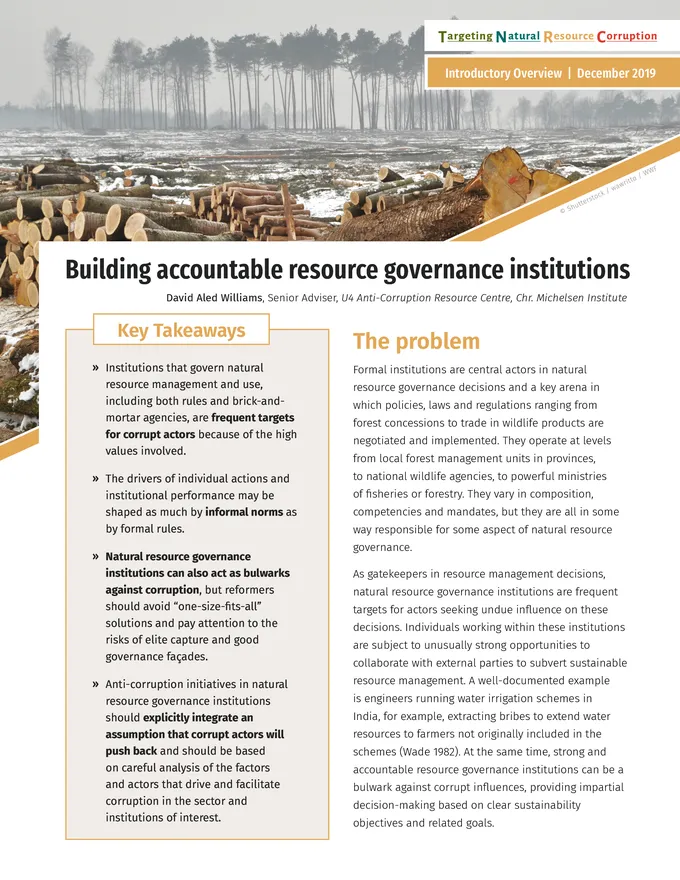
Formal institutions are central actors in natural resource governance decisions and a key arena in which policies, laws and regulations ranging from forest concessions to trade in wildlife products are negotiated and implemented. As gatekeepers in resource management decisions, natural resource governance institutions are frequent targets for actors seeking undue influence on these decisions. Getting to know institutions – how they work, the personalities involved, the pressures they are under, where their revenues come from – is a critical first step towards minimizing corrupt influences and unlocking their anti-corruption potential.
---
This content is made possible by the generous support of the American people through the United States Agency for International Development (USAID). The contents are the responsibility of World Wildlife Fund (WWF) and do not necessarily reflect the views of USAID, the United States Government, or individual TNRC consortium members.
-
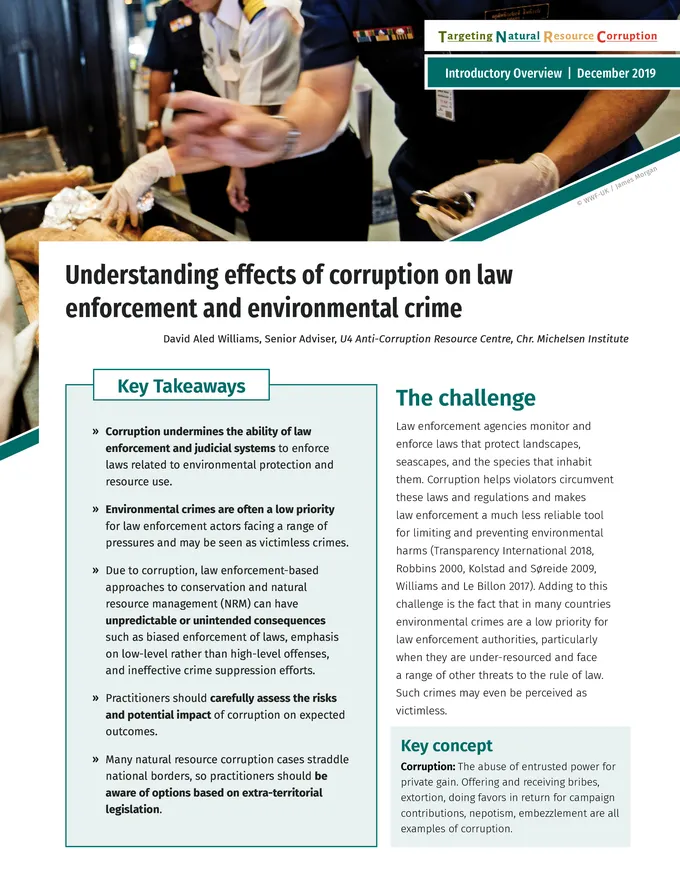
Law enforcement agencies monitor and enforce laws that protect landscapes, seascapes, and the species that inhabit them. In many countries environmental crimes are a low priority for law enforcement authorities, particularly when they are under-resourced and face a range of other threats to the rule of law. Corruption helps violators circumvent these laws and regulations and makes law enforcement a much less reliable tool for limiting and preventing environmental harms.
---
This content is made possible by the generous support of the American people through the United States Agency for International Development (USAID). The contents are the responsibility of World Wildlife Fund (WWF) and do not necessarily reflect the views of USAID, the United States Government, or individual TNRC consortium members.
-
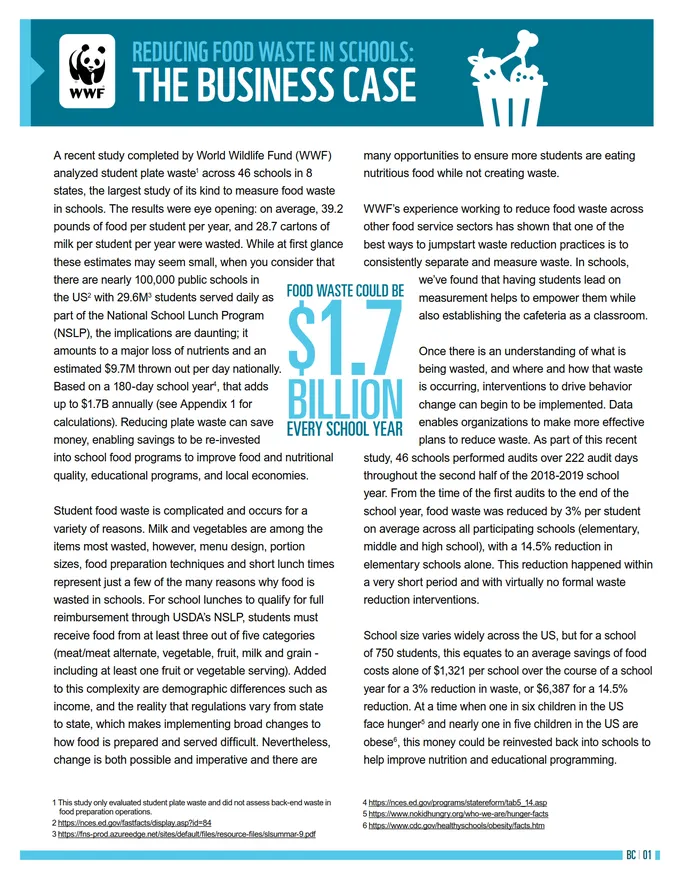
A recent study completed by WWF analyzed student plate waste across 46 schools in 8 states, the largest study of its kind to measure food waste in schools. The results and implications were eye-opening, when you consider that there are nearly 100,000 public schools participating in the National School Lunch Program, serving 29.6M students daily. This business case outlines the calculations and examines how reducing plate waste can save money and enable savings to be re-invested into school food programs to improve food and nutritional quality, educational programs, and local economies.
-
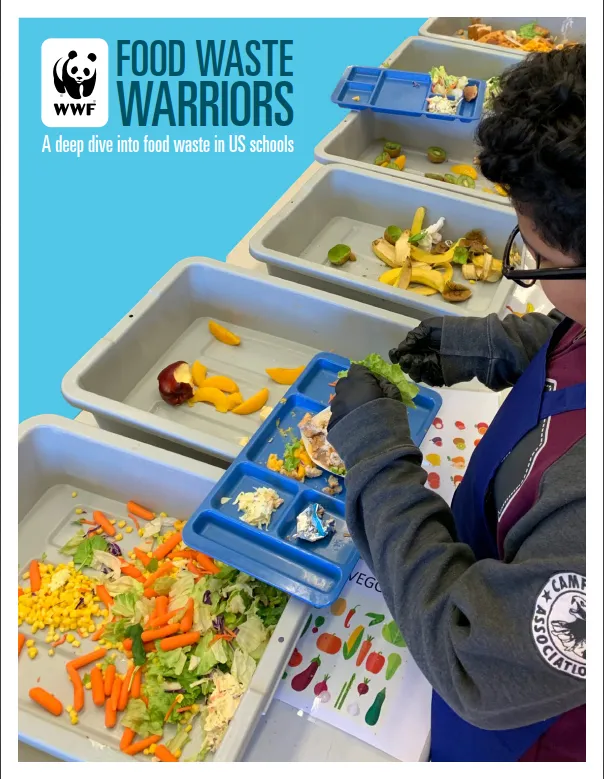
In the spring of 2019, WWF, with support from The Kroger Co. Foundation and the U.S. EPA, looked at post-service food waste in 46 schools in nine US cities across eight states. We worked with partners on the ground to share the experiential Food Waste Warrior conservation curriculum: running audits in cafeterias and guiding students to connect the dots between food, waste, natural resources, and wildlife. While not a representative sample of the 100,000 schools that participate in the National School Lunch Program, this research represents one of the largest school waste audit samples collected to date.
-
Given their indispensable role in preserving the global biodiversity upon which human well-being and sustainable development gains will depend, one might rightly wonder at the near total absence of information pertaining to ranger work prior to the undertaking of this study. The limited materials that did exist rarely included any feedback from rangers themselves. Things are different in this report, where we hear directly from 7,110 public-sector patrol rangers, surveyed at hundreds of sites across 28 countries.
Although a wide diversity of topics were addressed across the 197 questions contained in each survey, an analysis of results points towards certain themes that require urgent action from the governments that employ these rangers...
This is an updated version of Life on the Frontline 2018 assessing ranger welfare perceptions across different countries. It is the largest of its kind ever conducted.
-
Given the challenging conditions of today's dairy industry, dairy farmers are seeking solutions to enhance their bottom lines. Crossbreeding dairy cows with beef bulls is one such solution that has emerged with the potential to result in wins for both the dairy producer and the environment. Download to read this compelling business case.
-
Contextual Water Targets are the first step for any company looking to adopt a Science-Based Target for Water. Taking a contextual approach to setting water performance targets enables a company to become more responsive to local water challenges and to set up internal processes to manage locally specific water performance targets. This case study outlines the work that Levi Strauss & Co. (LS&Co.) has undertaken to apply this principle to its water performance within a part of its supply chain.