Publications
-
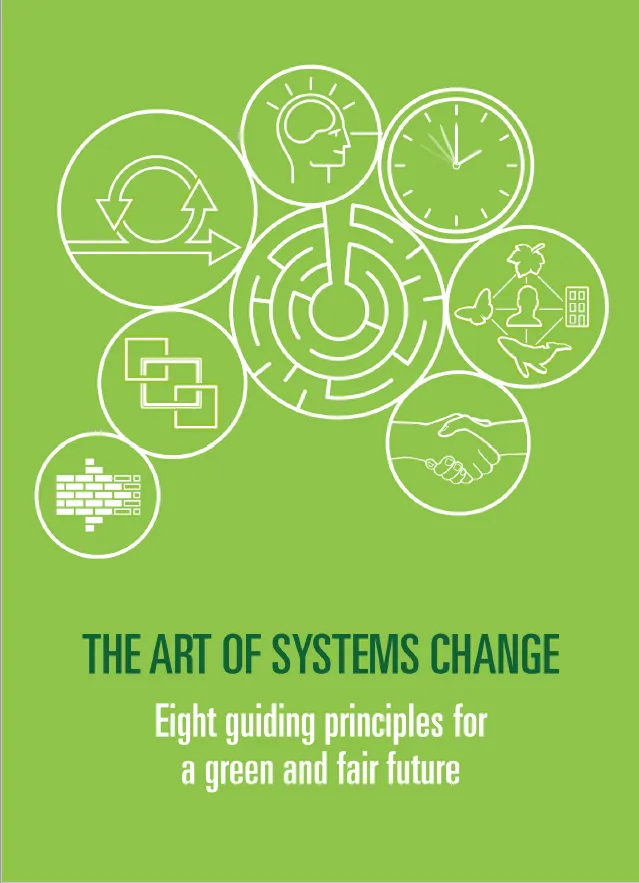
The most pressing humanitarian and environmental issues of today–such as health, conservation, infrastructure, and education–are all interconnected. Working in silos will not get us the future we both need and want. To transform to a better future, we must embrace complexity to create sustainable change.
WWF's 2018 Fuller Symposium explored systems thinking as a means to devise creative solutions to complex conservation, development, and environmental challenges. Many of the symposium's speakers, together with WWF scientists and staff, participated in a Book Sprint after the event to distill their collective wisdom on effective ways to understand and change complex systems. Their work resulted in a new book called The Art of Systems Change, which is now free to download.
The 15 authors represent fields as diverse as engineering, computer science, anthropology, and ecology. One thing unites them–their deeply held conviction that the world we live in is complex and interconnected. To truly change the world, we need to shift the way we think and embed complex systems thinking into how we plan, collaborate, and act.
Using The Art of Systems Change
The book has been designed to speak to change-makers working across all scales and sectors who seek to make systemic and lasting change. Part 1 introduces the fundamental tenets of systems thinking and describes their implications for our understanding of the world. Part 2 presents a set of mutually reinforcing principles that can guide our actions as we work to address our most pressing environmental and societal challenges.
In each chapter, we introduce a principle, why it's important, and how to work with it. We also provide simple 'daily practice' prompts that can help you cultivate both your individual and institution's capacity for changing systems. Throughout the book, we share stories and examples of both complex problems and systems and share insights on methods and approaches that can help us work more effectively in complex systems.
Welcome to the systems journey!
Eight principles for systems change
Principle 1: See ourselves in the system. We are all integral parts of the systems we strive to change. By recognizing this, we can tune into the feedback loops between our individual and collective actions, which empowers us to be strong and resilient agents of change.
Suggested Practice: One day a week, document at least five reactions (positive, negative, or neutral) you have to situations you face. What dynamics are behind these situations? Observe over a period of one to two months how your reactions evolve.
Principle 2: Identify our frames. How we frame our problems determines the solutions we seek. By developing the ability to adjust our frames when needed, we increase our capacity to better place problems within the context of the systems that generate them.
Suggested Practice: In your next team meeting when discussing how to address a new problem, ask yourself two questions: How am I defining the boundary of this problem? Who might define the boundary of the problem differently?
Principle 3: Co-create with intention. Creating lasting social and environmental change relies on the behaviors of all actors within a system. Co-creation helps create a more complete understanding of the relationships and structure of a system, and enables actors to effectively tackle systemic issues together.
Suggested Practice: Take a (virtual) lunch break with someone you don‚'t usually spend time with. Over time, watch how your relationship evolves with this person.
Principle 4: Explore time and scale. There are intrinsic time delays between action and response, which impact the results we see and when we see them. Systems cross multiple scales; and complex systems are nested within each other at different scales.
Suggested Practice: For one month, write down a daily observation about the system within which you work. Each day, make another observation about the same system, but focus on a different aspect. Observe how your perceptions of your system evolve over time.
Principle 5: Find simplicity in complexity. While complex, systems can be understood by distilling patterns, trends, or principles that reflect underlying structures and behaviors. Simple solutions can be identified and focused on to create foundations and coalitions for long-term change.
Suggested Practice: Draw a simple picture of your problem that you would use to explain to someone who doesn't know anything about it.
Principle 6: Experiment iteratively. We usually have to act with incomplete understanding of complex systems and their dynamics. Iterative experimentation allows us to adapt our programs as we "learn by doing".
Suggested Practice: Make a small change in your daily routine. It may be as small or as large as you like–the point is to plan, try, experience, get feedback, and improve.
Principle 7:Align structure with change. The structures of formal organizations and institutions can either inhibit or advance our capacity to operate with the dynamics and trajectories of complex systems.
Suggested Practice: Bring together two people who don't know each other from different divisions in your organization, who might not normally engage. Join them for a (virtual) coffee or lunch, and over time observe how and if their relationship evolves.
Principle 8: Act based on evidence. Working within complex systems requires us to be more intentional in what we're measuring and why, and how information is used to inform decisions made by people and organizations at different scales.
Suggested Practice: Identify a stakeholder in your system and ask yourself: What kind of evidence would actually influence them to change the course of action? What information do they need to make decisions? What factors might limit their actions and decision-making process?
-
The International Coalition for Sustainable Aviation (ICSA) believes that industry and government policymakers must commit to a pathway for the industry that includes near- and long-term goals and reflects an ambitious contribution to the overall effort necessary to achieve the 1.5C temperature goal.
-
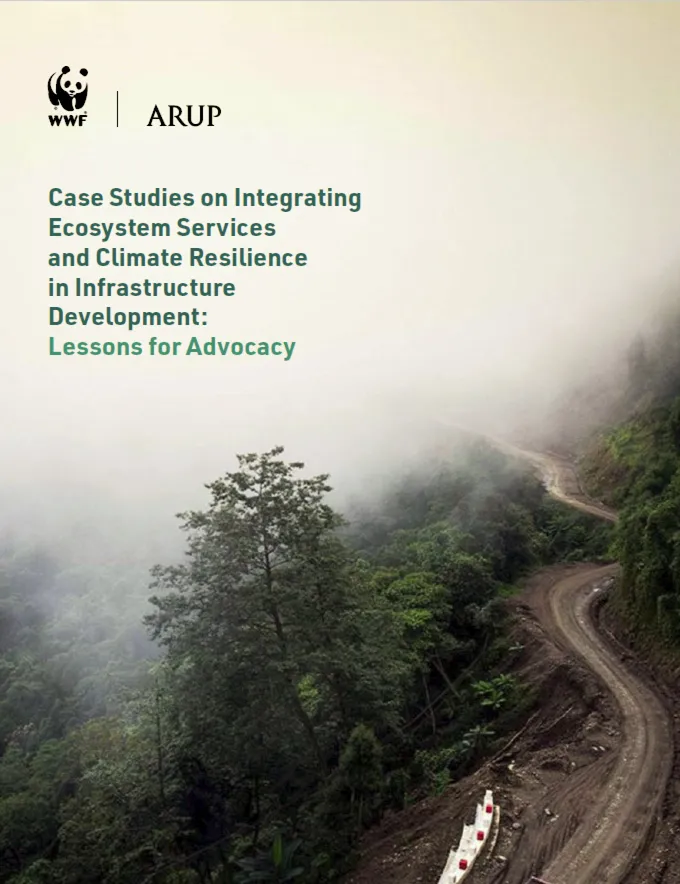
With support from GIZ, WWF and Arup conducted a review of innovative practices across several regions of the world that integrate both ecosystem services and climate change projections in planning and design. With 60% of the land expected to be urbanized by 2030 yet to be built, alongside an estimated 25 million km of new roads by 2050, there is urgent need to identify and replicate practices that preserve ecosystem services and mitigate the expected effects of climate change. Reviewing more than 90 cases of infrastructure planning or design, this report presents three brief case studies in developing economies to highlight recent advancements in such integrated approaches: the Mexico water supply system, the LAPPSET development corridor and Lamu port in coastal Kenya, and the Shenzen sea wall. It also highlights a number of innovative examples in the US and UK as examples to learn from to inform improved infrastructure planning moving forward.
The report summarizes important conclusions and recommendations for improving infrastructure development moving forward, including:
- While holistic approaches to infrastructure development at scale is an emerging trend, it has yet to mature;
- More effort is needed to share effective approaches and examples in practice across a diverse group of stakeholders, including industry, NGOs, multilateral financial institutions, and country governments to demonstrate the business case.
- There is an opportunity to shape the convergence of different approaches and frameworks in order to standardise them across institutions and simplify complex planning considerations for practitioners.
- A review of global standards and frameworks for decision-making and investment design could advance the agenda. This could be promoted under parent global processes like the Paris Agreement, CBD, UN Sustainable Development Goals, etc. The design and construction industry would likely follow and contribute actively.
- A holistic approach to the lifecycle of the infrastructure across themes as complex as ecology and climate change, should require procurement to adapt: this means including these topics fully in tender notes, procurement processes, budgets, and, ultimately recruitment and management.
- Advocacy must make efforts to prove that costs for planning and designing sustainable infrastructure with holistic approaches, are amply justified over the mid to long-term.
- There is also a clear role for designers and practitioners to play in influencing the ‚Äòclients‚' who are funding or implementing infrastructure projects.
- Each of the case study examples demonstrates the important of strong stakeholder relationships which are often made more complex by the holistic approaches, and which may not correlate directly with lines of responsibility or governing boundaries.
- When operating at a large scale, particularly at regional, water catchment or even international level, the coordination and commitment between all stakeholders involved is critical.
-
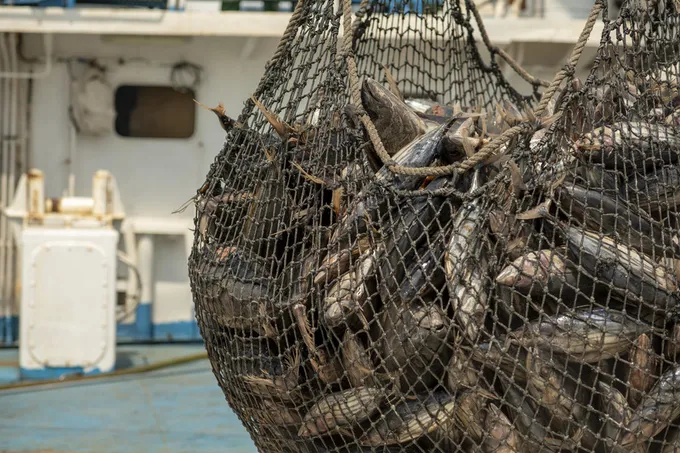
The crisis of depletion affecting fisheries worldwide is one of the defining environmental and social challenges of our times. The well-documented harmful impact of certain forms of fisheries subsidies on the environment and the health of fish stocks and the consequences for the economic stability of fishing communities, has been subject of discussion within the WTO for two decades. It is now high time for WTO members to take effective action to secure healthy oceans and sustainable livelihoods for the years to come.
-
Ending overfishing, fleet overcapacity, and illegal fishing
-
WWF has conducted the largest consumer survey about ivory trade in China‚ – 2,000 people in 15 cities‚ – for three consecutive years with GlobeScan, providing the best available assessment measuring changes in attitudes, purchasing and ban awareness over time.
The 2019 survey shows consumer demand for elephant ivory has stabilized at reduced levels and support for the ban among Chinese nationals remains strong. While the purchase of ivory from vendors in mainland China has dropped, those who reported buying during travels have increased from 18% in 2018 to 27% of travelers in 2019.
-
South Africa Alliance for Climate Action Declaration
-
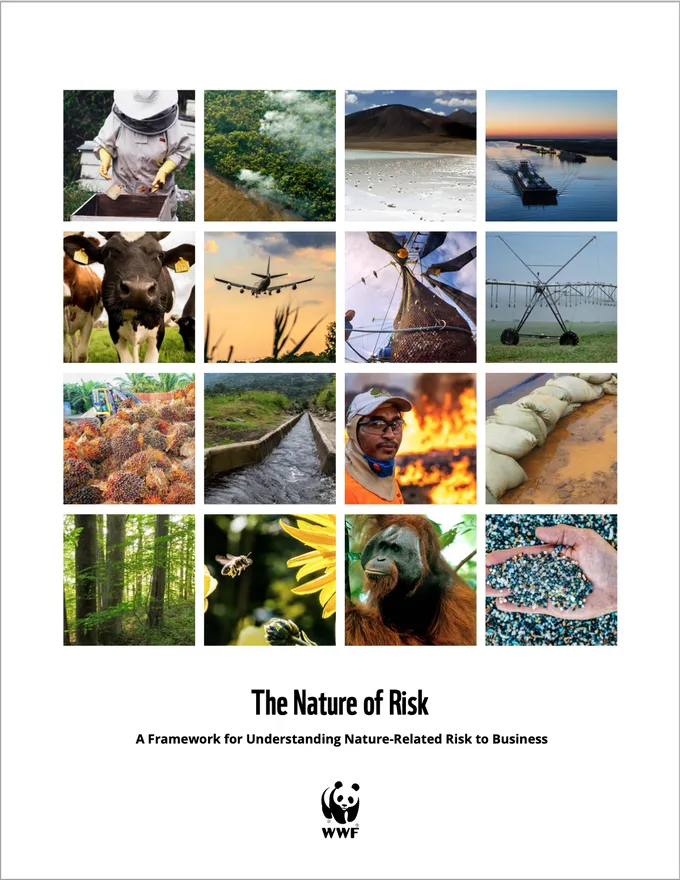
Scientific consensus is building around risks to business from the loss and degradation of nature, or 'nature-related risks'. These risks are not adequately addressed by businesses, and to be addressed, they need to be considered together with climate-related risks. The two are inextricably interlinked because climate change drives change in nature, and change in nature drives climate change.
The terminology used in this report draws on both nature- and climate-related risk to facilitate a unified approach. This report and framework aim to catalyze the incorporation of nature-related risks into private-sector decisions in a manner that facilitates sustainable development at all scales.
The report includes:
- A literature summary of existing work on the topic that outlines how nature-related risk is not adequately accounted for by businesses.
- A synthesis framework for how nature-relate risk emerges that builds on the many existing frameworks and that brings together understanding of natural capital and climate-related risk.
- A typology based on analysis of existing literature which serves as a proxy for risks that are most widely acknowledged as high importance.
- A set of case studies–examples of businesses facing consequences due to nature-related risk.
-
Poaching and the illegal trade of tiger parts are continuing to threaten wild tiger populations. TRAFFIC‚'s latest report on the illegal trade in tiger parts analyzes data over a 19 year period from 2000 to 2018, providing details and statistics on trends and the urgent threats facing wild tigers.
-
The importance of biodiversity below the forest canopy is often underappreciated, and yet it is a crucial component of healthy functioning forest ecosystems. Below the Canopy: Plotting Global Trends in Forest Wildlife Populations is the first-ever global assessment of forest-dwelling wildlife populations and highlights the multitude of threats forest-living species are facing.