Publications
-
WWF and RCL’s additional sustainability goals include targets to address RCL’s direct operations and the sustainability of the company’s tour operators and destinations.
-
Illegal, unreported and unregulated (IUU) fishing is a huge problem nationally and worldwide, costing the global economy an estimated $10 to $23.5 billion dollars per year. Yet, there has been little research done on how on how IUU affects legitimate fishermen. This economic snapshot analyzes how U.S. fishermen are impacted by IUU. It finds that due to price suppression, U.S. fishermen could be losing $1 billion in revenue per year. Stopping the flow of illegal seafood into the U.S. will help both U.S. fishermen, who could see the equivalent of about a 20 percent raise, and the health of our oceans.
-
More than ever before, the integrity of the Amazon region is under pressure from unsustainable economic activities and is undergoing unprecedented change. Multiple and interconnected pressures are driven by the economic interests of the countries of the region and the rest of the world. WWF Living Amazon Report 2016 alerts to a dramatic increase in the frequency of enacted legislative actions to downgrade, downsize or degazette protected areas in the Amazon.
-
To help companies reduce their water risks and impacts on local watersheds, Ceres and World Wildlife Fund have launched the AgWater Challenge – an initiative that aims to highlight leadership, as well as new, improved commitments on water stewardship, specifically stronger, more transparent targets around agricultural supply chains. Leveraging World Food Day on October 16, 2016, the initiative will highlight actions taken by companies and will raise awareness of the important role the private sector can play in addressing food and water security.
-
If you missed the AgWater Challenge‚'s first webinar or just need a refresher, you can view the presentation here.
-
Are you interested in participating in the AgWater Challenge but have some questions? Read our Frequently Asked Questions to see what the Challenge is all about and how your company can participate.
-
This Ranger Perceptions: Africa survey is the second in the series of report that aim to shed light on wildlife ranger working conditions. The intent of this survey -- like the previous one on Asia's rangers and the upcoming one on rangers in Latin America -- is to provide a snapshot of rangers' personal views of their working conditions, and so gain a deeper insight into the factors that affect their motivation.
-
Co-generating and integrating climate risk information to build resilience for conservation, development, and disaster risk reduction.
-
A Life Cycle Assessment (LCA) is a commonly used technique to assess environmental impacts associated with all the stages of the life of a product or service. It is a good tool but has its limitations. It works best when combined with the Forest Stewardship Council standards, which are the best tool for responsible forest management. This analysis explains why.
-
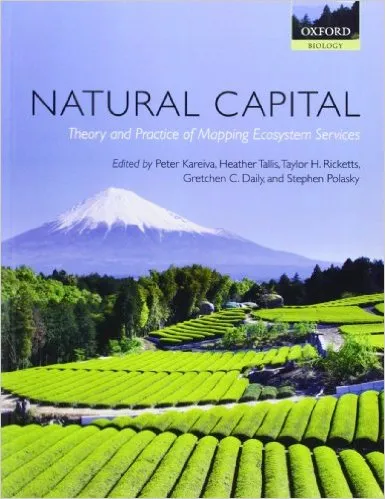
In 2005, The Millennium Ecosystem Assessment provided the first global assessment of the world’s ecosystems and ecosystem services. It concluded that recent trends in ecosystem change threatened human well-being due to declining ecosystem services, a bleak prophecy which has galvanized conservation organizations, ecologists, and economists to work towards rigorous valuations of ecosystem services at a spatial scale and with a resolution that can inform public policy. This book provides an intensive and technical analysis of ecosystem services to date. A key idea which guides the science is that the modelling and valuation approaches being developed should use data which are readily available around the world. In addition, the book documents a toolbox of ecosystem service mapping, modelling, and valuation models that both The Nature Conservancy and the World Wide Fund for Nature are beginning to apply around the world as they transform conservation from a biodiversity-only to a people and ecosystem services agenda. The book addresses land, freshwater, and marine systems at a variety of spatial scales, and includes discussion of how to treat both climate change and cultural values when examining tradeoffs among ecosystem services.
WWF contributors include: Nasser Olwero, Robin Naidoo, Emily McKenzie, Eric Wikramanayake, and Taylor Ricketts