Publications
-
This document is the quarterly newsletter of the USAID-funded Targeting Natural Resource Corruption (TNRC) project, which operated from 2018 to 2024. Its content included latest news, resources, and training opportunities.
---
This content is made possible by the generous support of the American people through the United States Agency for International Development (USAID). The contents are the responsibility of World Wildlife Fund (WWF) and do not necessarily reflect the views of USAID, the United States Government, or individual TNRC consortium members.
-
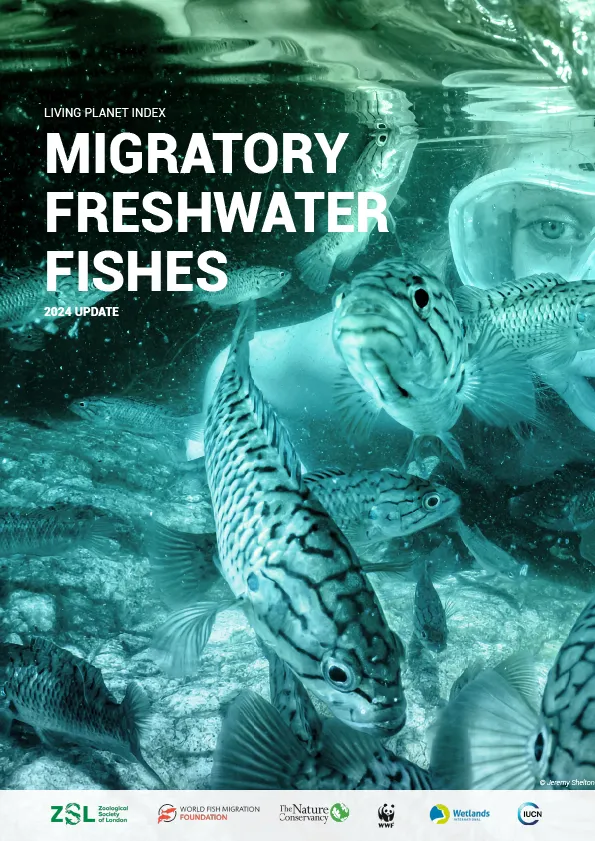
The 2024 Living Planet Index (LPI) update for Migratory Freshwater Fishes unveils a startling 81% decline in monitored populations of freshwater migratory fishes from 1970 to 2020. This distressing trend is attributed to habitat loss and degradation, with factors like river fragmentation due to dams and agricultural encroachment on wetlands accounting for half of the threats. Over-exploitation exacerbates the situation, alongside rising pollution and the escalating impacts of climate change, which have relentlessly plagued freshwater migratory fish species for three decades. Beyond ecological implications, these fish are lifelines for millions, sustaining food security and nutrition for vulnerable communities in Asia, Africa, and Latin America, while supporting the livelihoods of tens of millions involved in local fisheries, global trade, and the recreational fishing industry. Yet amidst this bleak scenario, there's hope. The report highlights actionable solutions, ready to be implemented by governments and communities today. It underscores the effectiveness of conservation efforts and improved management practices, emphasizing strategies such as species-focused fisheries management, habitat restoration, dam removals, establishment of conservation sanctuaries, and legal protections, laying out a pathway toward reversing this alarming decline.
-
While tiger populations have increased in some countries over the last decade, these gains are fragile, and tigers remain the world‚'s most threatened big cat. Today, there are approximately 5,574* tigers left in the wild across Asia (*GTF 2023), and those that remain are restricted to less than 6% of their historic range. Since 1850, tigers have been lost from at least 14 countries, and three of these extirpations (Cambodia, Lao PDR, and Viet Nam)occurred in just the last 25 years.
As a result of poaching and the loss of important prey species, the reduction in tiger range continues; the area where tigers occur has declined by approximately 50 per cent since 1994. In order to stem the decline, much more ambitious commitments and innovations will be required. These commitments should include high level goals to reverse the centuries-long decline in tiger range and return the species to sites, landscapes, countries, and ecosystems from which they are currently absent.
This report analyses the geographic opportunities for tiger range recovery across 30 current and former range countries, based on the relationship between tiger presence and intensity of human activity. In 15 counties, expanses of currently unoccupied but potentially suitable tiger habitat remain. Partnering with local communities to secure and increase the protection of such areas is essential to sustaining tiger recovery in the long-term.
-
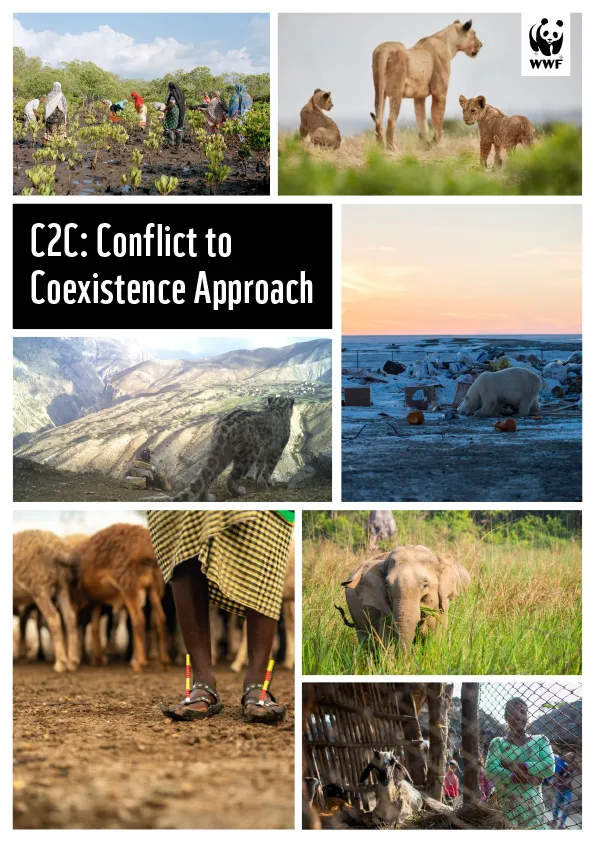
Around the world, human wildlife conflict (HWC) challenges people and wildlife, leading to a decrease in people‚'s tolerance for conservation efforts and contributing to multiple factors that drive species to extinction. HWC is a significant threat to conservation, livelihoods, and myriad other concerns and should be addressed at a scale equal to its importance. HWC will always remain a complex and layered issue, which requires integrated, holistic approaches and the involvement of all stakeholders anywhere in the world and any context in which it occurs. The ever-changing dynamic of the problem will always have to be matched with a dynamic and adjustable approach to address it. The C2C Approach is, therefore, not static and changes along with the conflict. Monitoring and adjustment will always be required for the sustainability of the approach. It provides a framework and methodology through which a tailor-made human-wildlife conflict (HWC) management strategy can be developed based on the local cultural, environmental and social context. Through a stepwise, participatory multi-stakeholder process (including those impacted by and impacting HWC), the C2C Approach promotes long-term management of HWC, while achieving short-term and intermediate results.
-
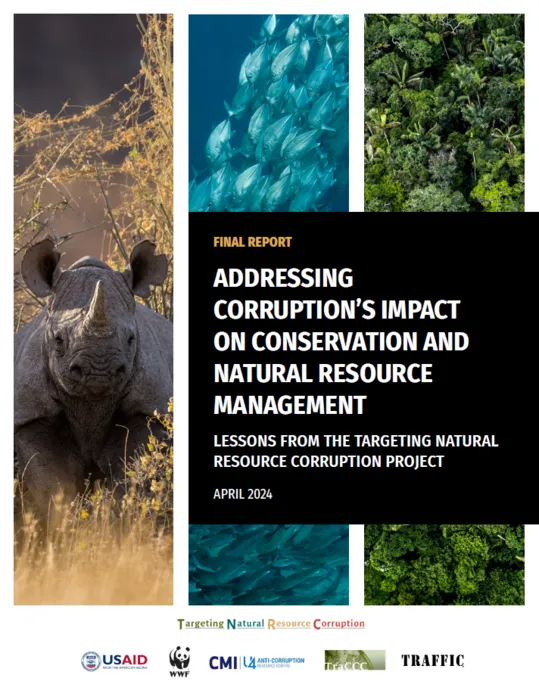
Addressing corruption's impact on conservation and natural resource management: Lessons from the Targeting Natural Resource Corruption project
This final report provides a summary of the contributions made by the United States Agency for International Development-funded Targeting Natural Resource Corruption (TNRC) project. The project worked from 2018 – 2024 and focused on improving biodiversity outcomes by equipping conservation and natural resource management practitioners to assess and address the threats posed by corruption to wildlife, fisheries, and forests. This objective was achieved through three strategic approaches: 1) harnessing existing knowledge and generating new evidence about the impact of corruption and effective programming responses; 2) communicating and networking to disseminate that information and demonstrate practical application, building experience, and generating new learning opportunities; and 3) supporting practical application through pilot projects in six countries and select initiatives to broaden practitioner experience. Additionally, the project worked on institutionalizing anti-corruption within partner organizations to leave a legacy of concrete change.
The project was led by the World Wildlife Fund (WWF) and implemented by a consortium of leading conservation and anti-corruption organizations, including TRAFFIC; the U4 Anti-Corruption Resource Centre at the Chr. Michelson Institute (U4); the Terrorism, Transnational Crime and Corruption Center (TraCCC) at George Mason University; and in collaboration with the Basel Institute on Governance.---
This content is made possible by the generous support of the American people through the United States Agency for International Development (USAID). The contents are the responsibility of World Wildlife Fund (WWF) and do not necessarily reflect the views of USAID, the United States Government, or individual TNRC consortium members.
-
This WWF paper proposes principles for how benefits of nature-based solutions (NbS) can be shared in a way that is fair, accountable, rights-based, and effective. NbS harness the power of nature to boost natural ecosystems, biodiversity, and human well-being to address major societal issues, including climate change. Around $133 billion currently flows to NbS, with calls to triple that amount by 2030 and quadruple it by 2050 to meet the magnitude of the threats facing humanity. Encouragingly, interest and investment in NbS are growing, especially from the private sector. This growth represents a significant opportunity, but accelerating into NbS implementation without concrete, principled guidance also represents a major risk. Without parameters and guidelines, much of this investment may be wasted or flow into and through institutions and power structures that do not respect human rights, protect Indigenous Peoples and local communities, or provide accountable financial management.
This paper aims to centralize a shared statement of ambitious ethical guidelines, for discussion with the global community, that constitute the highest integrity for NbS benefit sharing. After discussion and refinement of these principles, WWF will seek to develop concrete, practical guidance for applying these principles to NbS interventions in several pilot landscapes.
For more resources and tools, visit tnrcproject.org.---
This content is made possible by the generous support of the American people through the United States Agency for International Development (USAID). The contents are the responsibility of World Wildlife Fund (WWF) and do not necessarily reflect the views of USAID, the United States Government, or individual TNRC consortium members.
-
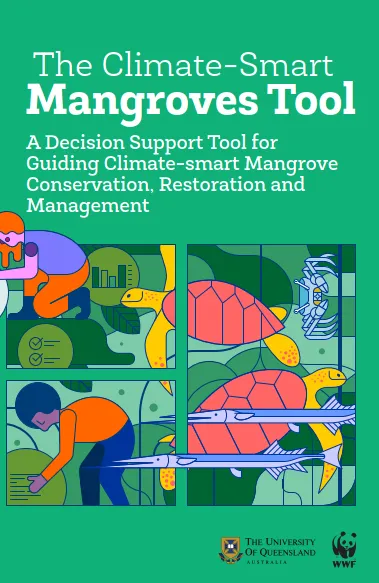
The Climate-Smart Mangrove Tool (CSMT) is designed to aid conservation practitioners in selecting appropriate "climate-smart" actions to reduce the current and future impacts of climate change on mangrove ecosystems. The CSMT is composed of an Excel-based workbook and a guidance manual, which provide a step-by-step process for assessing climate vulnerability and selecting "climate-smart" management actions. The Tool was developed by WWF, in partnership with the University of Queensland.
Download the Climate-Smart Mangrove Tool Excel-based workbook.
-
The Climate-Smart Mangrove Tool (CSMT) is designed to aid conservation practitioners in selecting appropriate "climate-smart" actions to reduce the current and future impacts of climate change on mangrove ecosystems. The CSMT is composed of an Excel-based workbook and a guidance manual, which provide a step-by-step process for assessing climate vulnerability and selecting "climate-smart" management actions. The Tool was developed by WWF, in partnership with the University of Queensland.
-
-
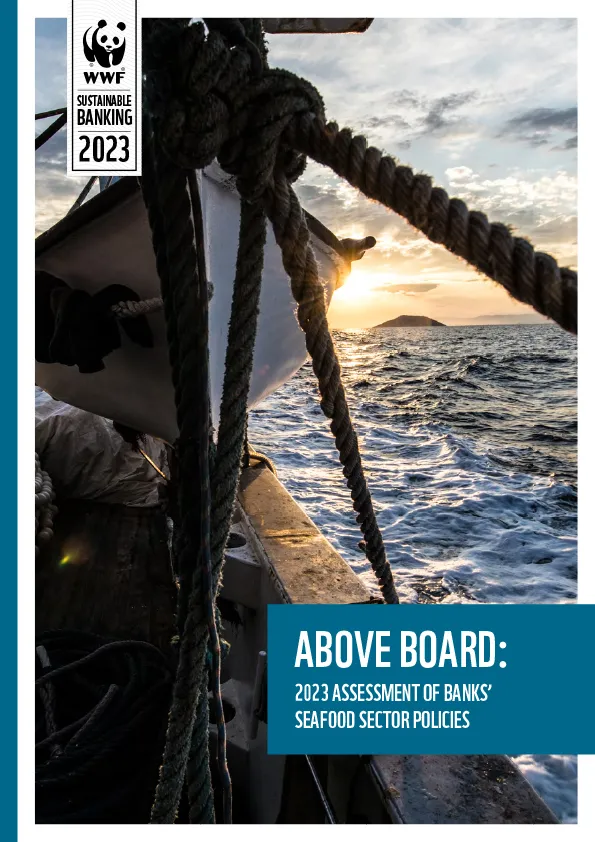
During the second half of 2023, WWF conducted a second annual assessment of 40 banks‚' seafood-related sector policies to understand if and how banks are improving the way they manage environmental and social (E&S) risks in their seafood portfolios, and where, specifically, additional support may be needed most. This report highlights key findings from this assessment, compares the results against last year‚'s baseline to monitor progress, provides actionable recommendations for banks, and directs readers to practical resources to guide next steps. Overall, the 2023 assessment found that an increasing number of banks are taking action to manage E&S risks related to nature loss, climate change and human rights issues in the seafood sector, with nine banks (23%) demonstrating improvements against last year‚'s baseline. However, more progress is needed to ensure that banks‚' policies sufficiently prevent and/or manage their exposure to these risks.
See the 2022 baseline assessment here.