Publications
-
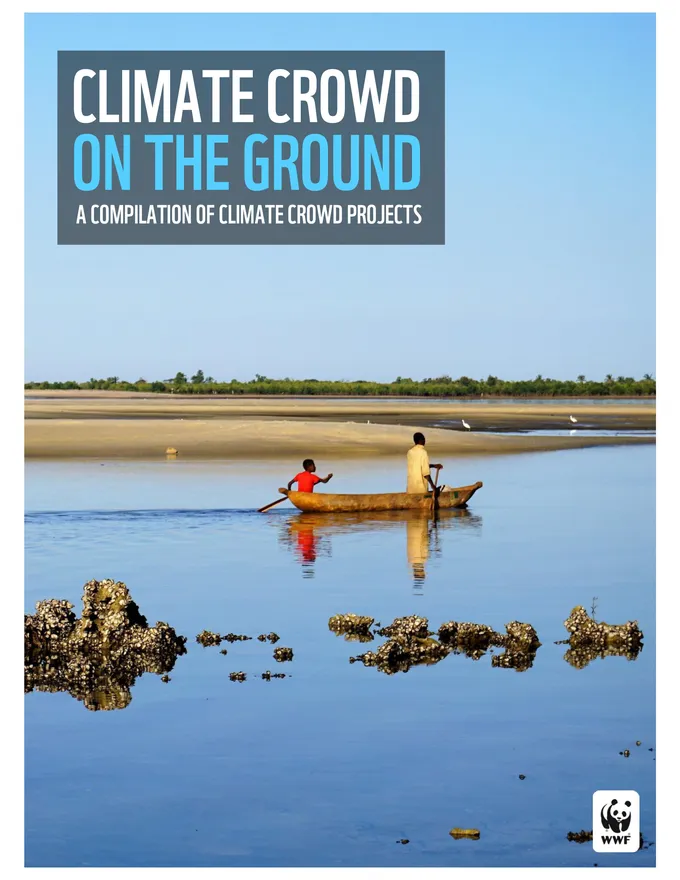
Climate Crowd on the Ground is a compilation of 15 Climate Crowd projects implemented in 8 countries, helping to build the resilience of people and nature to a changing climate. These projects are informed, designed, and implemented hand in hand with rural communities around the world. A big focus of the projects is improved water security, for example through rainwater harvesting, drip irrigation, fog catchers, solar-powered boreholes, and greywater recycling. Other projects focus on climate-smart agriculture, alternative livelihoods, education for schools, reforestation, clean cookstoves, and weather stations. The Climate Crowd methodology is to provide training and guidance to local partners who work with communities to collect data using a key informant survey. The Climate Crowd team then analyzes the data, compiling summary reports that highlight key trends. The findings are then presented back to the communities, and we work with them to co-design and implement on-the-ground projects to address climate vulnerabilities using funding from Climate Crowd.
-
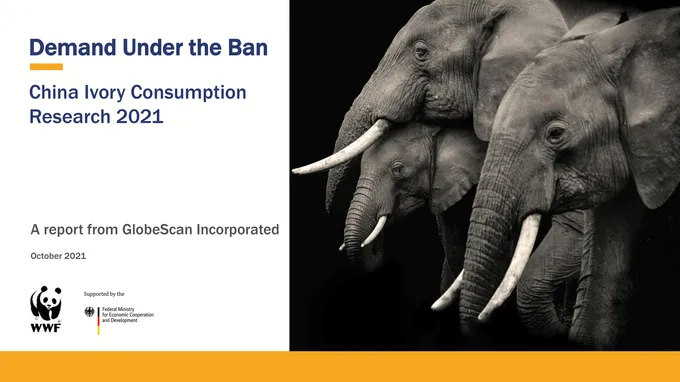
A "game-changing" ban on commercial processing and trade in elephant ivory was implemented by the State Council, China's Cabinet, on December 31, 2017. TRAFFIC and WWF commissioned GlobeScan before the ban became effective in 2017 to conduct the largest-ever ivory consumer research in China. This research has been conducted annually using the same methodology and surveying consumers in the same 15 cities. We believe this to be the most in-depth, longest-running research effort into consumer demand for ivory to date.
-
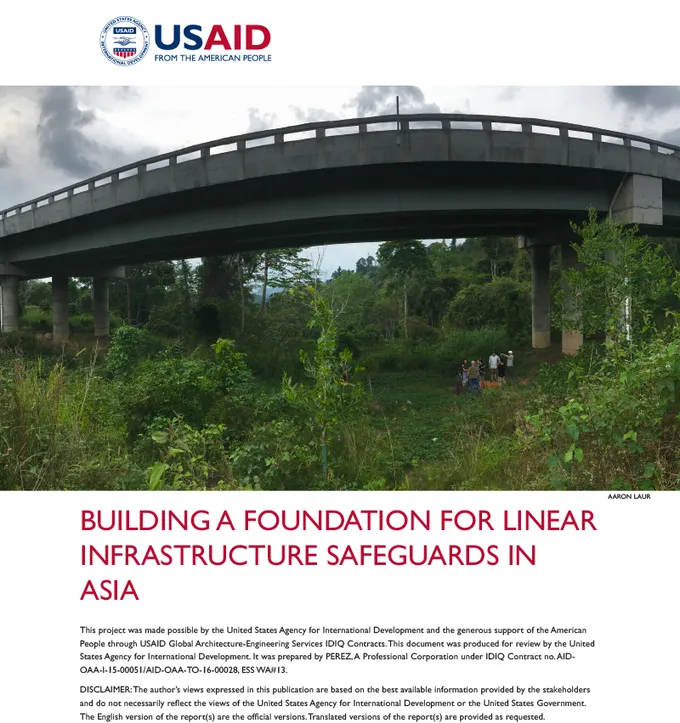
The Center for Large Landscape Conservation is pleased to announce the completion of the 14-month, USAID-funded "LISA Project" to advance wildlife-friendly linear infrastructure in Asia.
As Asia experiences unprecedented economic growth, the continent‚'s rich biodiversity and complex ecosystems are threatened by the rapid expansion of linear infrastructure development like roads, railways, and power lines. In 2020, the U.S. Agency for International Development (USAID) launched their Linear Infrastructure Safeguards in Asia (LISA) Project‚ – an assessment of the capacity of Asian countries to develop wildlife-friendly linear infrastructure. Due to the Center‚'s expertise in this area of conservation, including road ecology, we were selected to be the lead investigator on this project for USAID‚'s contractor, Perez, APC.
Twenty-four experts from seven countries formed the LISA Project team to build a base of knowledge to support Asian countries in planning wildlife safeguards for future linear infrastructure development. The project conducted its research through an in-depth literature review, a policy assessment, Asia-wide and fine-scale spatial analyses, personal interviews, an electronic survey, and the compilation of case studies.
-
To combat the worst impacts of climate change, governments, companies, and consumers alike are forcing a shift to low-carbon energy economies. In this paper, WWF examines the possibility of future oil developments within Alaska‚'s Arctic National Wildlife Refuge given this changing energy landscape. This study used the most recent data and modeling from Rystad Energy to analyze both potential of future oil development and the practical and economic uncertainties related to development brought about by the impacts of warming temperatures and an economy that is shifting to a reduced carbon-based energy dependence.
-
WWF‚'s inaugural Native Nations Partnership Report presents a summary of WWF's collaborative projects with Native nations over the past several years. Community collaboration and support allow our work to have a meaningful impact. Whether it is restoring bison to Native lands or developing strategies for sustainable financing, it is the personal connections that bring our efforts to life. In the following pages, you'll have the opportunity to read about exciting new initiatives that are underway including the expansion of bison habitat at the Wolakota Buffalo Range, returning black-footed ferrets to new partner lands, and developing the future of the Buffalo Nations Grasslands Alliance.
-
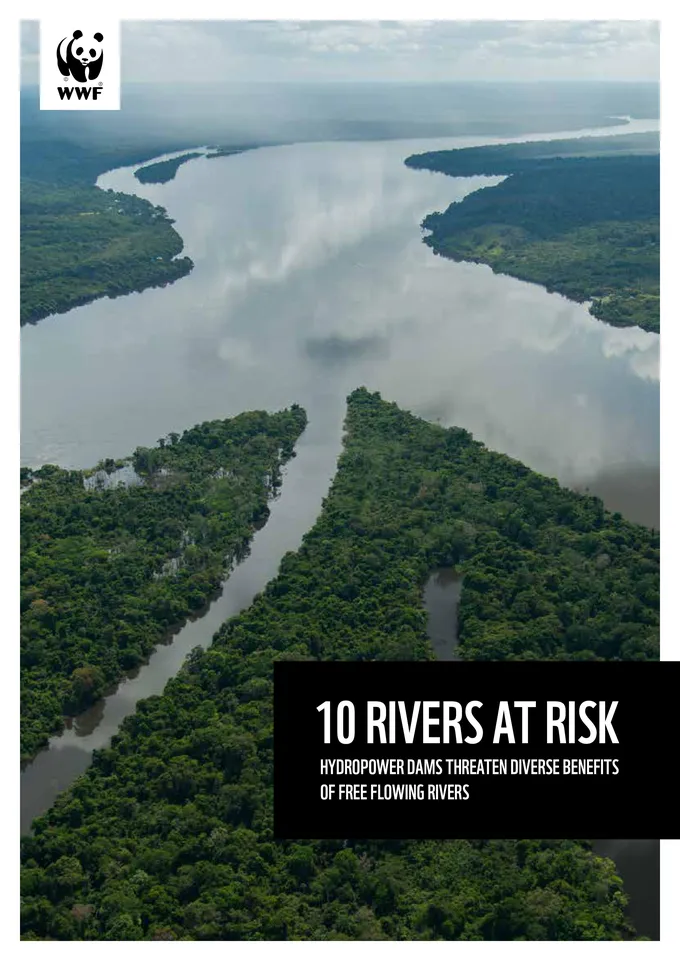
Free-flowing rivers provide a myriad of benefits including sustaining freshwater fisheries that are critical to the food security of hundreds of millions, fertilizing floodplain fields, buffering cities from extreme floods, keeping heavily populated deltas above the rising seas, and providing habitat for an extraordinary diversity of species both in and out of the water.
Yet, hydropower dams threaten the health of iconic rivers around the world from large, biodiverse tropical rivers, like the Irrawaddy, Mekong, Tapajos and Sepik, to the last free-flowing glacial river in the Alps, the last wild river in Europe, and rivers that are the lifeblood of the world-famous Okavango delta and Mara wildebeest migration.
However, for the first time, we can now meet global climate and energy goals without the need for hydropower dams. The key is for countries to focus on renewable energy solutions using LowCx3‚ – low cost, low carbon, and low conflict‚ – solutions and determine the best energy mix for their needs.
The 10 Rivers at Risk report offers a glimpse into 10 iconic rivers, the threats facing the rivers and the surrounding communities, and opportunities for action.
-
In a concerning trend, WWF's 2021 Plowprint Report has revealed that, for the second year in a row, grassland plow-up across the Great Plains has continued to accelerate. The 2021 report, which utilizes the USDA‚'s annual Cropland Data Layer and the Canadian Annual Crop Inventory from two years prior to its release date, finds that from 2018-2019 an estimated 2.6 million acres of grassland were plowed-up, primarily to make way for row crop agriculture. This is an area larger than Yellowstone National Park. Within the Northern Great Plains (NGP), the Great Plains‚' most intact region, nearly 600 thousand acres were plowed up during this same period.
-
Conservation in the Classroom
Leftover Lunch‚ – How Saving Food Saves the Planet
September 30, 2021 at 1 pm EDT
-
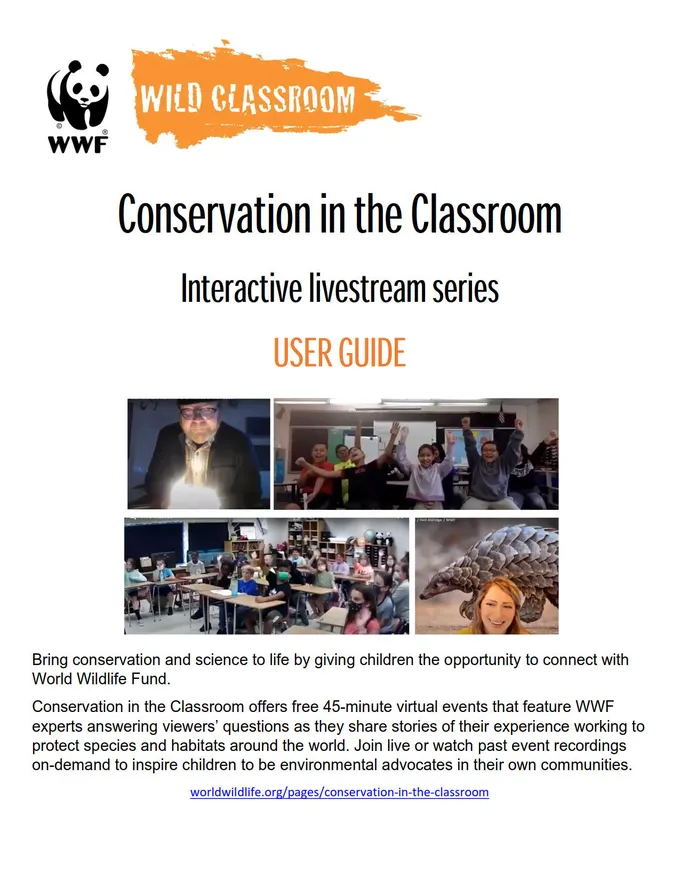
Conservation in the Classroom Interactive Livestream Series User Guide
-
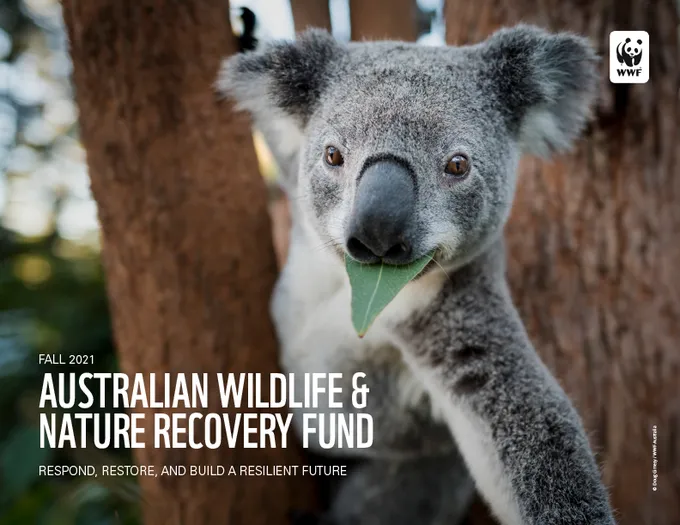
In January 2020, WWF launched the global Australian Wildlife and Nature Recovery Fund and began mobilizing an urgent response to the bushfire emergency. Working with scientists across Australia, we established a framework to address the full scope of work required to recover what had been lost and put in place safeguards for the future. Thanks to the generous support we received from Australia and around the world, we raised over $50 million for bushfire recovery and resiliency.
During Phase I – the emergency response – we formed partnerships at a grand scale, ensuring that as much wildlife could be saved and rehabilitated as possible.
We are now realizing our Phase II long-term recovery plan of mitigating natural hazards and protecting Australian nature. Regenerate Australia will be the largest landscape restoration and wildlife program in Australia‚'s history.