Publications
-
The emergence of reducing emissions from deforestation and forest degradation, and conserving, sustainably managing and enhancing forest carbon stocks (collectively referred to as REDD+) has generated great interest as a possible means of increasing support for the forest stewardship activities of indigenous peoples and local communities. If done well, REDD+ initiatives could contribute to strengthening community land and resource rights, empowering community-based management and diversifying livelihoods through participation in REDD+ activities.
-
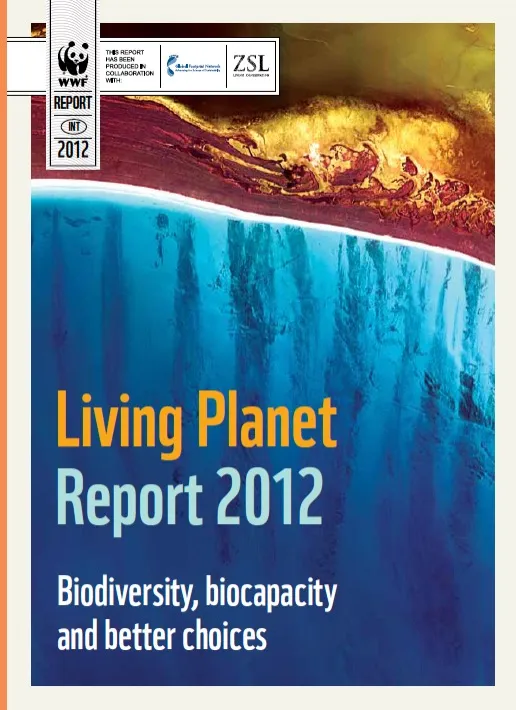
This WWF report brings together a variety of quantitative information and on the current state of global biodiversity and human impact on nature. Confronting the fact that people are using 50 percent more resources than the Earth can provide, this report summarizes this information and suggests changes in action to slow and reverse current trends.
-
Review of Trade in Ornamental Coral, Coral Products and Reef Associated Species to the United States
The United States is the world‚'s largest consumer and importer of coral reef associated species for ornamental purposes, including aquaria, jewelry, curio and home d√©cor. This report analyses the trade of coral reef associated species imported to the U.S. for ornamental purposes and examines issues and concerns related to the harvest, supply chain, and overall trade of some of the most threatened species in the trade.
-
Through the Freshwater Trout Aquaculture Dialogue (SAD), performance-based standards for salmon farming are being developed. This document provides the final draft of the principles and criteria. When completed, the final standards will help minimize the key environmental and social impacts related to freshwater trout farming.
-
Through the Shrimp Aquaculture Dialogue (ShAD), performance-based standards for shrimp farming have been developed. This document provides the final draft of the principles and criteria. The final standards will help minimize the key environmental and social impacts related to shrimp farming.
-
In 2010, the Obama administration recognized the incomparable fisheries and wildlife values of Bristol Bay by withdrawing the North Aleutian Basin from the oil and gas leasing process until 2017. Unfortunately, a future administration could roll back this protection and the Bay could again face the risks associated with offshore development. For thousands of fishermen and residents, the Bay’s sustainable fisheries are not worth these risks. In order to sharpen this discussion, World Wildlife Fund commissioned Portland-Based Ecotrust to define the cumulative value of Bristol Bay’s most important commercial fisheries.
The study quantifies ex-vessel, wholesale, processor, and retail values for the five fisheries the contribute 95% of the total landed value from the area potentially impacted by oil development. These fisheries include salmon, pollock, King crab, Pacific cod, and halibut. “Everyone knows that ex-vessel landings represent only the tip of the iceberg,” said WWF’s Dave Aplin. “Our study uses data from 2005 to 2008 to follow the fish from the net to the table. The study concludes that the total value of fish harvested in the study area at the final point of retail sale averaged $2.2-$2.9 billion dollars annually during 2005-2008 and supported $4.1-$5.4 billion annually in total economic activity.”
-
Through the Freshwater Trout Aquaculture Dialogue (SAD), performance-based standards for freshwater trout farming are being developed. This document provides the second draft of the principles and criteria that will form the final standards. When completed, the final standards will help minimize the key environmental and social impacts related to freshwater trout farming.
-
Through the Salmon Aquaculture Dialogue (SAD), performance-based standards for salmon farming are being developed. This document provides the second draft of the principles and criteria that will form the final standards. When completed, the final standards will help minimize the key environmental and social impacts related to salmon farming.
-
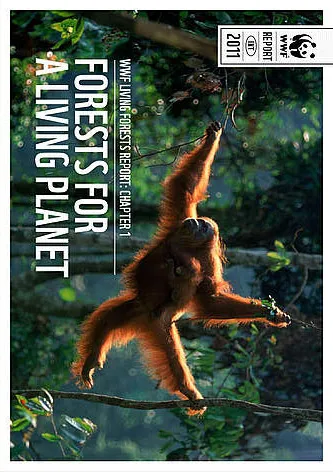
WWF’s Living Forests Report is part of an ongoing conversation with partners, policymakers, and business about how to protect, conserve, sustainably use, and govern the world’s forests in the 21st century.
WWF advocates Zero Net Deforestation and Forest Degradation (ZNDD) by 2020 as a target that reflects the scale and urgency with which threats to the world’s forests and climate need to be tackled. Our analysis identifies 5 key issues that are crucial to achieving ZNDD and avoiding negative consequences.
Conserving our forests is possible – and urgent. But it won’t be easy.
We face some uncomfortable choices and trade-offs, and WWF doesn’t have all the answers. But the questions raised in the Living Forests Report can’t be put off for another generation. The time to act is now.
-
In 2007, WWF concluded a review of its policies and programs as they relate to indigenous peoples and local communities. The review resulted in five main recommendations, explained in this report, on ways to strengthen partnerships with indigenous peoples and local communities and ensure high standards for that work throughout WWF.