Incorporating Natural Resource Safeguards in Linear Infrastructure Planning: A Compendium of Best Practice Resources
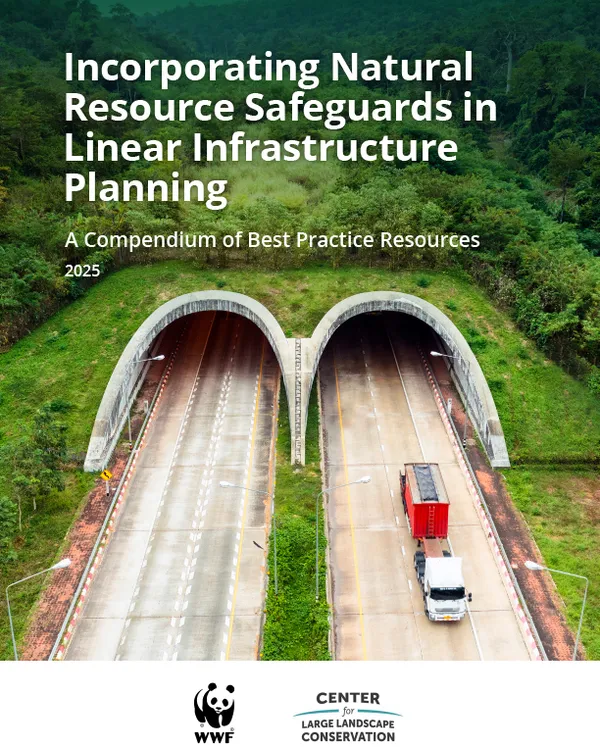
Global ecosystems are under threat from the rapid expansion of linear infrastructure (LI)‚ – roads, railroads, power lines, fences, pipelines, and canals. LI development can obstruct wildlife movement, fragment habitats, deplete natural resources, and lead to land-use conversion, impacting communities and the ecosystems they rely on.
The effects of past LI development practices that overlooked natural resource safeguards are now being intensified by climate change. Given the long life expectancy of most LI (25 to 100 years), policy, planning, financing, and project development must adhere to the mitigation hierarchy‚ – a four-step framework to avoid, manage, and reduce negative environmental impacts and protect and promote biodiversity and ecosystem health. This will ensure safeguards and mitigation measures are incorporated in infrastructure projects right from the planning stages.
The goal of infrastructure development processes should be to ensure that ecosystems and their services continue to flourish for countries to meet their climate and biodiversity goals. Strengthening natural resource safeguards will also enhance the long-term sustainability and resilience of LI, supporting thriving communities and conserving abundant biodiversity across the world.
WWF and the Center for Large Landscape Conservation (CLLC) have put together a compendium of best practices and associated resources to provide guidance on safeguarding nature and building climate resilience while developing LI projects. This report is a compilation of more than 170 papers, reports, and guidelines presenting the essential and globally accepted best practices and resources. The report serves as a resource for a broad group of LI practitioners, including environmental planners, conservationists, government agencies, engineering firms and consultancies, financiers of LI projects, and community-based organizations. It supports users in assessing, informing, and benchmarking their LI practices and planning and design procedures.
The shortlisted 10 best practices and their supporting information are assessed across four thematic areas‚ – ecosystems and their services, biodiversity, ecological connectivity, and climate resilience‚ – throughout the infrastructure life cycle.
-
Incorporating Natural Resource Safeguards in Linear Infrastructure Planning: A Compendium of Best Practice Resources
13.1 MB PDF Download