What are wildlife crossings and how do they save lives?
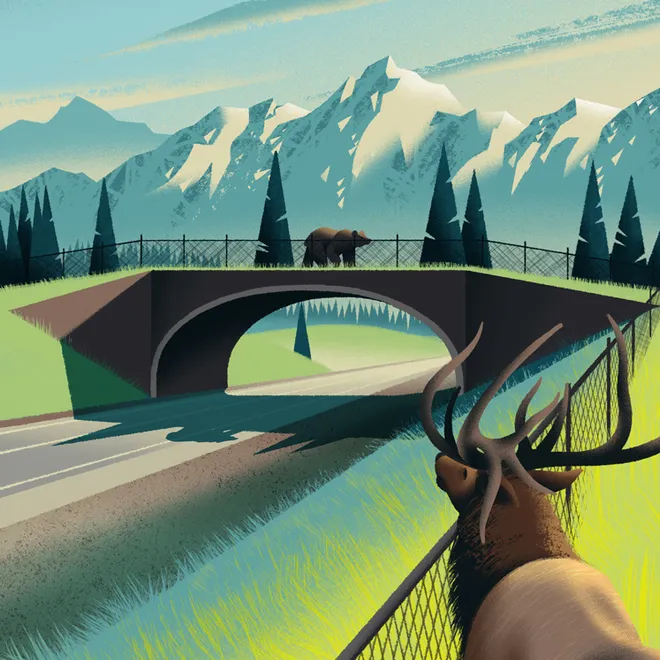
© FEDERICO EPIS/WWF-US
Key takeaways
- In the US alone, more than one million collisions between large wildlife and motorists occur every year, leading to an estimated 400 human deaths and more than 59,000 injuries annually.
- Wildlife crossings are structures created to keep wildlife off of busy roads as they move to seek food, mates, and shelters.
- Successful wildlife crossings are found across the US. In Congress, the Wildlife Road Crossings Program Reauthorization Act will renew this program for the long term so that roads stay safer for everyone.
Roads underpin modern society by connecting communities and economies. But roads also often disconnect the wildlife habitats where they are built.
As a result, roadkill is a gruesome yet unfortunately common sight across the United States and around the world.
Every year in the US, over one million collisions occur between motorists and large animals like deer, elk, and pronghorn, which cause more than 400 human deaths and more than 59,000 injuries.1 It’s estimated that more than a million animals are killed on roads in the US every day.2
These crashes occur because roads can disrupt ecological connectivity, which is the ability for animals to move freely from place to place to find food, mates, and shelter. Other forms of infrastructure and development, like railways, dams, canals, power lines, and even fences, can have similar effects.
A lifesaving solution exists to prevent these collisions: wildlife crossings. What are they? How do they work? And what are policymakers doing to build them?
What are wildlife crossings?
Wildlife crossings are structures designed to keep animals off busy roads to prevent collisions with vehicles and ensure safe passage for all. These structures include bridge-like overpasses above roads, tunnels or stretches of land underneath roads known as underpasses, canopy crossings that span between treetops, and fencing that guides animals toward safer routes.
Natural habitat features can also facilitate wildlife movement, like tree branches or floodplains.
How interventions work
The following interventions help maintain ecological connectivity and allow species to move from one part of a habitat to another, overcoming the obstacle of a road.
Overpass
This type of crossing, especially when combined with fencing, can create safety for animals seeking to cross a road.

© WWF/Matt Twombly
Small animal cover
Branches and other “furniture” can help small animals avoid detection by predators as they cross.

© WWF/Matt Twombly
Fencing
This can direct species to wildlife crossings and away from a road, helping them avoid collisions.

© WWF/Matt Twombly
Underpass
These are terrestrial or aquatic crossings under a road that allow species to cross safely.

© WWF/Matt Twombly
Floodplain
Native plant species stabilize banks and slopes.

© WWF/Matt Twombly
Canopy crossing
Tree-dwelling species—from monkeys to squirrels— can use this structure to get from one side of the road to the other safely.

© WWF/Matt Twombly
Does the US have any wildlife crossings? Are these crossings effective?
The 2021 bipartisan infrastructure law created the Wildlife Crossings Program, which has provided grant funding to state and Tribal governments for building structures like overpasses and underpasses to reconnect habitats and reduce accidents involving vehicles and wildlife.
With support from this federal program, Colorado recently completed what is now North America's largest wildlife overpass on six-lane I-25 in an area known for high movement of large animals such as elk and mule deer.3 According to the Colorado Department of Transportation, there was an average of one wildlife-vehicle crash per day in this stretch of I-25 before the construction of the wildlife crossing system – which is expected to reduce collisions by 90%.4
Montana’s Highway 93 includes dozens of wildlife crossings built in the 2000s with support from the Confederated Salish and Kootenai Tribes and the Center for Large Landscape Conservation. Deer, black bears, and other animals have used the structures more than 22,000 times each year and wildlife—vehicle collisions declined by over 70%. The Confederated Salish and Kootenai Tribes have also received additional funding from the Wildlife Crossings Program to build a Highway 93 overpass near where one of the state’s best-known grizzly bears was hit by an ambulance transporting a patient for emergency medical services in 2020.5
The Wildlife Crossings Program has provided funding for many more construction projects initiated around the US. In Wyoming, the Kemmerer South Wildlife Crossing Project broke ground in September 2025 for an overpass, several underpasses, and high barrier fencing along a 30-mile stretch of US-189 to improve the safety of motorists as well as mule deer and pronghorn.6 And in Arizona, the I-17 Willard Springs Wildlife Overpass south of Flagstaff that began in 2025 is expected to be completed by fall 2026, along with fencing and escape ramps.7
What are some examples of wildlife crossings around the world?
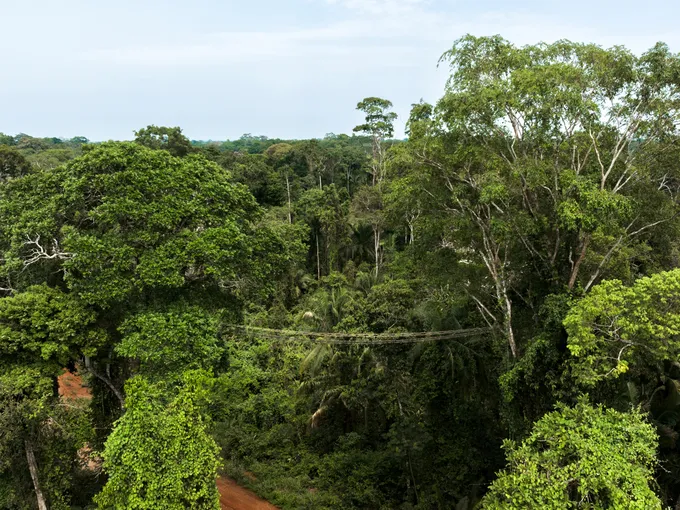
© WWF-US / Yawar Motion Films
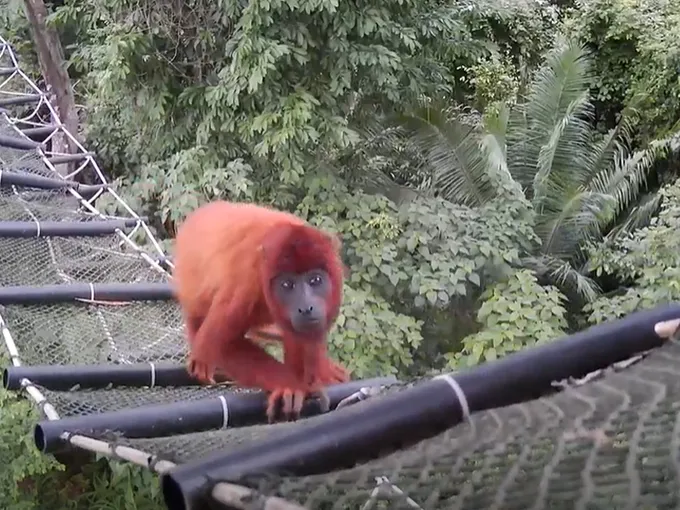
© WWF Peru
Many countries around the world have also built highly effective wildlife crossings.
Six bridges and 38 underpasses along the Trans-Canada Highway in Banff National Park have led to an 80% drop in incidents between wildlife and vehicles.
In northeast India in particular, collisions with trains have become a leading cause of death for endangered Asian elephants. Railway track fencing has proven effective at directing elephants to nearby wildlife crossings or natural habitats a short distance away, according to a handbook developed by experts on elephants and transport ecology in collaboration with WWF and partners. With support from WWF, AI-powered early warning detection cameras have also been installed in Assam to notify train conductors when elephants are present.
A WWF pilot program is also studying how to install forest canopy bridges in the Peruvian Amazon region of Madre de Dios. This collaboration between WWF and HP Inc. has led to the installation of 24 canopy bridges to facilitate safe passage for animals through fragmented areas of the forest. Camera traps have shown several monkey and other tree-dwelling species using the bridges, including the Weddell’s saddle-back tamarin, tufted capuchin, Colombian red howler, and kinkajou.8
Are US lawmakers considering policies to further prevent collisions between wildlife and vehicles?
The Wildlife Crossings Program established by the 2021 infrastructure law is only a pilot program through 2026—meaning it will expire unless lawmakers extend it.
Members of both parties in the House and Senate have introduced legislation, titled the Wildlife Road Crossings Program Reauthorization Act (H.R. 6078 / S. 3503), to renew this highly successful program for the long term so that the important work of making roads safer for everyone can continue.
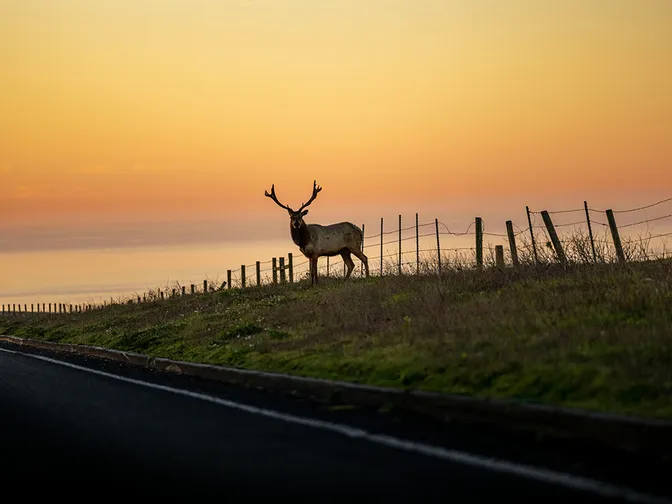
What can I do to help?
The clock is ticking to renew the Wildlife Road Crossings Program. Congress needs to hear from you why it’s important for the US to build infrastructure that keeps everyone safe and protects nature at the same time.
Tell your members of Congress today to support the Wildlife Road Crossings Program Reauthorization Act.
© Leo_Visions on Unsplash
Sources
1 https://digitalcommons.usu.edu/hwi/vol13/iss2/12/
2 https://link.springer.com/article/10.1007/s10344-019-1357-4
3 https://www.codot.gov/news/2025/december/i25-greenland-wildlife-overpass-complete
4 https://www.codot.gov/projects/archives/i25greenlandwildlifeoverpass
7 https://azdot.gov/projects/northcentral-district-projects/i-17-willard-springs-wildlife-overpass