Where bison roll, medicines grow
How American bison shape prairie landscapes through their movement
© Tailyr Irvine
Many of the medicinal and aromatic plants that people in the Great Plains have traditionally relied on for healing do not grow in isolation. Instead, they arise from relationships—between soil and water, plants and pollinators, animals and their activities. On the Great Plains, some of these relationships are born from a bison with an itch.
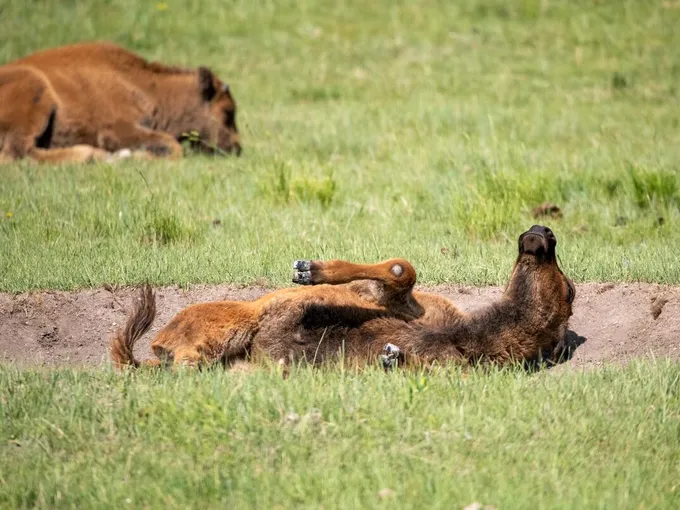
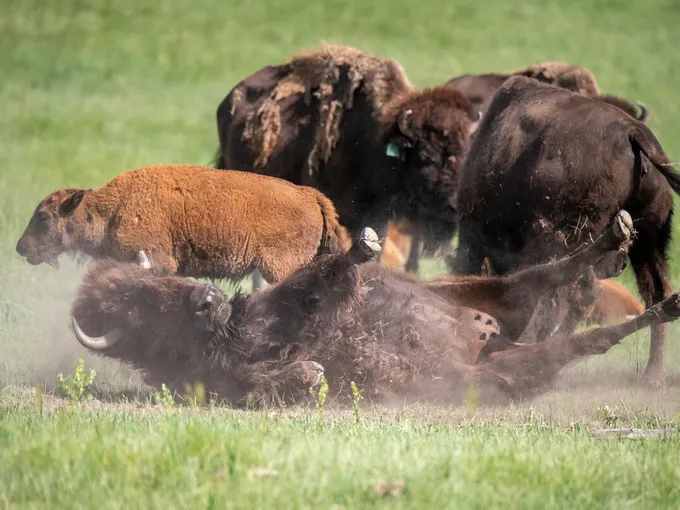
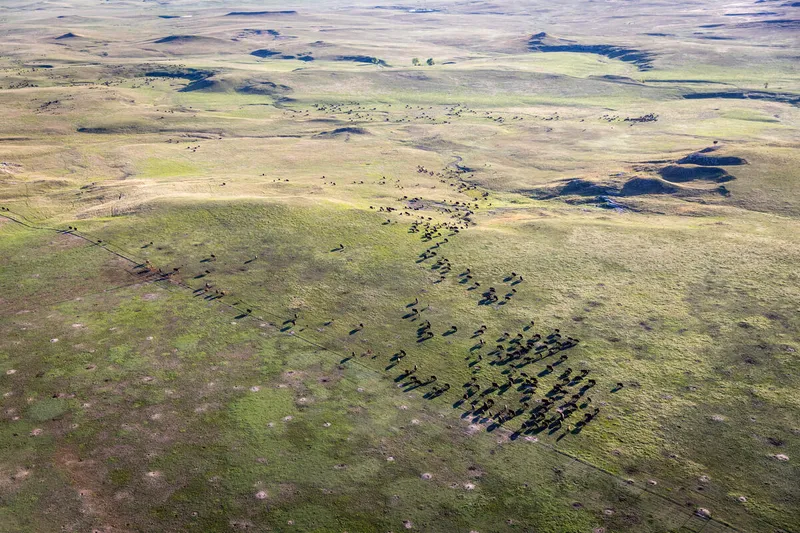
For thousands of years, plains bison shaped prairie landscapes through their movements, grazing, and behavior. One of their most distinctive ecological signatures of these large herbivores is the bison wallow—a shallow depression formed as bison roll and dust-bathe. While wallows may appear as little more than dusty divots in the landscape, research shows they function as persistent ecological features that influence water flow, soil chemistry, and plant diversity across grasslands.
© WWF-US/Clay Bolt
© WWF-US/Clay Bolt
© Chris Boyer/Kestrel Aerial/WWF-US
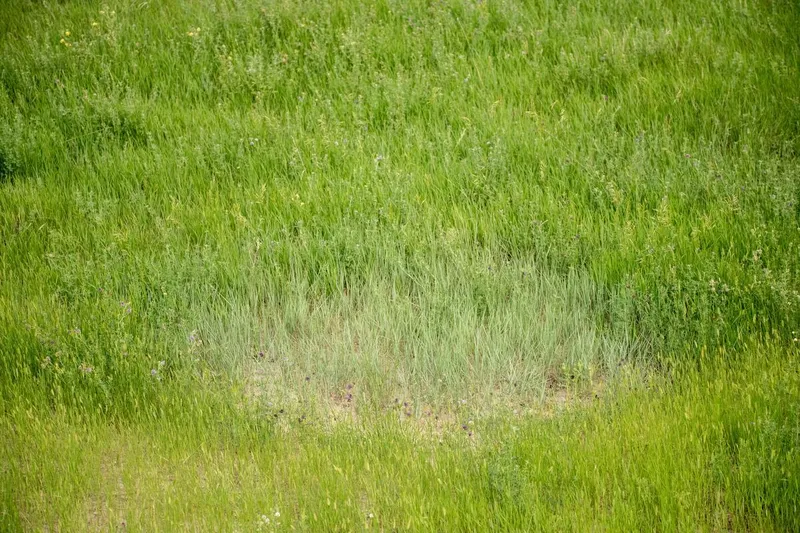
In a region where moisture is often fleeting, wallows become natural rainfall catchments. Rainwater collects in these depressions, which provide an entry point for moisture to bypass the hard crust of a sunbaked landscape, allowing it soak deeper into the soil and draw minerals closer to the surface. The result is a patchwork of conditions that differ from the surrounding prairie: wetter soils, exposed ground, and fluctuating nutrient levels. Ecologists have found that these microsites often support plant communities distinct from the surrounding grasslands that dominate much of the plains, including a higher proportion of flowering forbs.
© WWF-US/Clay Bolt
A recent Seedbank study spanning South Dakota, including sites at Custer State Park, the Wólakota Buffalo Range, and Flandreau Santee Sioux Tribal Buffalo Program reinforce this pattern of distinction. Although soils outside of wallows contained a greater overall plant diversity, several species emerged more readily from wallow soils. These included native grasses like big bluestem and buffalo grass, along with plants with documented medicinal value, including field pennycress and prostrate pigweed. Their absence from surrounding prairie soils suggests that wallows function as selective openings—places where disturbance, moisture, and exposed ground allow certain species to surface and persist. Rather than diminishing prairie diversity, these depressions create conditions where change-adapted plants thrive.
Medicine in the margins

© Tailyr Irvine
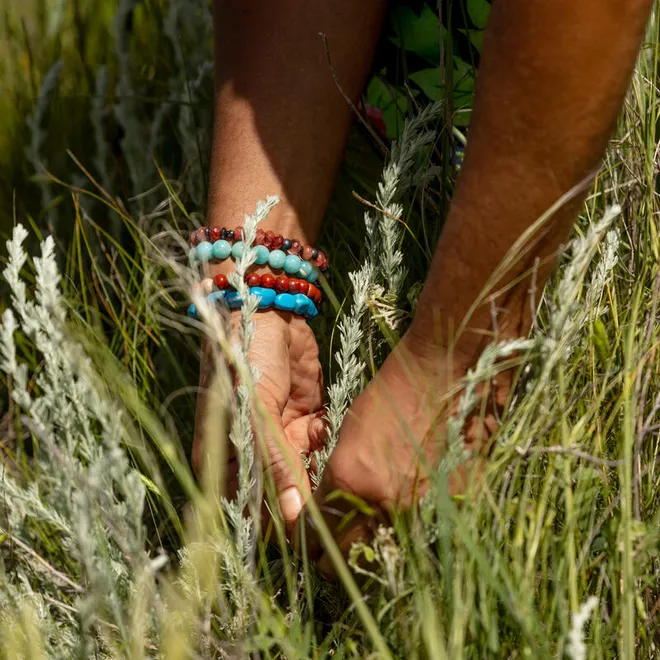
Interestingly, along the margins of wallows, plants with aromatic and medicinal properties are more likely to establish. Wild bergamot, a fragrant member of the mint family, frequently appears in these disturbed, moisture-retaining soils. Indigenous Plains Nations, including the Lakota, have traditionally used wild bergamot for teas and topical applications, valuing both its aroma and its calming qualities. Prairie coneflower—another species commonly found near wallows—has also been traditionally used in various preparations and ceremonies. These plants do not require pristine conditions; instead, they do best in places shaped by change.
"As an Unci (grandmother), I imagine what it was like to see wallows spread out across the prairie. There are still a few places where one can experience them,” says Monica Rattling Hawk, a tribal liaison specialist with WWF. "Today, we are regaining knowledge and experiencing the beauty of a simple wallow. The grasses, the plants—the medicines—and the water, form an entire tiny ecosystem. The smells, the sounds, the sights, are all part of recognizing and remembering the connections."
For many Indigenous cultures, knowledge of these connections is nothing new. Bison were not only providers of food, shelter, and tools, but also creators of the conditions that allowed many medicinal plants to flourish. Plants growing in landscapes shaped by bison were traditionally gathered with attention to place, timing, and reciprocity—an understanding that medicine emerges from relationship rather than extraction.
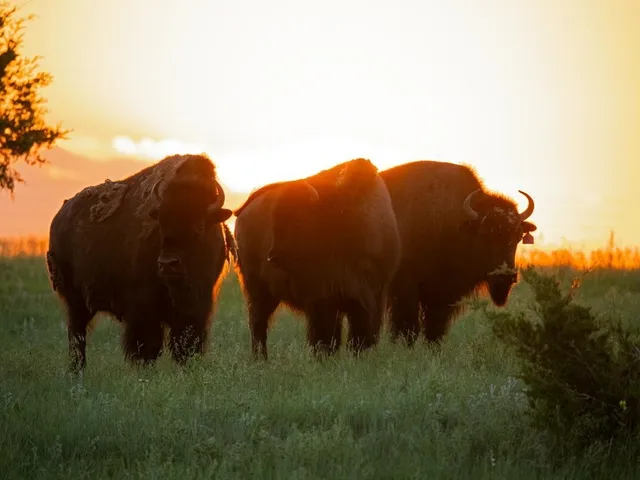
Today, as bison return to portions of their historic range, their wallows offer a reminder that conservation is not just about protecting individual species. It is about restoring the processes that allow life to interconnect. In honoring medicinal and aromatic plants, we are also honoring the animals that make their existence possible—and the ancient knowledge that recognized these ties long before modern ecology put them into words.

© Clay Bolt/WWF-US
© WWF-US/Clay Bolt
Support Tribes restore buffalo to the Great Plains
The Indian Buffalo Management Act would strengthen support for Tribal Nations who are working to bring buffalo back from the brink of extinction.
Citations
- Trager, M. D., Wilson, G. W. T., & Hartnett, D. C. (2004). Concurrent effects of fire regime, grazing and bison wallows on tallgrass prairie vegetation. Journal of Vegetation Science, 15(6), 799–808.
- Collins, S. L., & Barber, S. C. (1985). Effects of disturbance on diversity in mixed-grass prairie. Vegetatio, 64, 87–94.
- Bree Eastman, Hayden Wolfe, Michael Hildreth, Lora Perkins, Jeff M. Martin (2026) Effects of Bison Wallows on Soils and Plants in the Northern Mixed-Grass Prairie, Natural Areas Journal, 46(1), 13-20.
- Kindscher, K. (1992). Medicinal wild plants of the prairie: An ethnobotanical guide. University Press of Kansas.
- Moerman, D. E. (1998). Native American ethnobotany. Timber Press.
- Potts, S. G., et al. (2003). Linking bees and flowers: How do floral communities structure pollinator communities? Ecology, 84(10), 2628–2642.
- Cane, J. H. (1991). Soils of ground-nesting bees (Hymenoptera: Apoidea): Texture, moisture, cell depth and climate. Journal of the Kansas Entomological Society, 64(4), 406–413.
- Harmon-Threatt, A. N., & Chin, K. (2016). Common methods for tallgrass prairie restoration alter bee communities. Insect Conservation and Diversity, 9(1), 1–13.
- Tonietto, R., Ascher, J. S., & Larkin, D. J. (2017). A comparison of bee communities of Chicago green roofs, parks and prairies. Ecology and Evolution, 7(22), 9166–9178.