Why primates do not make good pets
Primates, including monkeys, marmosets, lemurs, and many others, may look playful and affectionate online, but they are animals whose complex needs can only be met in the wild, not in private homes. Keeping primates as pets puts people, animals, and ecosystems at risk.
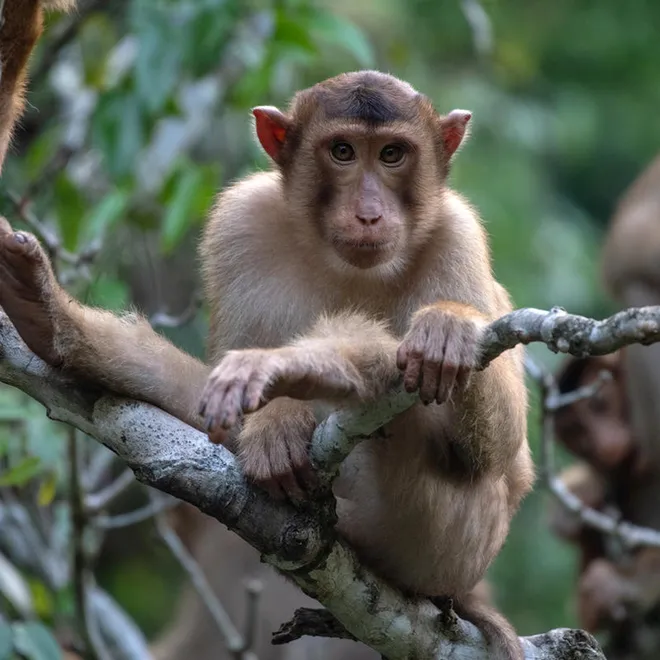
© Chris J. Ratcliffe/WWF-UK
Key takeaways
- Primates suffer in captivity and face conservation threats. The pet trade fuels wildlife trafficking, contributes to population declines, and normalizes ownership of endangered species.
- They pose ecological, health, and safety risks. Escaped primates can become invasive, disrupt ecosystems, and spread dangerous diseases; as adults, they often become aggressive and difficult to manage.
- Legal gaps enable ongoing exploitation. Inconsistent US regulations allow private ownership and interstate sales, prompting calls for federal action like the Captive Primate Safety Act to curb the trade.
Conservation and wildlife trafficking impacts

© Adriano Gambarini/WWF-US
The demand for pet primates fuels global wildlife overexploitation. Current available data shows that 94% of primate species are experiencing population declines, and 69% are threatened with extinction1. While the majority of the pet trade is legal and sustainable, there is evidence of unsustainable and illegal sourcing of animals from the wild, including primates, which is a significant threat to global wildlife populations. Trafficking can rapidly accelerate population declines for already threatened species, and even captive-bred primates sustain demand that normalizes ownership of endangered wildlife and undermines conservation efforts worldwide.
Invasive species and ecological risks
Like many exotic and nonnative animals in the pet trade, primates pose a risk of ecological harm if they escape or are intentionally released when owners can no longer care for them. Most pets cannot survive in the wild, and if they do, the potential impacts on local habitats, competition with native wildlife, and disease spread to local wildlife and people can be immensely damaging. No primate species is native to the United States.
Florida faces a heightened risk of invasive species because its warm climate and long growing season create ideal conditions for nonnative tropical species to persist and spread. Seven primate species have been introduced in the state, and two of them—rhesus macaques and vervet monkeys—appear to be established with breeding populations there.

© WWF-Sweden/Oja Jennersten
Public health and safety risks
Primates pose serious risks to human health and safety through disease transmission and physical injury. They can spread diseases like herpes B virus, tuberculosis, monkeypox, and other emerging pathogens that can be dangerous and potentially life-threatening to people.
As primates reach adulthood, they often become unpredictable and aggressive. Bites, scratches, and attacks can cause severe injuries, particularly to children and the elderly. Most private owners lack the training or facilities necessary to safely manage adult primates.
Primates are highly intelligent, social wild animals

© naturepl.com/Alex Hyde/WWF
Primates share many traits with humans: advanced intelligence, long childhoods, strong social bonds, and emotional depth. In the wild, they live in complex social groups, travel large distances each day, and rely on rich environments to meet their physical and psychological needs.
No matter how well-intentioned, a private home cannot replicate these conditions. Early separation from their mothers and lifelong isolation, confinement, and boredom frequently lead to anxiety, self-harm, and aggression.
Legal gaps enable the harmful trade
Despite the risks, the United States lacks a comprehensive federal ban on private primate ownership. Importation of primates for the pet trade has long been prohibited, and the Endangered Species Act prohibits interstate transport and sale of species listed as endangered. However, there is variation in regulation by species and among US state and municipal laws on primate ownership, and loopholes enable interstate commerce and online sales to occur. For primates smuggled into the US, there remains an opportunity to deceptively sell live primates in some states, claiming they are captive-bred. The current patchwork of regulation fuels confusion, enforcement challenges, and ongoing exploitation.
What can you do?
The Captive Primate Safety Act (CPSA) is bipartisan federal legislation that would close longstanding loopholes by prohibiting private possession of primates as pets and ending interstate commerce and transport for all primate species. Creating these clear, enforceable national standards helps mitigate the risks outlined above by curbing private ownership and physical interaction with primates.
Take action:
- Contact your members of Congress and urge them to support the Captive Primate Safety Act
- Learn about responsible pet ownership through WWF’s Responsible Pet Guide and educate others by sharing facts about why primates are not pets
- Report primate sales online to the platform you see the listing on or to the Coalition to End Wildlife Trafficking Online
Resources
1 Garber, P. A., Estrada, A., Shanee, S., Svensson, M. S., Luis Verde Arregoitia, Nijman, V., Noga Shanee, Gouveia, S. F., K.A.I. Nekaris, Chaudhary, A., Júlio César Bicca-Marques, & Malene Fris Hansen. (2024). Global wildlife trade and trafficking contribute to the world’s nonhuman primate conservation crisis. Frontiers in Conservation Science, 5. https://doi.org/10.3389/fcosc.2024.1400613