Octopus, squid, and cuttlefish: How cephalopods strengthen the ocean's climate resilience
These incredibly adaptable species are signaling how climate change is reshaping marine ecosystems
© Alex Mustard / naturepl.com / WWF
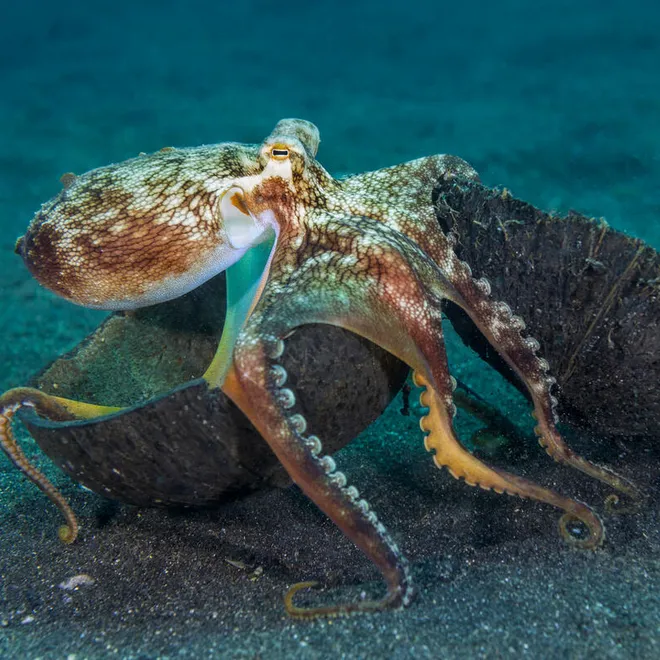
The ocean absorbs roughly a quarter of all the carbon dioxide humans release into the atmosphere. Much of that is driven by the workings of an interconnected web of life beneath the waves. Surprisingly, the clever sea creatures known as cephalopods are more central to that web than many know.
Cephalopods are an order of marine mollusks that includes species like octopus, squid, and cuttlefish, and are among the most fascinating creatures on our planet. Beneath their unique appearance is a highly developed brain capable of complex learning and problem-solving. They can regrow limbs, change shape, color, and texture in an instant, and even edit their own genetic information (RNA), the extent and scale of which is extremely rare in the animal kingdom.
However, cephalopods often swim under the radar when it comes to their contributions to our ocean’s health. These critical links within and among marine food webs also help move and store carbon. They keep ecosystems balanced and functional, strengthening the ocean’s resilience and ability to regulate our climate.
Their unique biology has essentially wired them for change. The same traits that make them so responsive to environmental changes have allowed cephalopods to thrive in virtually every ocean region on the planet. And this adaptability is helping us better understand and predict how climate change is reshaping marine ecosystems.
The ocean’s ecological middlemen

© Casper Douma / WWF
Cephalopods are particularly influential in marine food webs due to their dual role as both predator and prey. Often described as voracious feeders, these opportunistic predators aren’t picky, eating anything from small crustaceans, fish, and mollusks to other invertebrates and even other cephalopods. At the same time, cephalopods serve as prey themselves, helping sustain populations of various marine mammals and commercially important fish, such as seabass, tuna, and mahi.
Cephalopods aren’t just important to marine food webs; they also support the health, food security, and livelihoods of many coastal communities around the world. Over the last 50 years, cephalopod species like cuttlefish, octopus, and squid have grown in both commercial importance and as a food source. As overfishing and climate change drive declines in finfish stocks, cephalopod fisheries have been rapidly expanding worldwide.
Many cephalopod species are considered keystone species due to their influence on ecosystem dynamics. Their ecological role has far-reaching effects, helping support many other marine species populations, human food security and livelihoods, and our oceans’ climate regulation services.
The carbon keepers of the deep
© Geraldine Dion St-Pierre
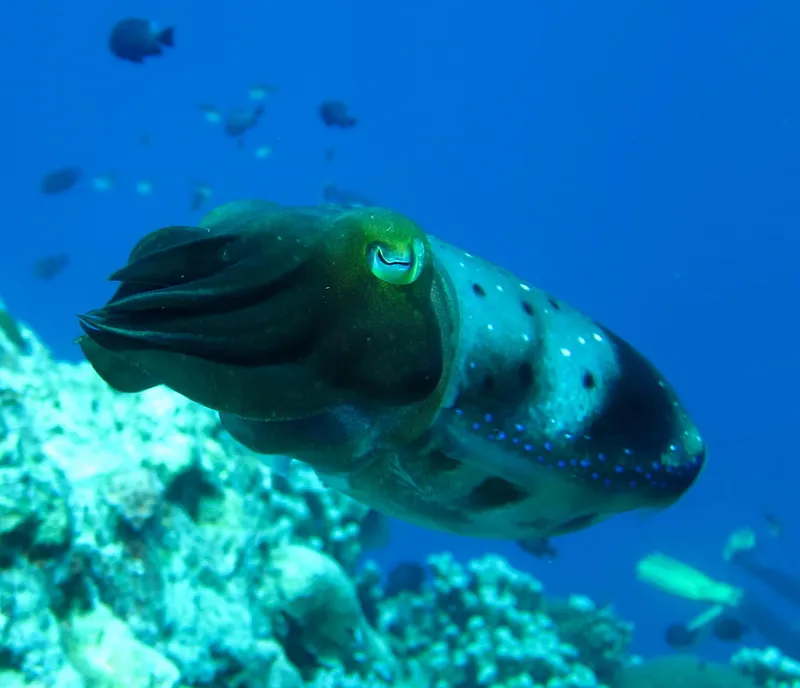
Some cephalopods help increase the oceans’ carbon storage capacity —even after death. Many marine species contribute to what’s called the biological carbon pump, the ocean's natural process of capturing atmospheric carbon and transporting it to the deep sea where it can be stored for thousands of years. Through vertical migrations, species ranging from fish to zooplankton contribute to this process by consuming carbon at shallower depths and releasing it deeper into the ocean through respiration and waste.
But it’s the carcasses of some cephalopods, particularly certain squid species, that play a larger role in the ocean’s biological carbon pump. As their carcasses slowly sink to the sea floor, they provide nutrients and energy for animals living deep below. At the same time, the squid carcasses are transporting carbon to the ocean floor where it can be stored. Because squid and many other cephalopod species have large, fast-growing populations with short life cycles (amounting to a lot of carcasses in some areas), cephalopods may contribute more than previously expected to carbon storage in the ocean.
Canaries of the ocean
Cephalopods occur in every ocean and across many different habitats. Their growth is highly responsive to environmental conditions - meaning that they could serve as early warning signals or biological indicators of how climate change is affecting our oceans. Cephalopods in the Barents Sea, the most climate-change-impacted area in the Arctic and where cephalopods are prolific, are proving to be an example of this.
Arctic cephalopods were found to have increased in abundance, diversity, and biomass in the mid-2000s and early 2010s, coinciding with the intensified environmental effects of climate change in the Arctic. The warmer waters brought a variety of species from the Atlantic, with opportunistic predators like cephalopods following the shift of prey populations. As Arctic marine ecosystems and food webs changed, so did cephalopods’ ecology in response.
The need for balance in a changing climate
As marine ecosystems continue to face growing threats from human activities and climate change, cephalopods could play an increasingly valuable role in helping us better predict the impact of climate change on ecosystems and other species. At the same time, they’re indicators of how rapidly and unpredictably our oceans are changing. When cephalopod populations and distributions shift in response to these changes, other species’ populations, including people, can also be impacted. Healthy cephalopod populations—as well as those of other marine species—remain critical to balanced ecosystems. And when ecosystems are healthy, they can better support oceans’ contributions that help sustain us all.
Learn more about other wildlife climate heroes.
© WWF-US / WWFGifts
Ocean-themed gifts
Support WWF's global conservation efforts and choose from symbolic adoptions, apparel, and more!
Sources
https://pmc.ncbi.nlm.nih.gov/articles/PMC10792511/
https://pmc.ncbi.nlm.nih.gov/articles/PMC9590006/
https://besjournals.onlinelibrary.wiley.com/doi/full/10.1111/1365-2656.13333
https://link.springer.com/article/10.1007/s11160-019-09554-2
https://www.sciencedirect.com/science/article/pii/S2589004224022119
https://bg.copernicus.org/articles/20/997/2023/
https://www.sciencedirect.com/science/article/pii/S0960982224004639
https://www.mbari.org/news/a-squid-graveyard-and-a-deep-sea-buffet/
https://www.annualreviews.org/content/journals/10.1146/annurev-marine-040722-115226
https://pubmed.ncbi.nlm.nih.gov/37468442/
https://www.frontiersin.org/journals/marine-science/articles/10.3389/fmars.2021.740781/full
https://link.springer.com/article/10.1007/s00227-023-04261-w
https://academic.oup.com/icb/article/63/6/1240/7226693
https://www.mbl.edu/news/what-can-cephalopods-teach-us-about-adapting-climate-change