5 remarkable animal dads
© Shutterstock/Lori Labrecque
Nature has some outstanding animal dads who go to great lengths for their offspring, from protecting them from threats to keeping them warm and fed to socializing them through play.
Here’s a look at five remarkable animal dads:

© Martin Harvey/WWF
1. Mountain gorilla
Male mountain gorillas, known as silverback gorillas because of the coloring of their coats when they mature, lead cohesive families, defending females and offspring from threats by charging and beating their chests. They play an important role in their offspring’s socialization and support infants during weaning. Virunga National Park is home to more than half the world's mountain gorilla population. WWF has worked to reforest areas and fund antipoaching patrols in Virunga. We also collaborate with local people to raise environmental awareness.

© J.J. Huckin
2. Pygmy marmoset
The whole family pitches in to care for baby pygmy marmosets, a tiny primate found in the forests of South America. Pygmy marmosets live in small groups, usually consisting of the parents and several sets of offspring. The smallest monkeys in the world, adult marmosets, weigh an average of four ounces. Pygmy marmosets usually give birth to twins, with each weighing only around half an ounce. Father pygmy marmosets help mothers carry their offspring.

© Shutterstock/Volodymyr Burdiak
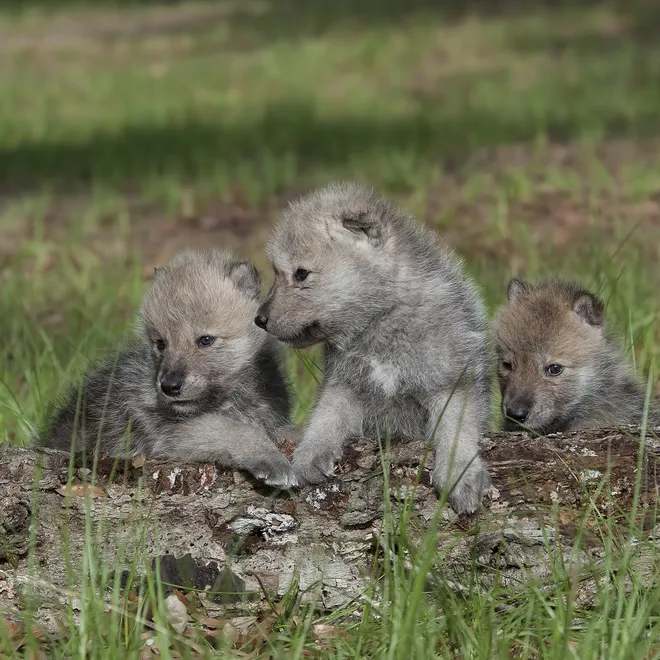
3. Arctic wolf
Wolf fathers are very protective of and attentive to their mates and pups. Wolves generally pair for life and usually only the alpha male and female of a pack mate. The whole pack pitches in to help raise the pups, and the father is responsible for guarding the den and hunting for food. Pups can travel with the pack at about five months. WWF works with governments, businesses, and communities across the Arctic to combat the threats to the region and to preserve its rich biodiversity, including the presence of the Arctic wolf.

© Shutterstock/Volt Collection
4. Emperor penguin
Perhaps the best-known wildlife fathers of all, male Emperor penguins begin their paternal duties long before their offspring are born. After the mother lays her egg, she returns to the sea to feed on a two-month-long journey, and the father’s job—keeping the egg safe and warm—begins. He spends two long, arduous months balancing the egg on his feet in the harsh Antarctic winter, protecting it with his brooding pouch. He has to fast for these two months, unable to eat anything until the mother penguin returns and he can make his own journey to the sea to replenish himself.

© Wild Wonders of Europe/Zankl/WWF
5. Seahorse
Seahorse fathers break all the rules—they're the ones who get pregnant and give birth. After the seahorse mother deposits her eggs into the father’s pouch, the father fertilizes and incubates them until he gives birth to the tiny, fully-formed seahorses. This happens after about 20 to 28 days of pregnancy.