Five native plants that help power the monarch butterfly migration
Plant them in spring and enjoy their fall blooms
These late-blooming plants native to North America help feed butterflies—especially monarchs—at a crucial point.
© Sarah Pietrkiewicz
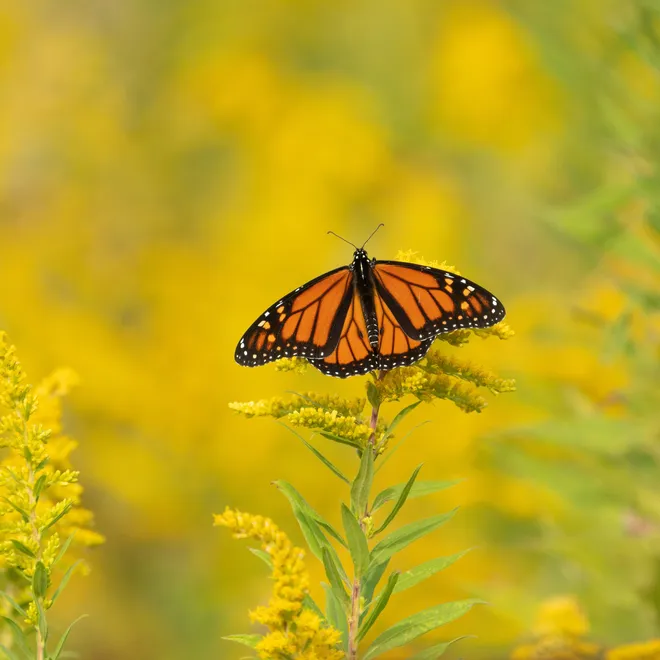
Have you ever wondered how to help monarchs before they make their incredible migration? While milkweed is the only food source for monarch butterfly caterpillars and vital for them, the adult butterflies rely on the nectar of many flowering plants to make their incredible migration, particularly at the end of the blooming season in the fall.
Below are a few late-blooming plants native to North America that help feed butterflies—especially monarchs—at a crucial point. Planting these or letting them grow in the spring and summer can give monarchs a boost when they eventually bloom in the fall. Their timing is essential: The later blooming nectar gives monarchs the power to complete the up to 3,000-mile journey the super generation of monarchs need to make it to Mexico for winter. If you don’t have access to a garden, no fear! Just by recognizing these plants and spreading the word, you can help the monarch butterfly and keep these plants blooming wherever they are found.
© Morgan Heim / Day's Edge Productions
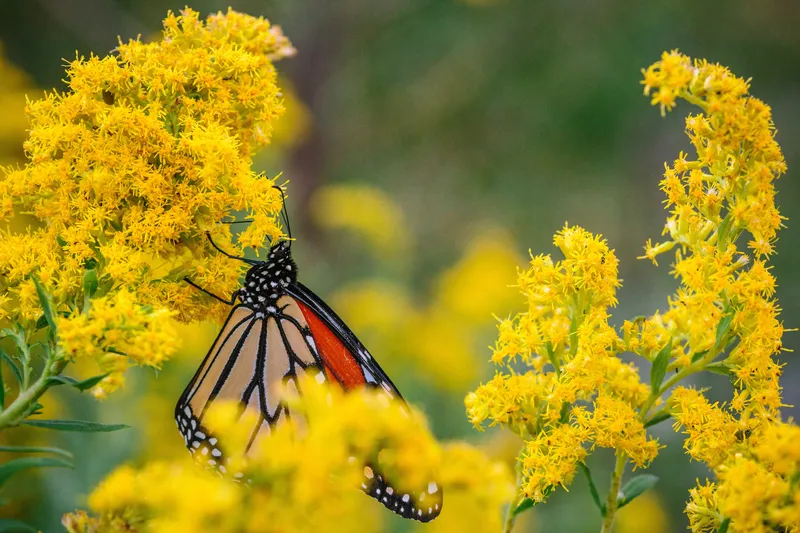
Goldenrod
(Solidago spp)
Goldenrod plants, like showy goldenrod, are a top nectar source for monarchs in the fall. Often confused with ragweed, goldenrod is not responsible for the infamous allergies people detest, but sadly, they are sometimes blamed and removed. By learning the goldenrod native to your area and planting it, you can support a lot of important pollinators, including monarch butterflies. Native goldenrods are host plants to over 126 species of butterflies and moths and provide a great food source in the fall, when many summer-flowering plants are losing their flowers for the season.
© Danielle Brigida
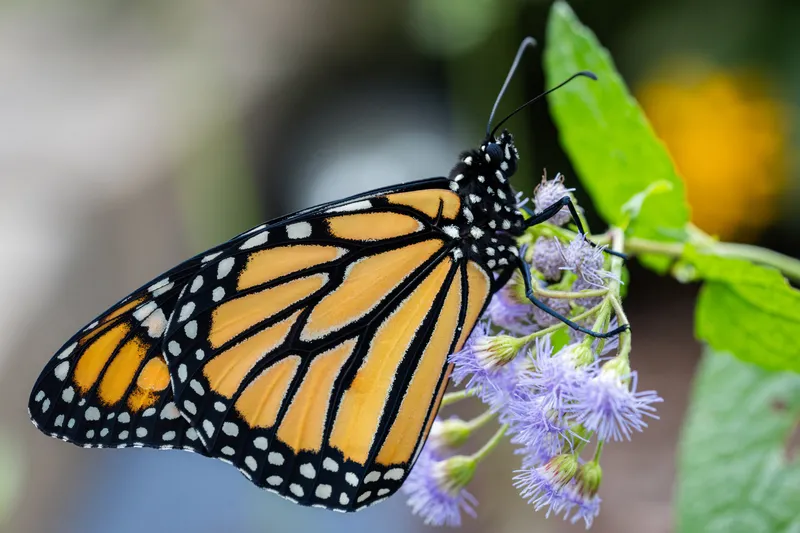
Blue mistflower
(Conoclinium coelestinum)
These blue-purple flowers attract a number of important pollinators, and the monarch, too! Native to Eastern and North America, this beautiful plant has blooms that carry through October.
© Courtney Celley / USFWS
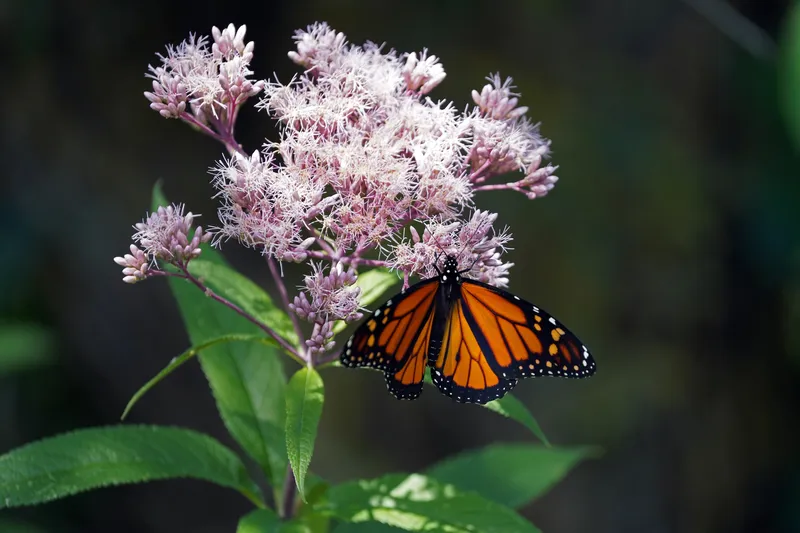
Joe-pye weed
(Eutrochium spp)
This tall, flowering, pollinator-friendly plant is drought-tolerant. Its fuzzy pink flowers bloom in the fall, when you can sit back and enjoy the pollinator buzz that it creates.
© Danielle Brigida
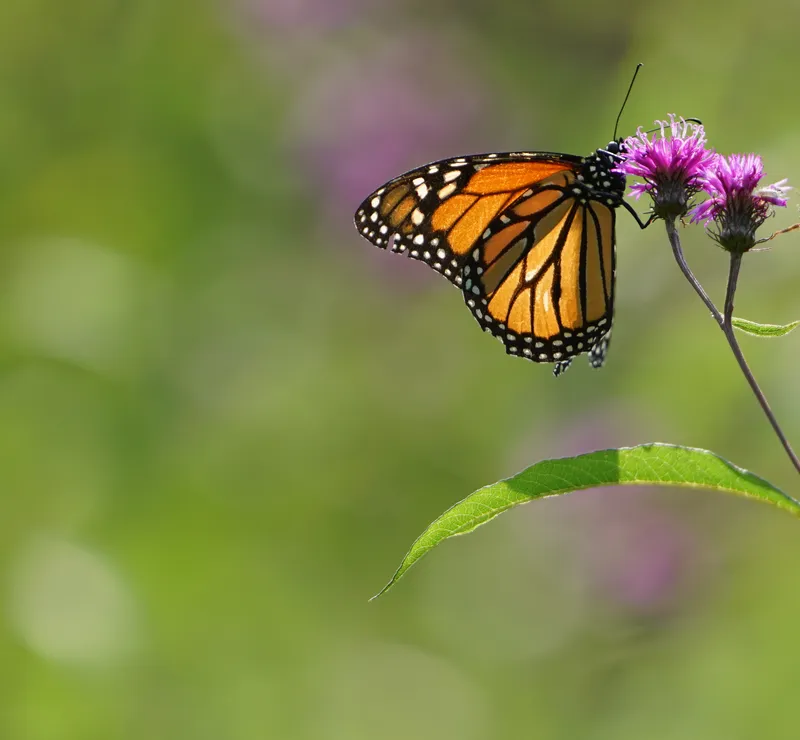
Ironweed
(Vernonia spp)
Monarchs love some ironweed! Native to the Central and Eastern United States, ironweed can be found in prairies, riverbanks, wetlands, and marshes—and along the roadsides. They produce beautiful, deep purple flowers in the fall.
© Sarah Pietrkiewicz
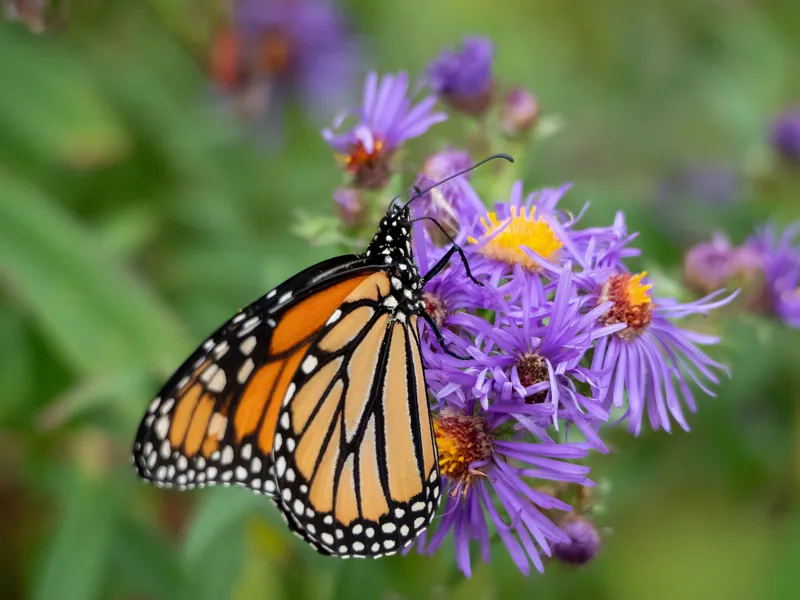
Asters
(Symptotrichum spp)
Asters like the New England Aster are great fall bloomers—often showing off daisy-like purple and pinkish flowers from August through October, making it an excellent late-season bloomer and an important food source.