Wild animals sporting green
For St. Patrick’s Day, we’re taking a look at wild animals sporting green. WWF fights to secure a future for animals on the planet we all share. We have made it our mission to find solutions that save the marvelous array of life on our planet by applying the best science available and working closely with local communities.
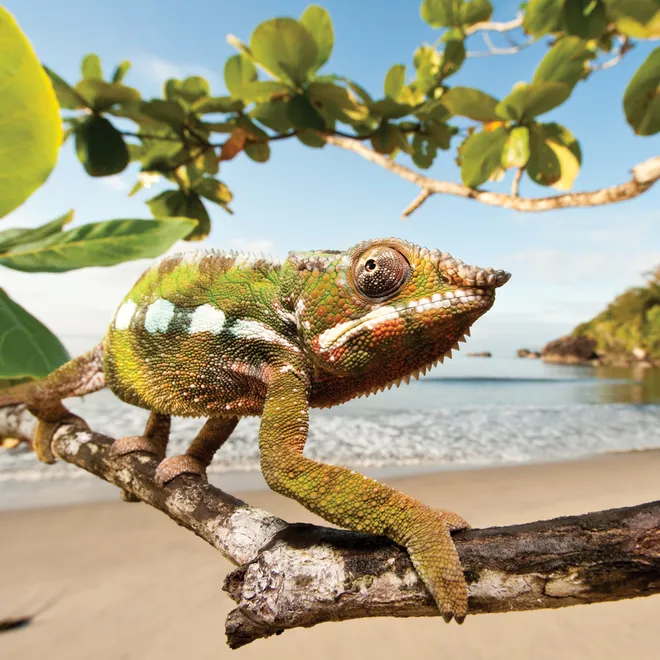
© naturepl.com / Nick Garbutt / WWF
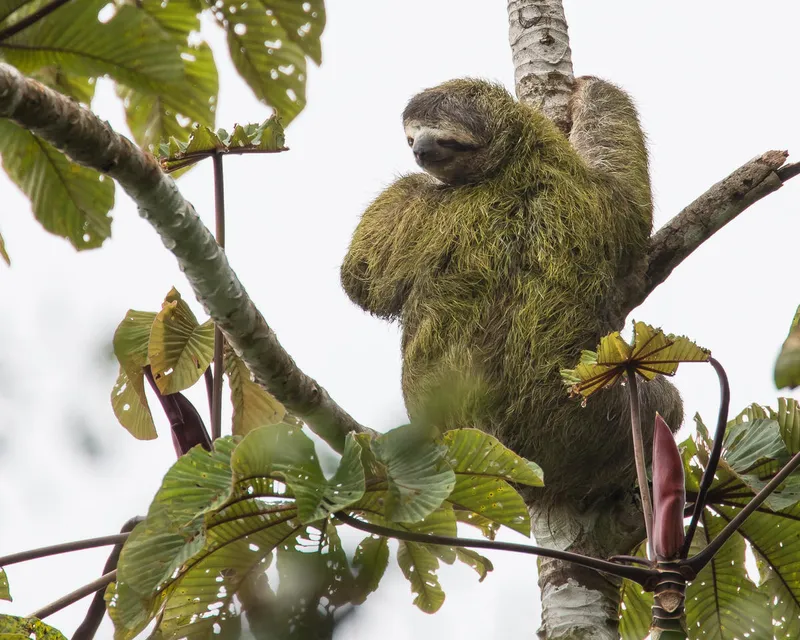
© WWF-US / Keith Arnold
Sloth
While a sloth’s fur isn’t actually green, sloths often have green algae growing on them, giving them a green tinge. Sloths, moths, and algae have a symbiotic relationship that forms an ecosystem. Mature moths fly into the trees to find a sloth host, and specialist algae rely on bacteria from the moths. The sloths also eat the nutrient-rich algae to supplement their diet of leaves.
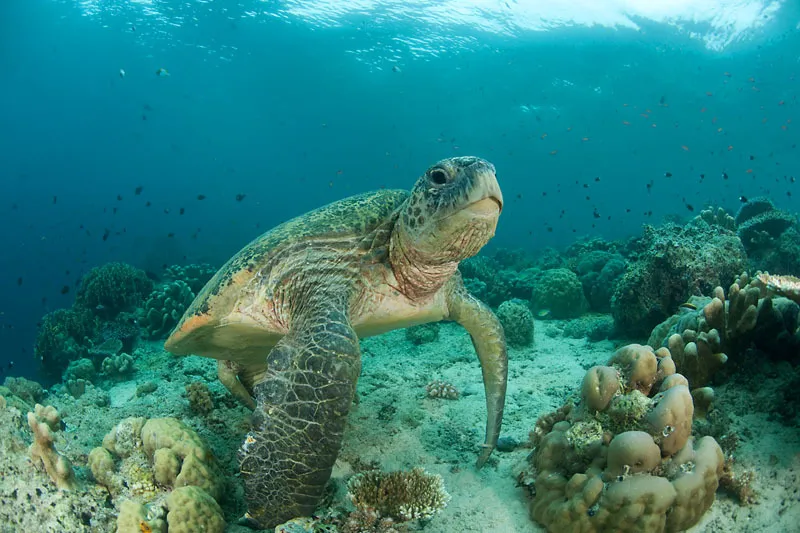
© Jürgen Freund/WWF
Green turtle
The green turtle is one of the largest sea turtles and the only herbivore among the different species. Green turtles are named for the greenish color of their cartilage and fat, not their shells. They graze on seagrasses and algae, which maintains the seagrass beds and makes them more productive—much like mowing the lawn to keep it healthy. Green turtles are threatened by overharvesting of their eggs, hunting of adults, being caught in fishing gear, and loss of nesting beach sites. WWF addresses these issues by establishing marine protected areas, tracking turtles by satellite, and encouraging the use of fishing gear that prevents bycatch.
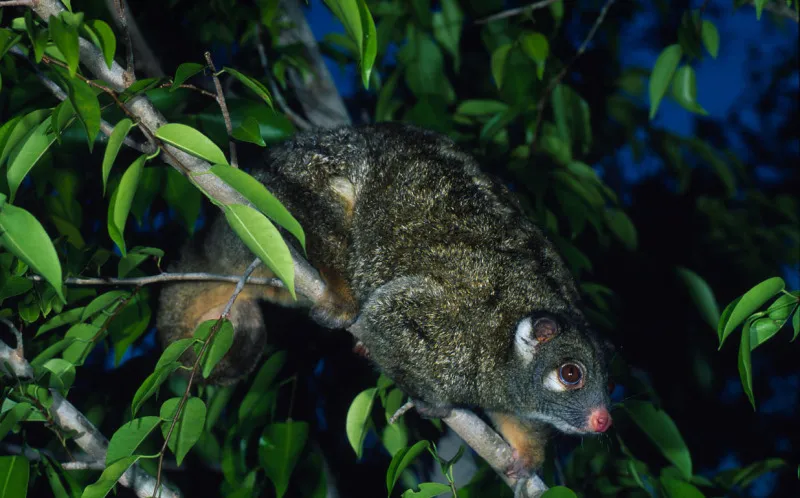
© Martin Harvey/WWF
Green ringtail possum
These Australian possums actually have olive grey fur grizzled with black, yellow, and white hairs, which makes it appear green. This green tint provides camouflage among the leaves of the forest, protecting them from predators.
© Stefan Hertwig/WWF
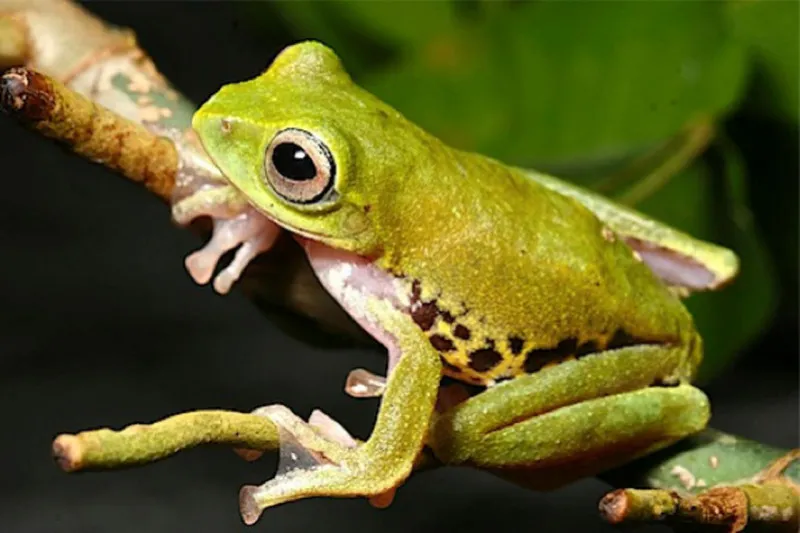
Mulu flying frog
This tiny frog, with males growing to just 3.5 cm, is only green half of the time. The Mulu flying frog has bright green skin at night, but changes color to display a brown hue during the day. It was found 1,650m above sea level in Gunung Mulu National Park, Sarawak, Malaysia. The species is native to the Tapin Valley near a small stream in the area.
© Stefan Hertwig
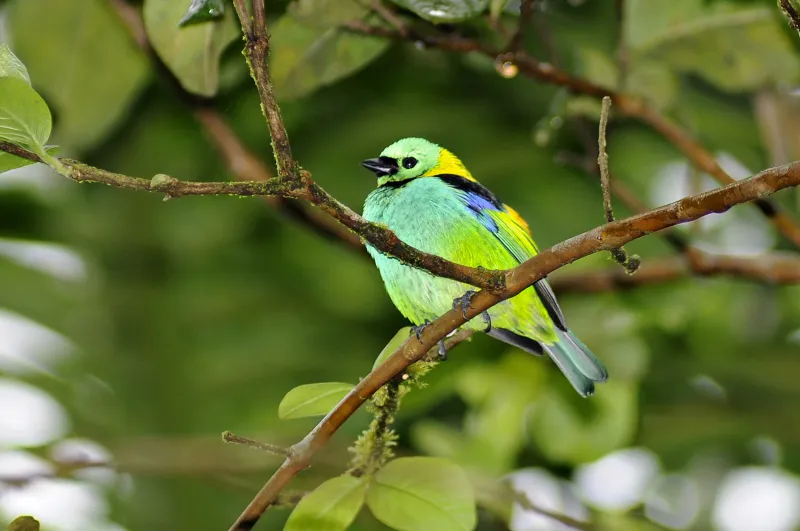
Green-headed tanager
This small, brightly colored bird lives in east-central South America in humid forests. Its extravagant coloration camouflages it in the trees.
© Wild Wonders of Europe/Christian Ziegler/WWF
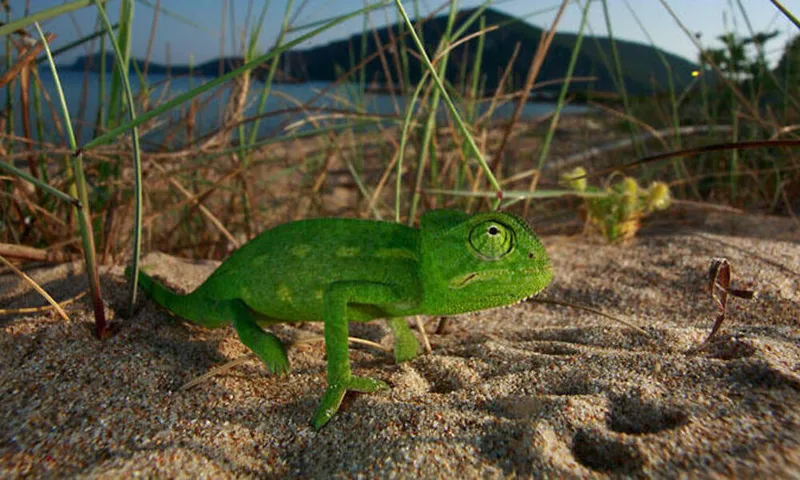
African chameleon
This species is usually green, but, like other chameleons, it has the ability to rapidly change color. Chameleons change color for social signaling, in reaction to different temperatures and conditions, and to camouflage. They usually turn darker colors when they are angry or attempting to scare others, and males turn lighter, multicolored patterns when attempting to court females.
© Martin Harvey/WWF
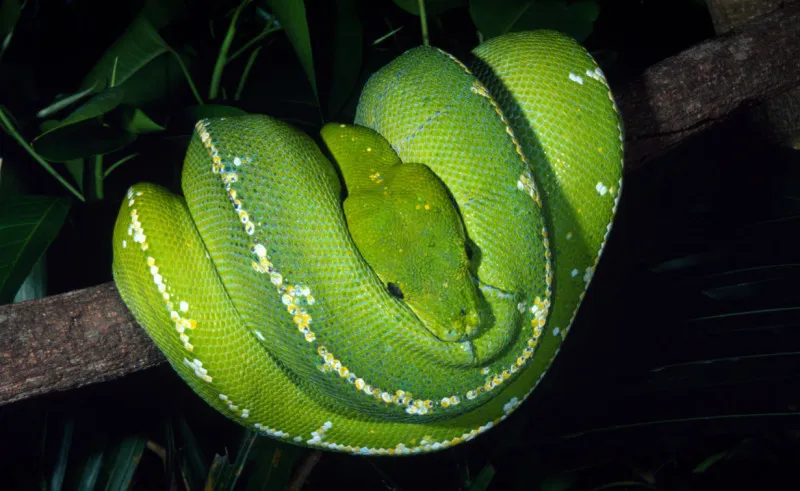
Green tree python
This five-foot-long green python is found in Australia, New Guinea, and Indonesia. Only adult green tree pythons are green; juvenile green tree pythons are bright yellow or brick red.
© WWF-US / WWFGifts
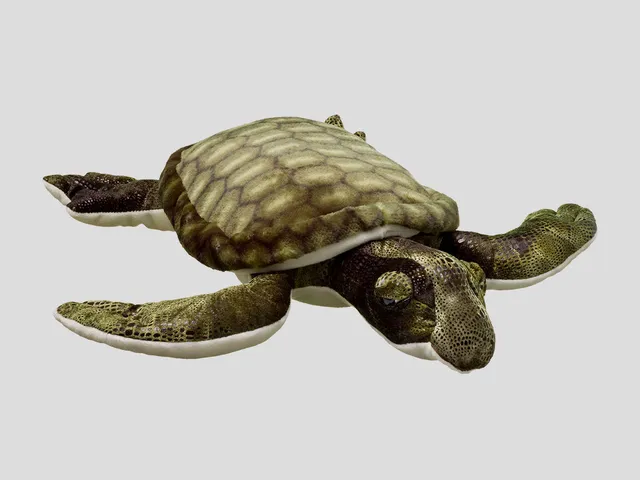
Adopt a green turtle
Support WWF’s global efforts to protect wild animals and their habitats and choose from kits with plush and more.