Oceans
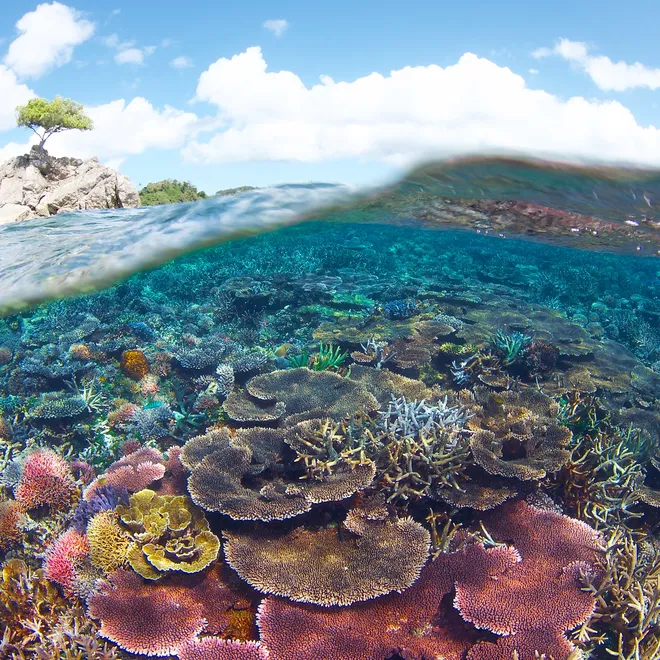
Dive in to explore our magnificent oceans and the incredible biodiversity beneath the surface. In this lesson, your students will discover the complex ecosystems in the ocean and the threats they face from fishing and climate change with a video from a marine policy expert, a persuasive writing exercise, and an engineering design challenge.
© WWF-Malaysia / Eric Madeja
💡 Warm up
© WWF
Physical Exercise
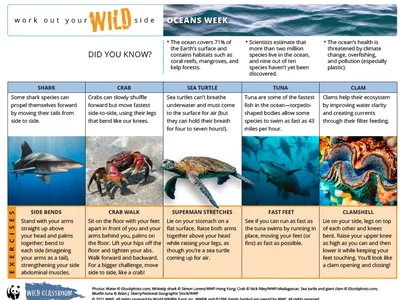
Work Out Your Wild Side: Oceans Week
As you start the lesson, lead students in a wild workout inspired by the movements and behavior of ocean animals like clams, sharks, and sea turtles. Ask student volunteers to describe threats to oceans that they are aware of.
© naturepl.com / Michael Pitts / WWF
Story
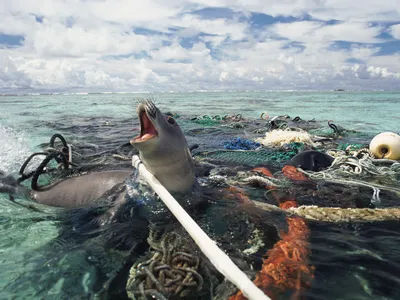
Our oceans are haunted by ghost nets: Why that's scary and what we can do
After reading the web story aloud, prompt students to recall the effects of ghost gear on wildlife and discuss potential solutions to reduce its impact.
💻 Tech time
Recorded Livestream
The Enormous Ocean: Plentiful or Plundered?
Play the recorded livestream to hear Michelle Kuruc, a marine policy expert, explain how threats like noise pollution and unsustainable fishing practices harm the ocean's inhabitants—including whales, sea turtles, fish, and coral—and what we can do to help. Visit the link in the video description for additional activities and discussion questions.
Why are coral reefs turning white?
If you are short on time, watch the video about coral bleaching to introduce students to another conservation issue threatening our oceans.
▶️ Activities
© WWF
Writing
A Need for the Seas
Lead students in a writing activity in which they will read a passage, discuss the importance of our oceans, and compose a persuasive and informative letter to a friend or family member to explain the importance of sea turtles and oceans and how we can help oceans around the world.
© WWF
STEM
Be Careful What You Fish For
Challenge students to use their engineering skills to design new fishing methods to decrease bycatch.