Greenprints for the Future
Wild Classroom’s Sustainability Project Fund

© Delores Williams
Greenprints for the Future puts students in control of leading environmental change.
Equipped with tools, funding, and support, students design and lead projects that address real environmental challenges in their schools and communities. Through Wild Classroom, up to 15 educators will receive $1,200 to help students put their solutions into action.
How it works
Educators interested in applying will be asked to
1) Use our provided Wild Classroom activity (for grades K-5) or (for grades 6-12) with their students to
- Reflect on their connection to nature
- Identify an environmental issue in their school or community
- Design a creative solution to address the problem.
2) Select one student’s solution proposal and submit with the application by November 16, 2026 for the opportunity to receive $1,200 to bring the idea to life
3) If selected, implement the proposed solution with their students and submit all requirements by May 1, 2027 (see requirements below).
Examples of environmental issues for solution proposals

© shutterstock
Snacks & lunches in lots of wrappers
Too much packaging creates more trash.

© shutterstock
Cars/buses are running longer
Which creates air pollution and wastes fuel

© shutterstock
Lots of leftover food thrown away
Good food ends up in the trash instead of being saved, shared, or composted

© Paul Rogers / WWF-UK
Few birds, bees or butterflies
Pollinators and wildlife are disappearing, which can affect plants and food

© Paul Rogers / WWF-UK
Litter on playgrounds, sidewalks, etc.
Trash harms the environment and animals

© Istockphoto.com / WWF-Canada
Lights or electronics are left on when not in use
Wasting energy that could be saved
What you will receive

© lovelyday12
Financial support to fund student-led environmental projects
A maximum of 15 educators will be selected for the funding opportunity, with each receiving $1,200 to help support the implementation of their submitted project.

© Shutterstock
Guidance from our team to help you every step of the way
Recipients also receive personalized guidance from Wild Classroom throughout the project's design and implementation. This includes an exclusive kickoff webinar, helpful tools and resources to aid in your project-based teaching, and readily available one-on-one assistance from Wild Classroom team members.

© Shutterstock
Recognition
Recipients will be recognized and celebrated through WWF and Wild Classroom communications, and each participating student will receive a WWF certificate of completion at the end of the project.
How recipients will be selected
The Wild Classroom team reviews submitted proposals using the rubric below to evaluate how well each solution:
- Shows understanding of nature’s importance and how it affects everyday life (30%)
- Addresses an environmental threat and positively impacts the school or local community (30%)
- Demonstrates creativity, collaboration, and critical thinking (20%)
- Has the potential to create lasting impact beyond the initial project (20%)
Need to knows
Who can apply
WWF employees, WWF board members, and individuals on the Specially Designated Nationals list are ineligible. To be eligible for Wild Classroom's Sustainability Project Fund, applicants must
- Work with students in grades K-12, in a formal or nonformal education setting
- Reside and teach in a U.S. state or territory
- Be at least 18 years of age
Requirements of awardees: Upon selection
Recipients will be notified and required to complete/submit the following in early 2027
- W9 tax form
- ACH wire transfer form
- Signed agreement acknowledging terms and conditions
- Completed facilitator pre-survey
- Attend or view kickoff webinar hosted by Wild Classroom
- Signed transparency letter from administration (public school educators only)
Requirements of awardees: At project completion
Once the project/solution has been implemented, recipients will be required to submit the following by May 1, 2027
- Completed facilitator post survey
- Photos and videos that capture the project implementation that can be shared to Wild Classroom community and public
- Media consent forms from the participating students' guardians
- Written recap report describing the project's implementation and what project-specific outcomes were achieved
Questions?
We’re happy to help! Email [email protected]
Greenprints for the Future Winners
Congratulations to our 2025-2026 recipients!
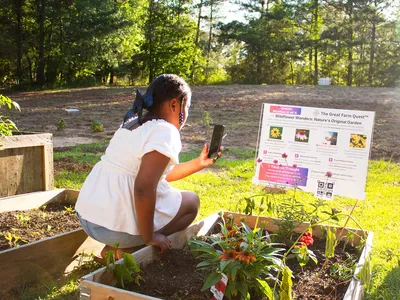
Generations Forward Learning Farm
© Delores Williams
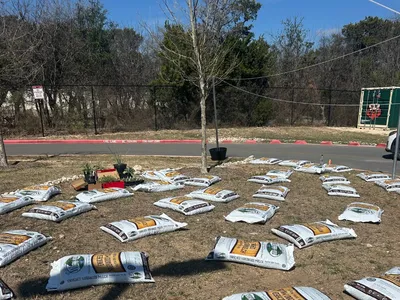
Great Hearts Invictus
© Jacob Murrie
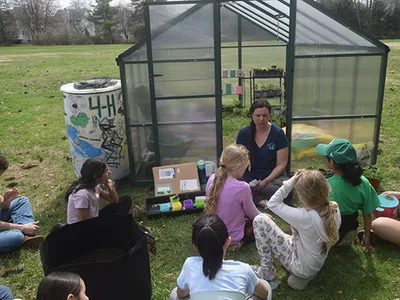
Somerset County 4-H
© Melissa Bright
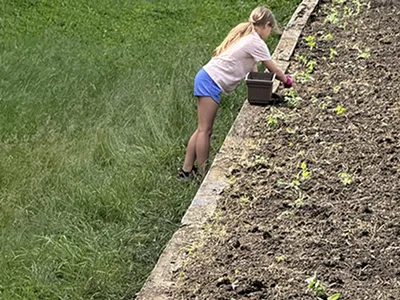
South Hamilton CSD
© DeDe Henderson
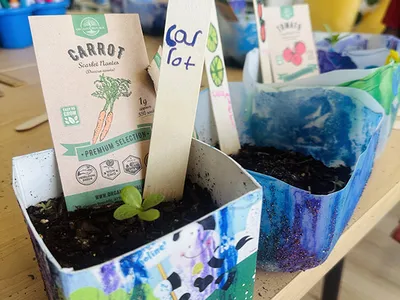
Ayni Learning Space
© Karissa Clarr
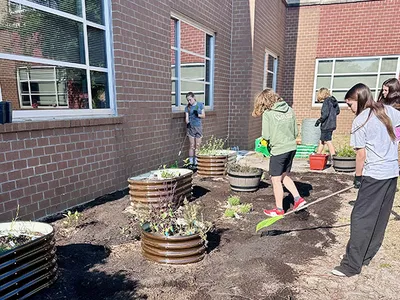
Charles P. Murray Middle School
© Robert Roth
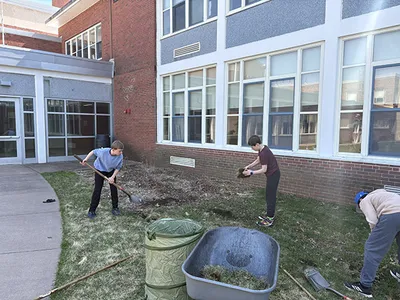
William Diamond Middle School
© Christine Goulet
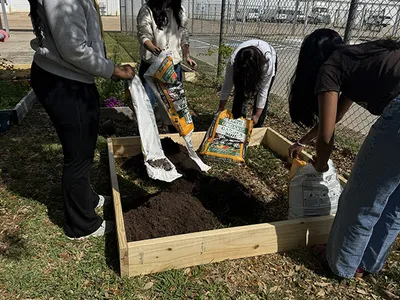
Tomball Star Academy
© Morgan Peake-Lozano