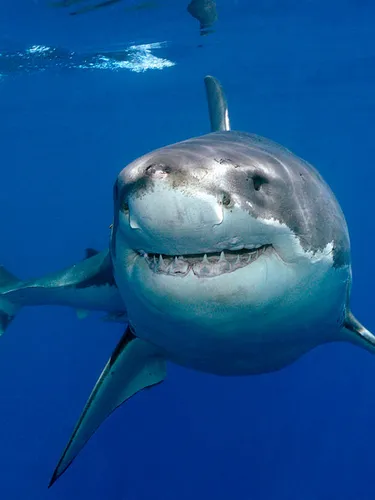
© naturepl.com / Mark Carwardine / WWF
Great white sharks
The great white shark is the world's largest known predatory fish. It has 300 teeth, yet does not chew its food. Sharks rip their prey into mouth-sized pieces which are swallowed whole. The shark’s heavy, torpedo-shaped body allows it to cruise efficiently for long periods of time, and then suddenly switch to high speed bursts in pursuit of prey—sometimes leaping out of the water. It feeds on a broad spectrum of prey, from small fish, such as halibut, to large seals and dolphins.
As large and powerful predators, great white sharks play an important role at the top of the marine food chain. Despite its fame and reputation, little is actually known about the great white shark’s biology and behavior.
Great white shark facts
- Status View status categories and descriptions
- Vulnerable
- Scientific name
- Carcharodon carcharias
- Weight
- 4,000 – 7,000 pounds
- Length
- 16 – 20 feet
- Habitats
- Oceans
Threats to great white sharks

© Wildlife Pictures/Jêrome Mallefet / WWF-Canon
Great white sharks are decreasing in numbers and are rare due to years of being hunted by man for fins and teeth, and often as a trophy for sport fishing. The white shark is often caught as bycatch by commercial fisheries and can also become entangled in meshes that protect beaches.
How WWF is taking action to protect great white sharks

© Edward Parker / WWF-Canon
WWF supports research and monitoring of white sharks as they migrate to and from the Gulf of California. Sharks are tagged and the movements are tracked by satellite. This information on their behavior will help with a management plan for the protected area where they are found (Guadalupe Island Biosphere Reserve), such as how to protect them from bycatch and to regulate tourism.
How you can help
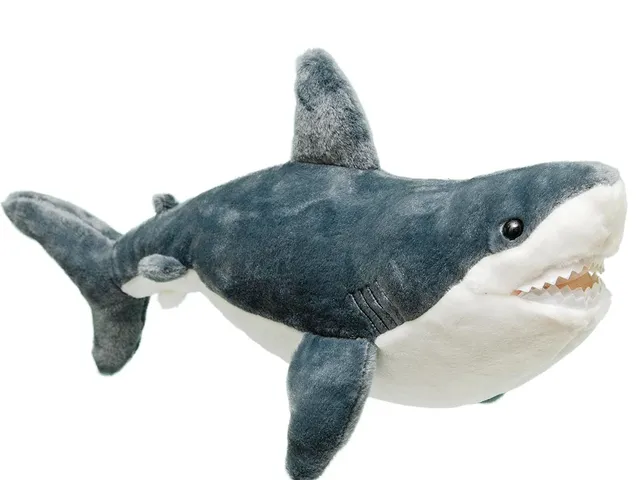
© WWF
Adopt a great white shark
Support WWF’s global efforts to protect wild animals and their habitats and choose from kits with plush and more.