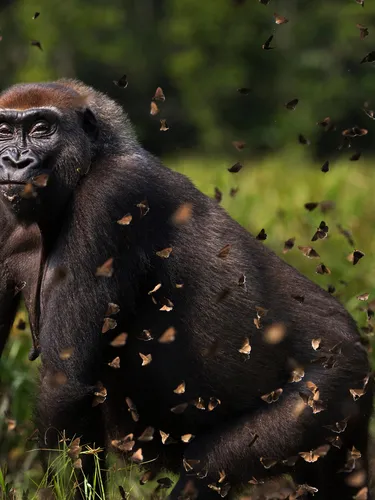
© naturepl.com / Anup Shah / WWF
Western lowland gorillas
The western lowland gorilla is the most numerous and widespread of all gorilla subspecies. Populations can be found in Cameroon, the Central African Republic, Equatorial Guinea, Gabon, and the Republic of Congo, with possibly some remnant populations in the Democratic Republic of the Congo. The exact number of western lowland gorillas is not known because they inhabit some of the most dense and remote rain forests in Africa. However, significant populations still exist, including in the remote swampy forests of the Republic of Congo.
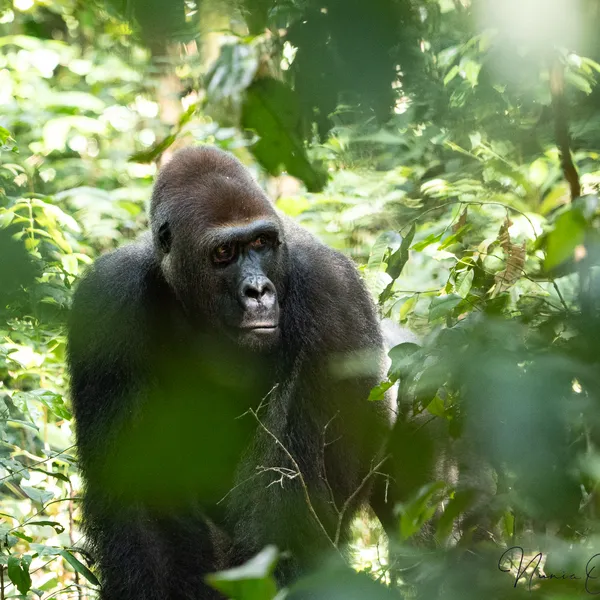
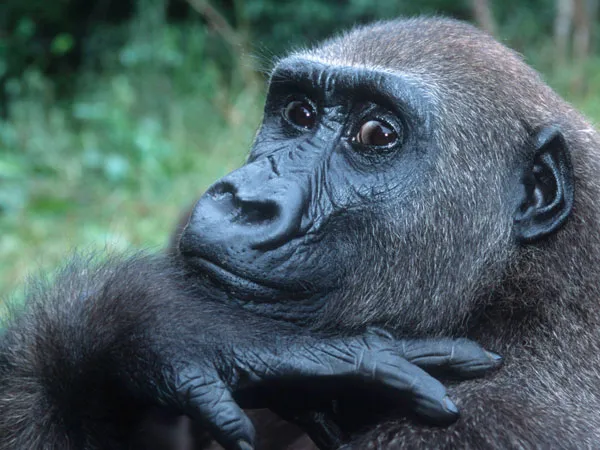
Western lowland gorillas can be distinguished from other gorilla subspecies by their slightly smaller size, their brown-grey coats, and auburn chests. They also have wider skulls with more pronounced brow ridges and smaller ears. Large numbers have not protected the western lowland gorilla from decline. Because of poaching and disease, the gorilla’s numbers have declined by more than 60% over the last 20 to 25 years. Even if all of the threats to western lowland gorillas were removed, scientists calculate that the population would require some 75 years to recover.
Western lowland gorilla facts
- Status View status categories and descriptions
- Critically endangered
- Population
- Unknown
- Scientific name
- Gorilla gorilla gorilla
- Weight
- Up to 440 pounds
- Height
- 4 to 5 ½ feet when standing on two feet
News and stories
Threats to western lowland gorillas
Disease
Central Africa is home to not only gorillas but also the deadly Ebola virus. Ebola has caused a number of massive gorilla and chimpanzee die-offs in the remote forests at the heart of the primates’ ranges. Some scientists estimate that it has killed about one-third of the wild gorilla population in the early 2000s. The toll has been even greater in some areas, such as the Minkébé Forest in northeastern Gabon—once considered one of the most important populations—where the virus may have killed more than 90% of the region’s gorillas and chimpanzees.
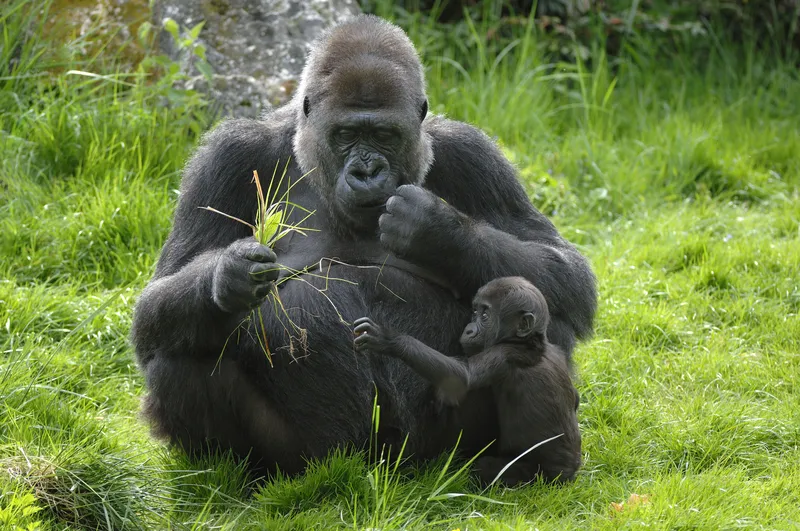
© naturepl.com / Eric Baccega / WWF-Canon
Habitat loss
Only about 22% of western lowland gorillas live inside protected areas, so the majority of these gorillas are unprotected and highly vulnerable to poachers. Large areas of gorilla forest have already been fragmented as a result of selective commercial logging, the construction of roads, or the expansion of human settlements.
There is also a strong link between habitat loss and the bushmeat trade. As previously inaccessible forests are opend up by timber companies and others, commercial hunters gain access to areas where gorillas roam and often use logging vehicles to transport bushmeat to far-away markets, as well as sell meat to employees of logging companies.
Poaching
The hunting and killing of gorillas is illegal but still, the animals are killed for bushmeat or during the capture of baby gorillas for pets. Timber and other companies have opened areas of once remote forest, facilitating poaching and the bushmeat trade. Poaching also carries dangers for humans, as Ebola may be spread through the butchering and handling of gorilla and other primate meat.
How WWF is taking action to protect western lowland gorillas
Combating ebola
The Ebola virus is a threat throughout much of the western lowland gorilla’s range. WWF supports programs that increase antipoaching efforts and raise awareness of the dangers of eating bushmeat. In addition, WWF has several places where we monitor gorillas and other wildlife for the presence of pathogens like Ebola and anthrax. As such, WWF directly contributes to Ebola research and prevention.
© WWF-US / Richard Carroll
Developing ecotourism
WWF has helped to develop opportunities for tourism in Campo Ma'an National Park in Cameroon, the Dzanga-Sangha Protected Areas in the Central African Republic, and has pursued opportunities in places such as Loango and Moukalaba-Doudou National Parks in Gabon. Tourism provides significant local employment opportunities in often remote areas where other opportunities are scarce while protecting gorilla populations.
WWF has co-managed Dzanga-Sangha Protected Areas since their creation in 1990 and has run a Primate Habituation Program since 1997 that habituates western lowland gorillas for tourism and research. It plays a vital role in the park's management strategy by generating significant revenue and strengthening the vital link with the community.
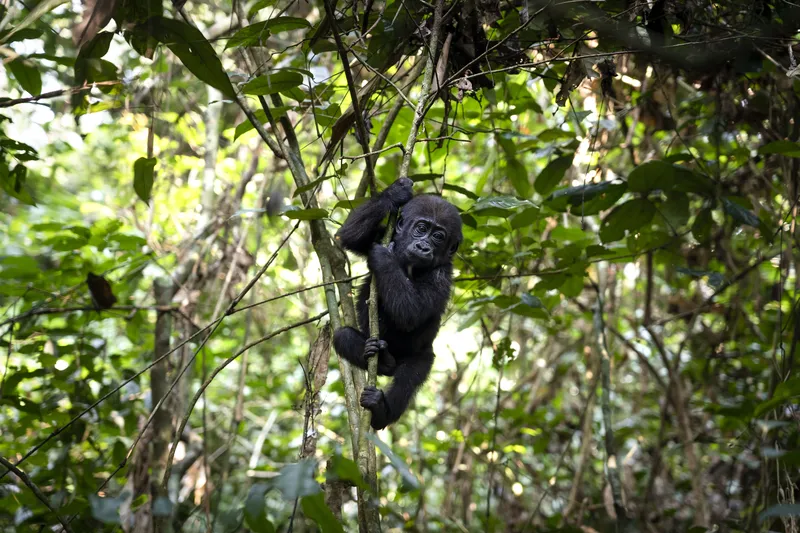
Through these programs, tourists can view western lowland gorillas while local communities benefit from programs for rural development and sustainable natural resources use. The annual revenue earned directly from gorilla tourism is an important component of funding conservation and management of the parks, as well as local and national economies. Dzanga-Sangha employs over 260 people, mostly from local communities including many Indigenous BaAka, making it one of the largest employers in the Central African Republic.
© Andy Isaacson / WWF
Promoting sustainable development
Unsustainable logging practices, commercial hunting and fishing, and oil and gas development threaten the western lowland gorilla across its range. WWF and its partners are working to establish a network of protected areas across the Congo Basin and are promoting the development of logging and mining industries that are well-managed both ecologically and socially.
Protecting the Congo Basin necessitates partnering with the local communities and Indigenous Peoples who depend on the forest for their livelihoods and who serve as its custodians and defenders. We work with farmers to adopt new varieties of crops and innovative methods to grow them; help local women improve their livelihoods through sustainable farming and other programs; and advance gorilla-based tourism that protects national parks and helps local communities.
Stopping poaching and the illegal wildlife trade
WWF advocates for nations to more effectively enforce wildlife laws and raise awareness in local villages of the dangers of eating bushmeat. In addition, WWF has trained local wildlife authorities in modern methods of antipoaching and gorilla monitoring and provided equipment and provisions for antipoaching teams in several nations.
For example, the eco-guards in Dzanga-Sangha have removed over 850,000 snares from the forest since the creation of the protected area in 1990 and confiscated well over 3,000 guns and 30,000 rounds of ammunition. These incredible results and the hard work of these antipoaching teams have significantly contributed to the safety of its gorillas.
Thanks to these antipoaching efforts in Dzanga-Sangha Protected Areas, populations of gorillas and other species like forest elephants are thriving.
© R.Isotti, A.Cambone - Homo Ambiens / WWF-Canon
Gorillas of Dzanga-Sangha
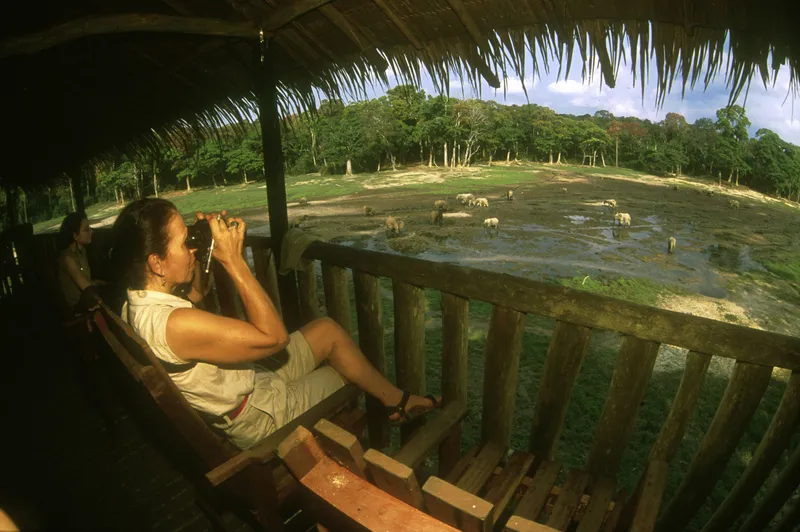
One of the few places that humans can see western lowland gorillas in the wild is the Dzanga-Sangha Protected Areas in the Central African Republic. These opportunities for gorilla viewing are so rare, in part, because it takes three or more years of careful and patient gorilla tracking and following to habituate the animals to the presence of humans.
“The follow and habituation of gorillas in Dzanga-Sangha would never have been possible without the extensive knowledge of the BaAka trackers, which are the real backbone of our program,” says Chloe Cippoletta, who led the Dzanga-Sangha habituation field staff for years.
WWF has long worked with local BaAka trackers as part of the habituation program, capitalizing on their knowledge of their forest homeland and their ability to locate the gorillas even when traces of the animals are elusive. Tourism dollars are a key part of forest and gorilla protection in this region. Forty percent of the money from park entry fees at Dzanga Sangha, for example, is dedicated to programs in the local community that promote rural development and sustainable use of natural resources
How you can help
© WWF
Adopt a gorilla
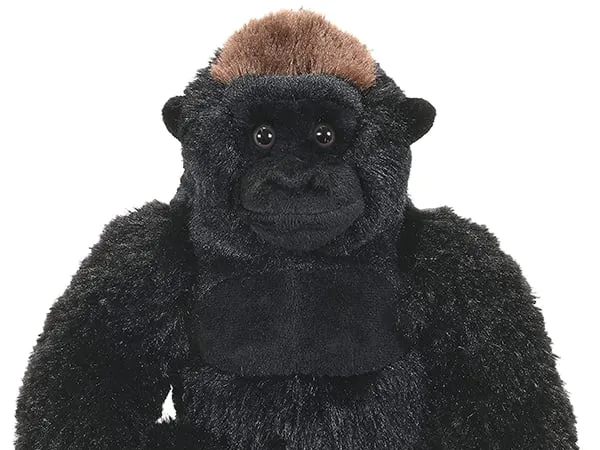
Support WWF’s global efforts to protect wild animals and their habitats and choose from kits with plush and more.