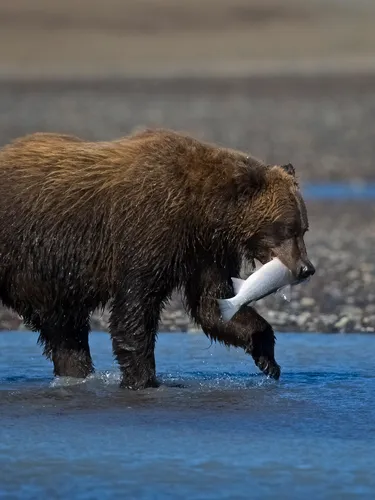
© Don Getty
Brown bears
Few animals have captured the imagination like brown bears. They can stand on two legs, walk on the soles of their feet, pick things up with their “fingers,” and often eat what we eat. This—coupled with their ability to communicate with one another through scratch marks left on trees, smells and sounds—establishes a similarity to our own way of life. Some of the largest living carnivores, brown bears have fallen prey to hunting and other conflicts with humans.
Brown bear facts
- Status View status categories and descriptions
- Least concern
- Population
- 110,000
- Scientific name
- Ursus arctos
- Weight
- Up to 1,500 lbs
- Height
- 3.35 feet to shoulders
- Length
- 6.5 feet
- Habitats
- Forests, tundra
News and stories
Why brown bears matter
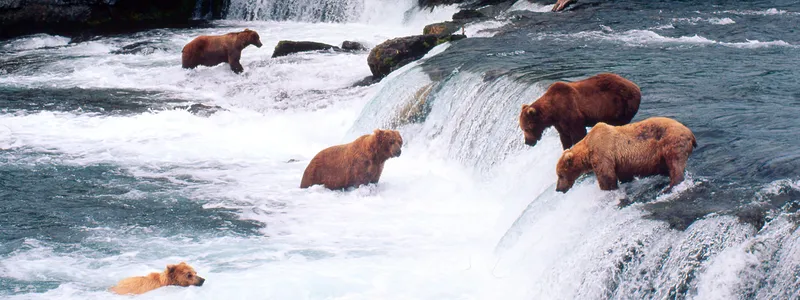
© Kevin Schafer / WWF-Canon
While brown bear population numbers are currently stable, they are considered a high priority in conservation. Given their dependence on large natural areas, brown bears are important management indicators for a number of other wildlife species. Brown bears also play important roles as predators who keep other animal populations in check. Additionally, they act as seed dispersers, helping to sustain their own environment.
Threats to brown bears

© Loraine Logan / WWF-US
Formerly hunted for its hides, meat, and as a big game trophy, the brown bear’s most severe threats are currently habitat destruction and persecution.
Hunting
Brown bears were pursued extensively due to their size, valuable furs and meat. The brown bear population now occupies just 2% of its former range. Bear gall bladders reportedly bring high prices as traditional medicines on the Asian market although there is no evidence that products derived from bear parts have medical value.
Habitat loss
Human expansion into the bears’ natural habitat, as well as instances where brown bears are considered nuisances, demonstrate the tension that exists between bears and people. Logging, mining, road construction, and other development—coupled with human attempts to prevent brown bears’ interference with things like livestock, crops, water supplies, and garbage bins—all impact this animal population.
How WWF is taking action to protect brown bears
WWF works continuously to conserve bear populations and maintain a vital habitat for the bears. This includes forging new partnerships with businesses to ensure that adequate protection is in place.
How you can help
© WWF
Adopt a grizzly bear
Support WWF’s global efforts to protect wild animals and their habitats and choose from kits with plush and more.